

For much of the past two years, the story of luxury has been told from Paris and Milan, and it has not been a cheerful one. Last Thursday, 5 November, two New York companies told a different story. Tapestry, the owner of Coach and Kate Spade New York, and Ralph Lauren both reported quarterly results ahead of their own guidance and raised their outlooks for the full year. Reuters described Ralph Lauren as having "outperformed the wider luxury sector in recent quarters", and noted that Tapestry raised its forecasts "even as the broader luxury sector grapples with a spending slowdown".
A week earlier, on 30 October, Capri Holdings showed the other side of the American market. Sales at Michael Kors were still falling, even as Jimmy Choo grew and the group, too, lifted its annual forecast.
Tapestry: Coach does the heavy lifting
Tapestry's fiscal first quarter, which ended on 26 September, produced revenue of $1.89 billion, up 11% on a reported basis and 12% on a pro forma basis, which strips out Stuart Weitzman, the shoe brand Tapestry sold in August 2025. Almost all of that growth came from one brand. Coach's sales rose 16% to $1.66 billion, while Kate Spade's fell 10% to $233 million.
The quality of Coach's growth matters as much as the size. Tapestry says Coach's average unit retail on handbags rose at a low-double-digit percentage rate while units grew at a low-single-digit rate. In other words, customers bought slightly more bags and paid noticeably more for each one. The company welcomed 2.6 million new customers in the quarter, about 35% of them from Gen Z.
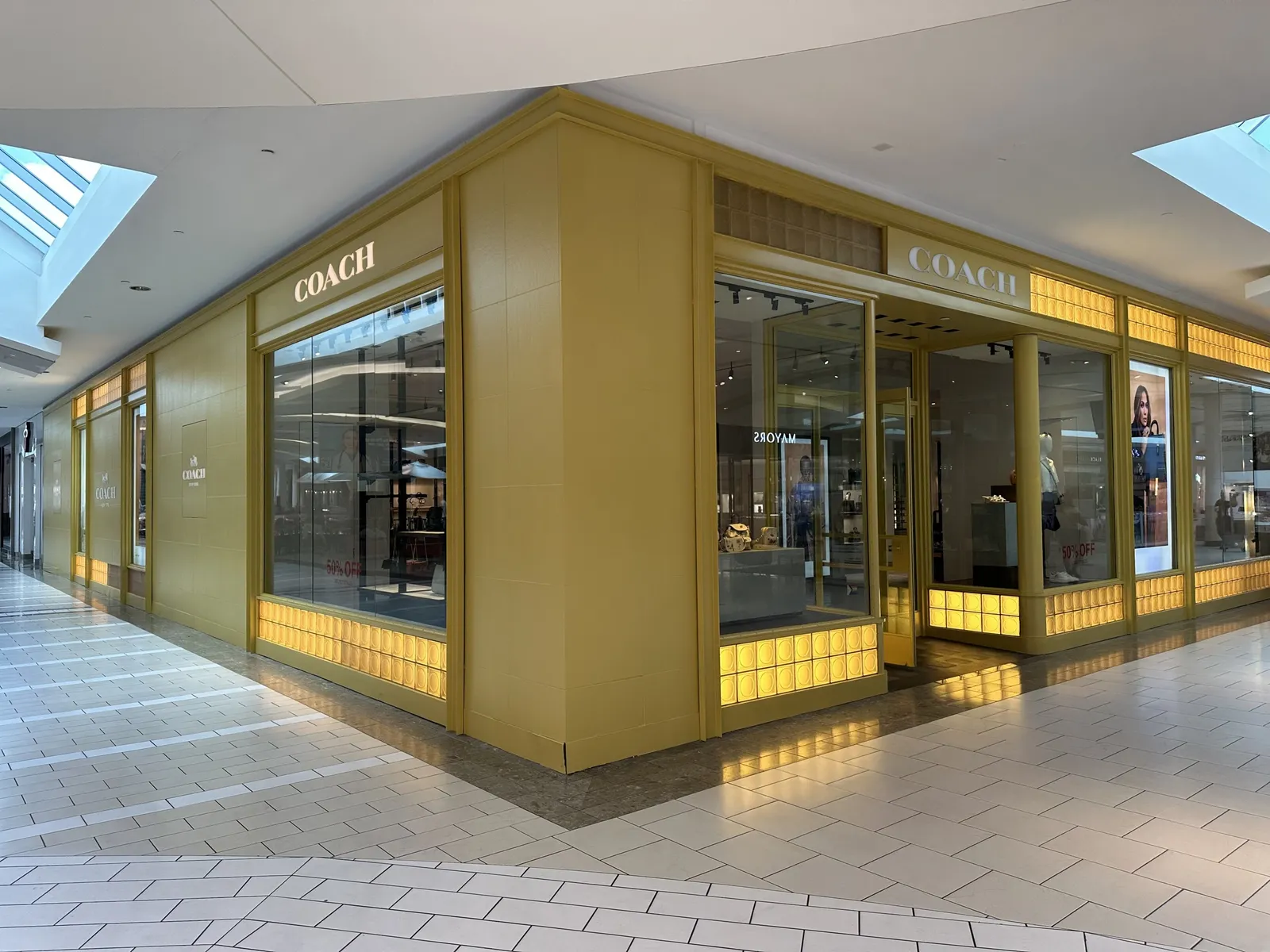

The growth was also global. In constant currency, North America grew 4%, Europe 22% and Greater China 39%. Gross margin widened by 230 basis points to 78.6%, and non-GAAP earnings per share rose 32% to $1.82.
"Our first quarter marked a powerful start to the year, with revenue, margin, and earnings growth ahead of expectations and strength around the world," said chief executive Joanne Crevoiserat. Tapestry now expects fiscal 2027 revenue of about $8.5 billion to $8.6 billion, up from $8.4 billion to $8.5 billion, and earnings per share of $8.25 to $8.35. It also raised its planned return to shareholders this year to about $2.0 billion.
Ralph Lauren: Asia leads, Europe lags
Ralph Lauren's second quarter, to 26 September, brought revenue of $2.19 billion, up 9% reported and 10% in constant currency. Every region grew, but not equally:
- Asia: revenue up 28% to $571 million, with China up more than 35%.
- North America: up 6% to $885 million, with comparable store sales also up 6%.
- Europe: up 1% reported and 3% in constant currency to $696 million, while comparable store sales slipped 1% and fell 4% in physical stores.
Globally, direct-to-consumer comparable sales rose 10%, and average unit retail rose 9%, which the company attributes to "strong full-price selling trends" and a favourable mix of regions and channels. Adjusted gross margin rose 250 basis points to 70.5%. The reported figure of 74.2% was flattered by refunds of tariffs previously paid under the International Emergency Economic Powers Act, which the company excludes from its adjusted numbers. Adjusted earnings per share rose 22% to $4.64.
The quarter's store openings show where the company is building. It opened 22 owned and partner stores, including standalone men's and women's stores on London's Sloane Square, a store in St Tropez, a store at Hopson One in Beijing and, in Boston's Seaport, its first Ralph's Coffee in Massachusetts. The house's creative standing is high too: its founder won the CFDA's menswear award on 2 November.
"We delivered strong second quarter performance, enabling us to raise our Fiscal 2027 outlook once again," said chief executive Patrice Louvet. The company now expects constant-currency revenue growth of about 6% to 7% for the year, up from 5% to 6%.
Why the shares fell anyway
Investors were not satisfied. Ralph Lauren forecast third-quarter revenue growth of about 3% to 4%, which Reuters reported was below analysts' expectations of 4.2%. The company attributed the slower quarter to the timing of wholesale shipments and deliberate cuts to off-price sales. Its shares fell about 4% in early trading, according to Reuters, after rising about 16% this year.
Some analysts read the forecast as habit rather than warning. The company tends "to beat, guide conservatively and rinse and repeat," Guggenheim Securities analyst Simeon Siegel told Reuters. Europe is the real watch point. Like its peers, Reuters reported, the company has been hurt by the war involving Iran, which has hampered business in the Middle East and in Europe, where tourism has faltered. Store traffic in Europe "remains a key metric that we're watching closely," said chief financial officer Justin Picicci.
Capri: one brand down, one brand back
Capri's second-quarter revenue fell 5.5% to $809 million. These are the first results without Versace, which Capri sold to Prada in December 2025, as covered in our report on Prada Group's third quarter. Michael Kors' revenue dropped 8.6% to $663 million, although its operating margin edged up to 10.3% on more full-price selling and lower tariff costs.
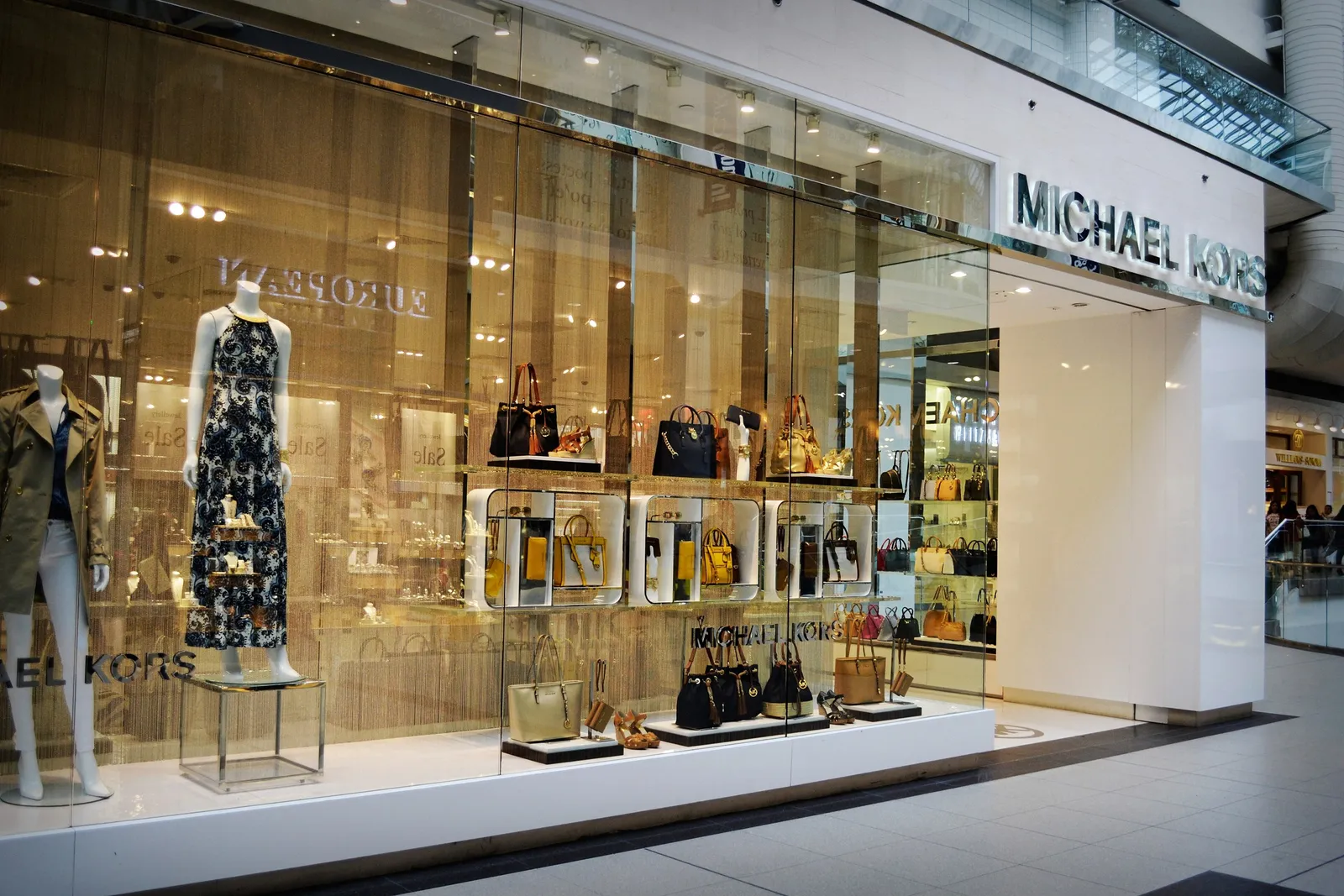

Jimmy Choo went the other way. Its revenue rose 11.5% to $146 million and it returned to an operating profit of $2 million, against a $9 million loss a year earlier. "We are encouraged by the momentum building at both Michael Kors and Jimmy Choo," said chairman and chief executive John D. Idol, adding that trends had improved each month of the quarter and that he expects the group to return to revenue growth in the second half. Capri now expects revenue of about $3.42 billion for the year, and the sale of Versace has helped cut its net debt to $336 million from $1.6 billion a year earlier.

What it tells us
Set beside the European results of recent weeks, from Kering's continuing Gucci reset to Hermès' steady climb, these figures suggest a pattern. The American houses are not winning by staying cheap. Coach and Ralph Lauren are both getting customers to pay more for each item, and both are growing fastest in China. Analysts cited by Reuters also point to Ralph Lauren's broad price range as one reason it has held up while shoppers wary of inflation avoid pricier rivals.
The risks are equally clear. Kate Spade and Michael Kors show that the formula does not transfer automatically from one brand to another. And Europe, where tourist spending has faltered, is still the softest region for even the strongest performer. With the holiday quarter now under way, the next set of numbers, from Tapestry on 4 February, will show whether the American advantage holds.
Featured image: ajay_suresh.jpg), CC BY 4.0, via Wikimedia Commons. Cropped for this page.