
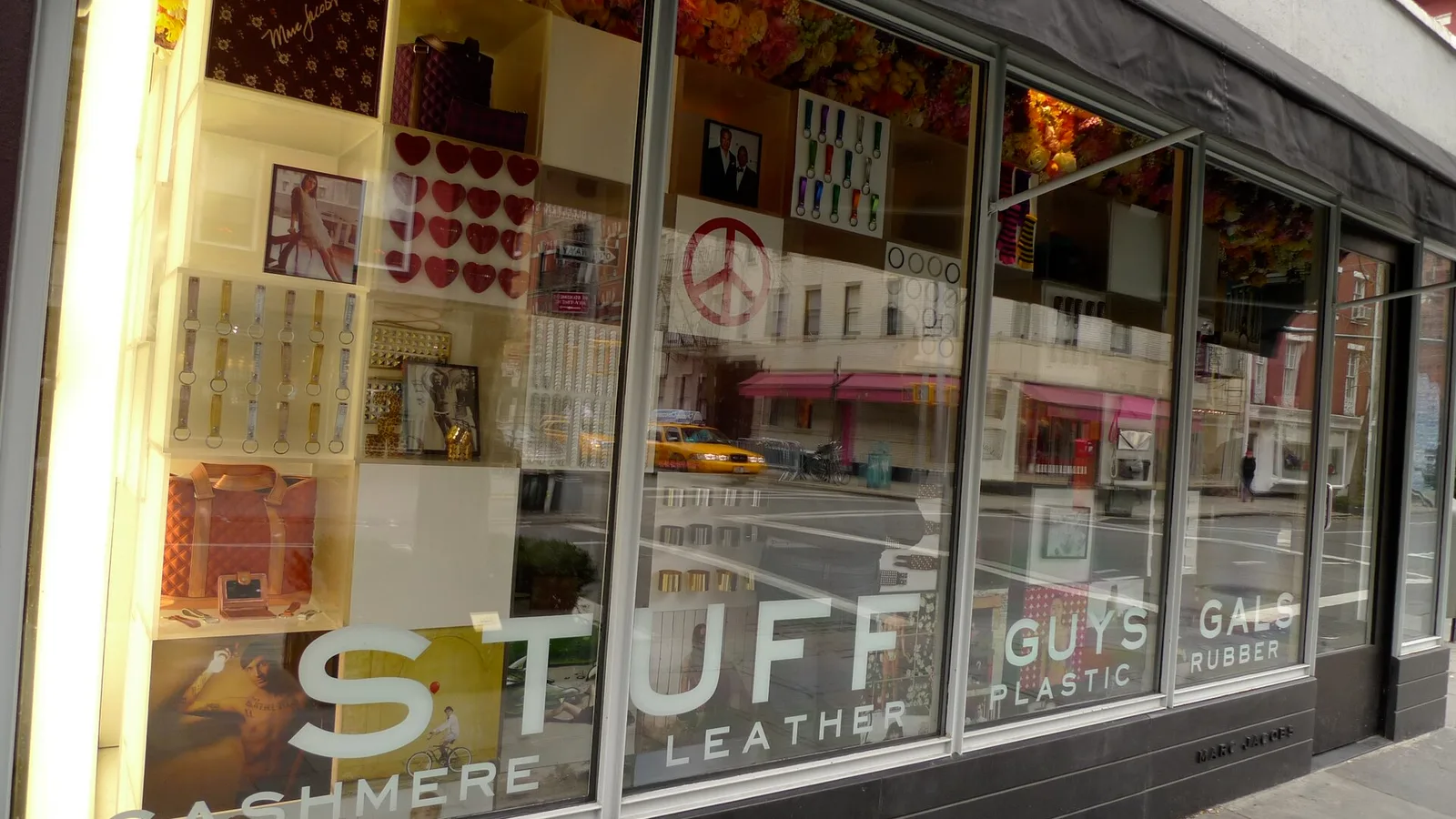
For almost three decades, Marc Jacobs was one of the most recognisable names in the LVMH stable. That chapter has closed. On 1 September 2026, WHP Global and G-III Apparel Group announced they had completed the acquisition of the Marc Jacobs brand from LVMH, and in its 12 October results LVMH confirmed simply: "On September 1, Marc Jacobs was sold to WHP Global."
If you've wondered who owns Marc Jacobs now, and whether anything will change, here's a clear guide.
Who owns Marc Jacobs now?
Marc Jacobs is now owned by a joint venture split 50/50 between WHP Global and G-III Apparel Group, according to the companies' announcement.
The structure has two layers:
- The brand (intellectual property) is held by the joint venture. WHP Global leads it, including global brand licensing.
- The operating business (wholesale, retail and e-commerce) was acquired by G-III, which runs it under a long-term licence from the joint venture and provides support services.
Crucially, Marc Jacobs himself stays on as founder and creative director, "ensuring continuity of the brand's creative vision, runway collections and fashion shows", the announcement says.
How much did the deal cost?
The companies' closing announcement does not give a price. TheIndustry.fashion reported the sale at US$925 million. The deal was first announced in May 2026, the outlet said.
TheIndustry.fashion also reported that G-III is taking on parts of the brand's direct-to-consumer, retail and wholesale businesses centred in the US and Europe, including around 100 stores.
Who are WHP Global and G-III?
Neither is a household name, but both are significant in fashion.
WHP Global
WHP Global describes itself as a brand-management platform founded in 2019 to acquire and grow consumer brands. Its announcement says its portfolio includes 16-plus brands generating more than US$9.5 billion in annual retail sales across 80-plus countries. TheIndustry.fashion reported that its premium fashion portfolio already includes Vera Wang, Rag & Bone and G-Star. Brand-management companies typically own a name and earn revenue by licensing it to manufacturers and retailers.
G-III Apparel Group
G-III is a New York-listed fashion company. According to the announcement, it owns ten brands, now including Marc Jacobs, DKNY, Donna Karan, Karl Lagerfeld, Sonia Rykiel and Vilebrequin, and licenses more than 20 others, including Calvin Klein, Tommy Hilfiger and Levi's. (You'll find Calvin Klein and Tommy Hilfiger on Casadi's brand pages.)
What the new owners say
"Marc Jacobs is a defining name in fashion, with powerful cultural relevance and global growth potential," said Yehuda Shmidman, founder, chairman and CEO of WHP Global. He thanked LVMH "for its stewardship of this brand over nearly three decades".
Morris Goldfarb, G-III's chairman and CEO, said G-III "brings the scale and expertise to build and grow global brands", and that it looks forward "to protect what makes the brand special while supporting its continued growth worldwide".
Both companies say they want to expand the brand "across markets and product categories".
A brief history of Marc Jacobs and LVMH
Marc Jacobs created Marc Jacobs International with Robert Duffy in 1984, according to the brand's own description. TheIndustry.fashion notes that LVMH first acquired a majority interest in the label in 1997, the same year Jacobs joined Louis Vuitton as creative director.
That dual role defined an era. At Louis Vuitton, Jacobs launched the house's ready-to-wear and became famous for artist collaborations that turned the monogram into a pop-culture object. Today the Marc Jacobs brand spans handbags, small leather goods, ready-to-wear, footwear, eyewear and fragrance, TheIndustry.fashion reports. Explore the house where he made his name on our Louis Vuitton brand page.
Why did LVMH sell?
LVMH has not given a detailed public rationale beyond confirming the sale. TheIndustry.fashion framed the sale as part of LVMH's "broader strategy to rationalise its assets" against a challenging luxury market. LVMH's third-quarter release also noted that most of the DFS travel-retail businesses had been sold. For the wider context, read our explainer on LVMH's third quarter.
BoF has also observed a broader pattern of star names operating outside LVMH, including Stella McCartney, Phoebe Philo and Kim Jones, whose new label we cover in Kim Jones revives his own label.
What changes for shoppers?
In the short term, very little. Marc Jacobs remains creative director, and the runway shows continue. Over time, it's reasonable to expect:
- More categories. The owners' stated aim is expansion into "new opportunities across markets and product categories". Licensing models often add categories such as homewares, eyewear or children's lines.
- Wider distribution. G-III's strength is wholesale, so the brand may appear in more department stores and multi-brand retailers.
- A focus on icons. Brands under new ownership tend to lean on their best-known products. Marc Jacobs's bestselling bags are likely to remain central.
What it means for Australian availability hasn't been announced.
A note on licensing and luxury
Some fashion watchers worry that brand-management ownership can dilute a label if licensing expands too quickly. Others point out that it can bring a brand to far more customers. Which way Marc Jacobs goes will depend on how carefully the new owners protect its creative identity, something both companies say is their priority.
The first moves
Early leadership hires offer a clue. A LinkedIn commentary dated 2 October reported that Marc Jacobs appointed John Wattiker, formerly of Hearst Magazines, as chief marketing officer, reporting to chief executive Eric Marechalle. We have not yet seen an official company announcement, so treat this detail as reported rather than confirmed.
Frequently asked questions
Who owns Marc Jacobs in 2026?
A 50/50 joint venture between WHP Global and G-III Apparel Group, completed on 1 September 2026. G-III runs the operating business under licence.
Is Marc Jacobs still the designer?
Yes. Marc Jacobs remains founder and creative director.
How much did WHP Global and G-III pay for Marc Jacobs?
The companies didn't state a price in their closing announcement; TheIndustry.fashion reported US$925 million.
Is Marc Jacobs still part of LVMH?
No. LVMH confirmed the sale in its third-quarter 2026 results.
How long did LVMH own Marc Jacobs?
LVMH first acquired a majority interest in 1997, so close to 30 years.
Where can I compare the groups behind fashion brands?
Read our guide to who owns luxury or use the brand comparison tool.
Featured image: Chun-Hung Eric Cheng, CC BY 2.0, via Wikimedia Commons. Cropped for this page.
