
For anyone who grew up shopping in Australian malls, the past month has been sobering. Cue, the label many women relied on for their first job-interview suit, has gone into receivership with its sister brand Veronika Maine. Suboo, the Bondi-born label worn by Gigi Hadid and Kendall Jenner, has entered liquidation after 14 years.
On 13 October, the ABC asked the question many readers have been asking: why are Australian fashion icons closing down? Here is what has happened, what the experts say is driving it, and what might come next.
What happened to Cue and Veronika Maine?
Cue Clothing Co, which owns Cue and Veronika Maine, was placed into administration and receivership in September 2026 by its UK-based owner, Hilco Capital, which had been seeking a buyer, according to Inside Retail. The receivers are FTI Consulting.
The ABC reported that when Cue went into receivership it had more than 130 outlets across Australia and New Zealand, and that five stores have since closed. The brands are still trading while the receivers look for a buyer.
Who might buy Cue?
Inside Retail, citing The Australian Financial Review, reported on 12 October that at least two formal offers had been tabled:
- Brand Collective, Larry Kestelman's fashion group, which has recently moved to acquire Glue Store, The Dom and Running Bare;
- Justin Levis, son of Cue founder Rod Levis, who spent more than 26 years as an executive director of the business.
Inside Retail noted that Levis has a separate case against Cue Clothing Co in the NSW Supreme Court over what he described as an abrupt termination in May 2024, and that the case is continuing independently of the sale. FTI Consulting and Brand Collective declined to comment. Nothing has been agreed publicly, so treat any outcome as unconfirmed until the receivers announce it.
What happened to Suboo?
Nine.com.au reported on 6 October that ASIC records show Suboo Pty Ltd was wound up following a members' meeting on 1 October, with a liquidator appointed.
Founded in 2012 by Sue Di Chio, Suboo built an international following and was stocked by Nordstrom, Saks Fifth Avenue, Neiman Marcus, Revolve, Selfridges, David Jones and Bloomingdale's, among others. In a statement to Nine.com.au, the company cited "rising operating costs, broader global economic pressures and significant changes across the international fashion and retail landscape", adding: "The retail environment today looks very different to the one in which Suboo was built."
Suboo said there were "no outstanding unfulfilled customer orders". It has not said what will happen to the brand name.
Why are Australian fashion brands closing?
The ABC report brought together an economist and a fashion academic. Their explanations fall into a few clear themes.
1. Costs: rent, labour and freight
RMIT's Carol Tan pointed to labour costs and "heavy rents", while CreditorWatch economist Ivan Colhoun added "transport costs, weak consumer confidence". Colhoun said Australia saw "roughly a thousand first time retail insolvencies last financial year", and that "the expectation has to be that we will see more".
2. Cautious shoppers and higher interest rates
The ABC noted that the latest interest-rate rise will squeeze the sector further, with rates at their highest level in 15 years. "With budgets under pressure, you'll see people deciding to be a little bit more cost conscious and a little bit more cautious," Colhoun said.
3. Big store networks built for another era
Tan argued that the brands that have fallen "had a huge retail footprint. They've been in an industry for a very long time. They haven't really adapted to the current market condition." The ABC listed earlier casualties: Roger David (closed in 2018), Katie's (closed at the start of 2025 after its parent company collapsed), and Betts and Jeanswest, both restructured into online-only retailers.
4. How we dress for work has changed
For Cue specifically, Tan made a striking point: Cue "was the brand that people went to when they wanted to get their first job interview or their first job, very structured clothing. Since the casualisation of the workforce, we might not want to wear such structured suits." Her conclusion: "Just having heritage is not enough."
5. Ultra-fast fashion online
Tan told the ABC that "7.9 million customers shopped on Shein and Temu just in 2025". "If I can buy something online that is cheaper and in my pyjamas, why would I want to go in store?"
6. Department stores under strain
The ABC reported that Myer posted a significant full-year loss, citing volatile trading and cost-of-living pressures, and that David Jones has also been in the red; its parent company has rejected media reports that a key lender had engaged an insolvency adviser. Tan noted that luxury brands increasingly prefer their own stores to department-store concessions.
Is anyone getting it right?
The ABC visited Miss Gladys Sym Choon, an Adelaide retailer that has traded for more than 40 years. Manager Chloe Mozuras described "real old school customer service": staff know regulars by name and will even try on items and send photos for online customers. "It's important to have the Australian independent clothing stores because otherwise everyone's going to end up looking exactly the same," she said.
Tan's advice to brands was similar: understand "who your customer is", and "what makes them tick".
What this means for Australian fashion lovers
From Casadi's point of view, there are a few practical takeaways:
- Gift cards and returns. If you hold a gift card or have a pending return with a brand in receivership, act promptly and check the receivers' updates. Policies can change during an insolvency.
- Support the labels you love. Smaller Australian labels live or die by repeat customers. If you value a local designer, buying full-price pieces you'll keep for years matters more than a one-off sale purchase.
- Look for longevity. Australian brands that endure tend to have a clear identity. Explore profiles of Zimmermann, Camilla, Aje, Country Road and R.M. Williams to see how different labels have built staying power, or set them side by side with our comparison tool.
- Secondhand is part of the picture. We looked at whether resale really slows new buying in The Resale Paradox.
A bigger, global story
These closures aren't only an Australian problem. As Tan told the ABC, "this is evident not only in Australia, but globally". Even the world's biggest luxury group is feeling a cooler market: see our explainer on LVMH's third quarter.
There are reasons for optimism, too. Melbourne Fashion Week runs from 19 to 25 October, showcasing designers who are building smaller, more focused businesses.
Frequently asked questions
Is Cue closing down?
Not at the time of writing. Cue and Veronika Maine are trading in receivership while FTI Consulting seeks a buyer. Five stores have closed.
Who is buying Cue?
Nothing is confirmed. Inside Retail, citing the AFR, reported formal offers from Brand Collective and from Justin Levis, son of founder Rod Levis.
Why did Suboo go into liquidation?
The company cited rising operating costs, global economic pressures and major changes in the fashion and retail landscape.
Which Australian fashion brands have closed recently?
The ABC listed Roger David (2018) and Katie's (2025), with Betts and Jeanswest moving online only. Suboo entered liquidation in October 2026.
Will more Australian fashion brands close?
CreditorWatch's Ivan Colhoun told the ABC that more retail insolvencies should be expected.
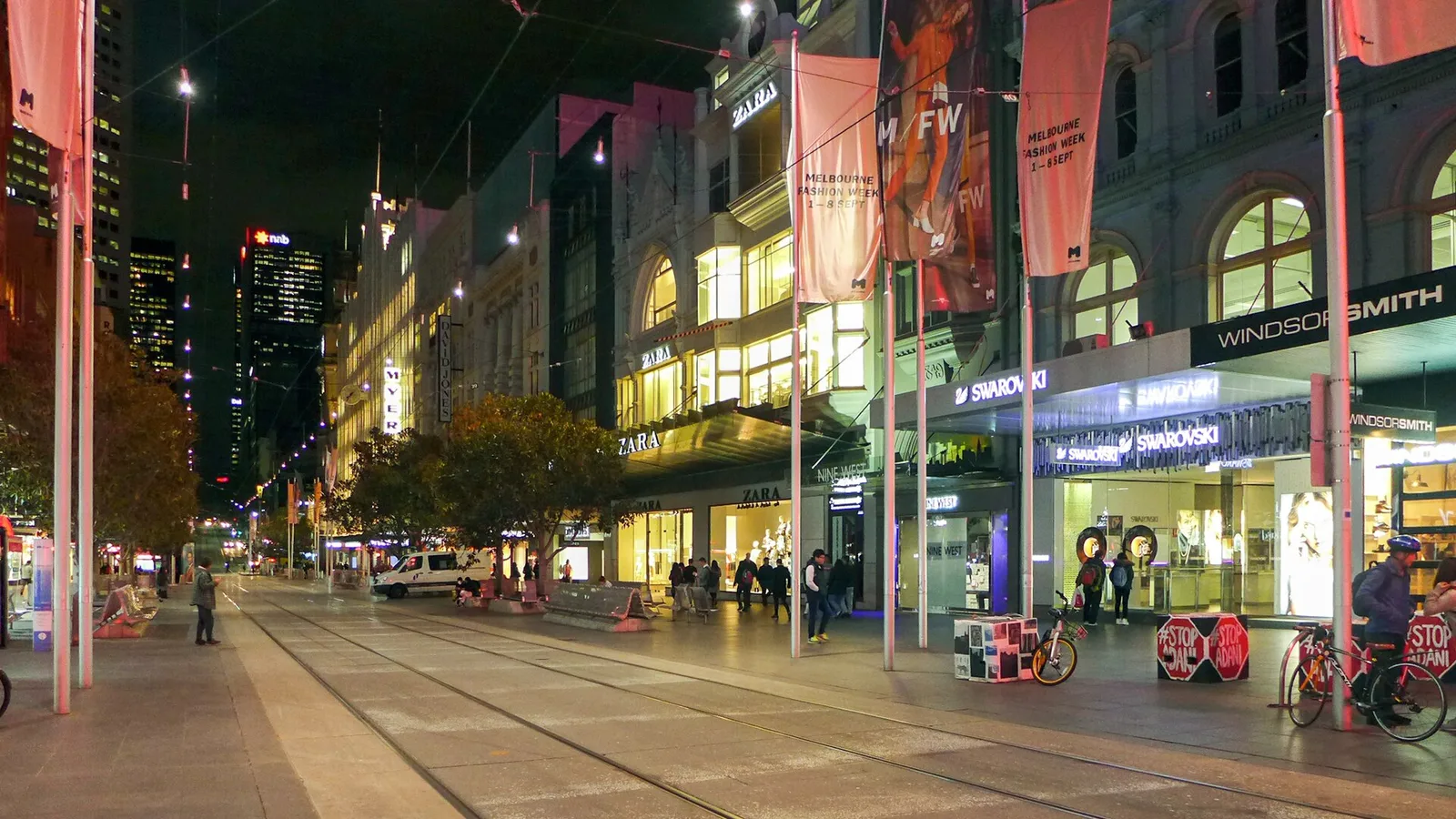
Featured image: Wpcpey, CC BY-SA 4.0, via Wikimedia Commons. Cropped for this page; the cropped version is shared under the same CC BY-SA 4.0 licence.
