

Sell more at full price, discount less, control where the product is sold: it is a familiar refrain in luxury this year. This week two heritage leather-goods houses, one British and one Florentine, reported on exactly that strategy. On Monday 19 October Mulberry said its first-half sales had risen 18 per cent. A day later Ferragamo said third-quarter revenue had fallen 3.5 per cent at constant exchange rates. Read side by side, the two updates show where the strategy is working, and what it costs.
Mulberry: discipline that is paying off
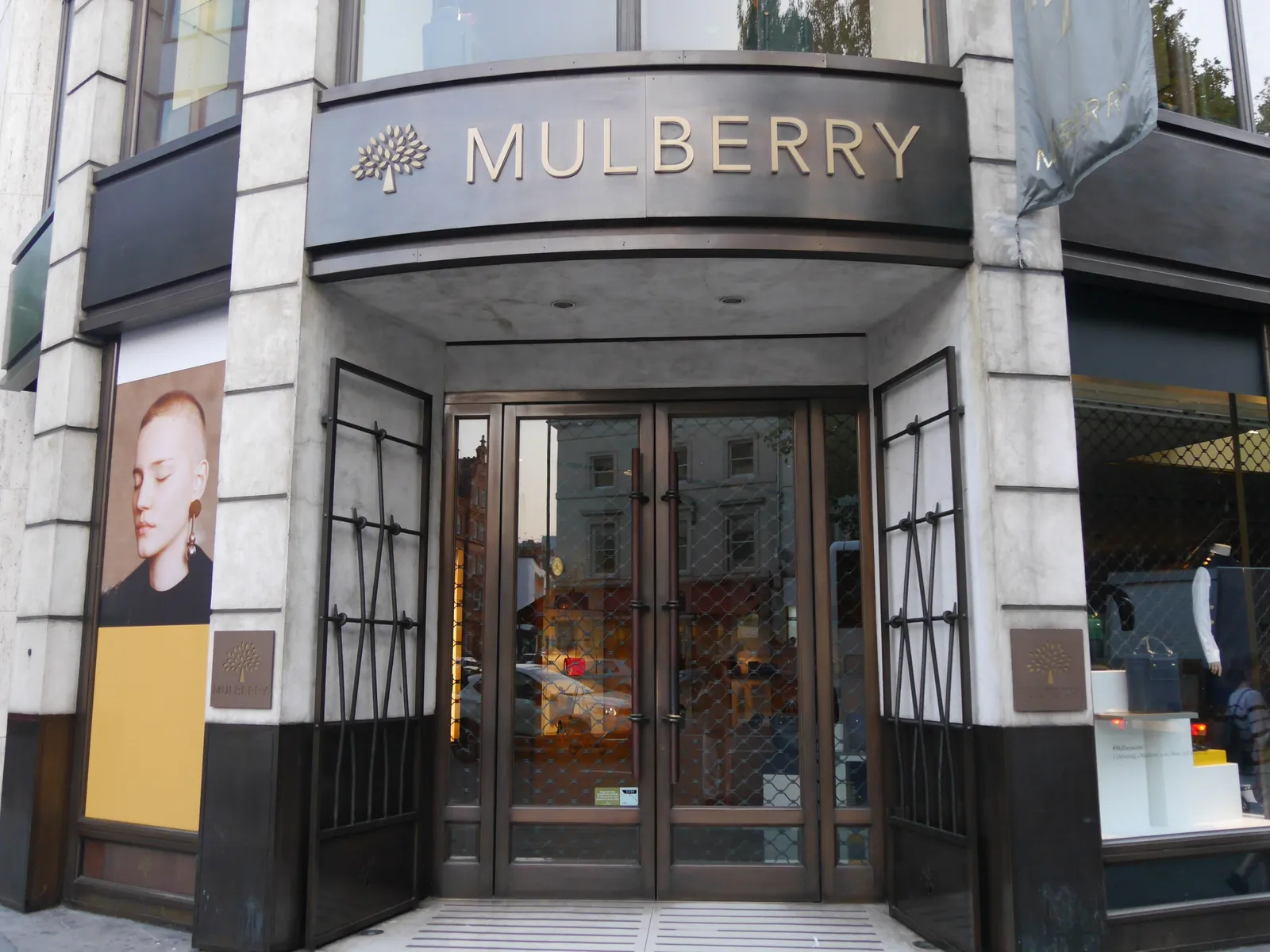
Mulberry's trading update covered the 26 weeks to 26 September 2026. Group sales rose 18.1 per cent at actual exchange rates and 18.2 per cent at constant rates, in line with the board's expectations, the company said. Growth came from every region:
| Mulberry, 26 weeks to 26 Sept 2026 | Sales | Like-for-like |
|---|---|---|
| Group | +18% | |
| UK | +10% | +9% |
| United States | +28% | +34% |
| Europe (ex UK) | +23% | +21% |
| Asia Pacific | +5% | +24% |
| Franchise and wholesale | +52% |
The company credited new bags (the Raffia, Crochet, Stevie and Darley Camera Bag) alongside continued demand for its best-known families, the Bayswater and the Lily. It also pointed to the visibility of the Mulberry by Christopher Kane show at London Fashion Week (which we reviewed here). Crucially for margins, Mulberry said it had resisted discounting: excluding markdowns, promotional sales were a 300-basis-point smaller share of sales than a year earlier.
"The growth in full-price sales is particularly encouraging, demonstrating that our collections are resonating with customers across our key markets," said chief executive Andrea Baldo, whose strategy is called "Back to the Mulberry Spirit". He added a caveat: "There remains much more to achieve as part of our strategic plan, and we are operating in a challenging trading environment."
Investors liked what they read. Shares rose as much as 7.4 per cent to 246 pence in early trading, Reuters reported. Mulberry kept its medium-term targets of more than £200 million in annual revenue and a 15 per cent adjusted operating (EBIT) margin, and will publish full first-half results on 19 November.

Ferragamo: a quarter that went backwards
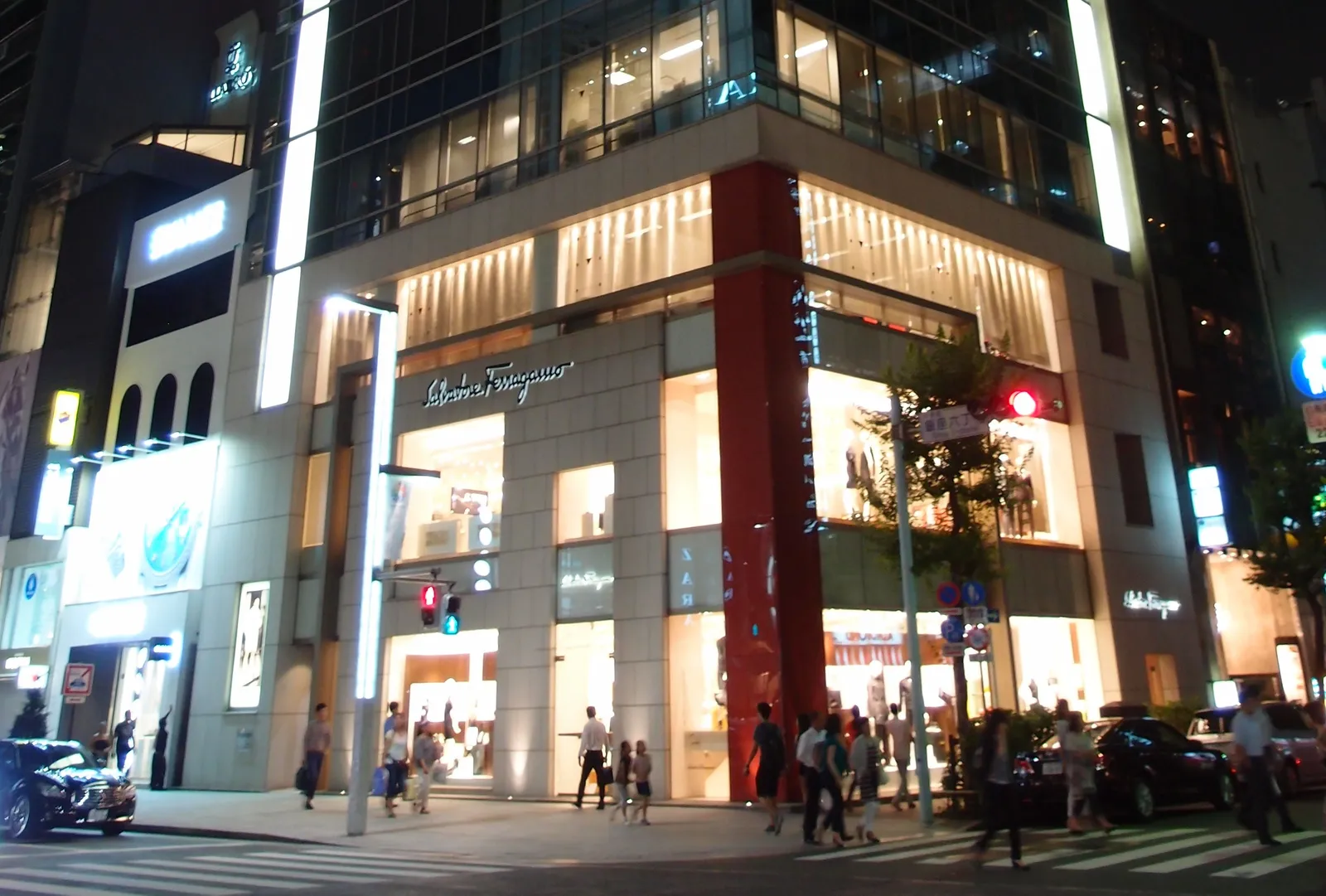
Ferragamo's board reviewed unaudited revenue for the nine months to 30 September on 20 October. Total revenue was €675 million, flat on a year earlier at constant exchange rates and down 2.8 per cent at current rates, from €695 million. The third quarter alone brought €207 million, down 3.5 per cent at constant rates and 6.2 per cent at current rates. As Vogue noted, that followed a return to growth in the second quarter.
The house's own direct-to-consumer business (its stores and e-commerce) is holding up. Direct sales were €537 million over nine months, up 4.0 per cent at constant rates, and flat in the third quarter, supported, the company said, by full-price sales in its main retail channel, with growth in North America and Europe offsetting weak Asian markets. The drag was wholesale: down 13.4 per cent over nine months to €123 million, and down 19.1 per cent at constant rates in the quarter, partly, Ferragamo said, because of a continued focus on "the quality of distribution" and on selected strategic partners. (Quotations from Ferragamo's Italian press release are our translation.)
By region, over nine months at constant rates, North America rose 11.2 per cent and Central and South America 4.8 per cent, while Europe, the Middle East and Africa fell 7.4 per cent, Asia Pacific 5.3 per cent and Japan 2.2 per cent. In the third quarter, Asia Pacific fell 11.1 per cent. The company blamed persistent geopolitical tensions, weak demand over the summer and "a further deterioration of the trend in Asia, in particular in China".

On the analyst call, Vogue reported, executive board member Ernesto Greco said the company was "totally committed to increasing the sales quality in the primary business", and acknowledged the need to turn the critical success of creative director Maximilian Davis's shows into sales. "We are probably on the right track, but still there is room for improvement," he said. According to the same report, Ferragamo will close some stores in smaller, tier-three Chinese cities while reinforcing e-commerce there; over nine months, apparel, silk and footwear grew while leather goods fell 3.5 per cent.
Same strategy, opposite direction
The most striking difference is wholesale. Both houses talk about selective distribution, but they are at different stages. Ferragamo is still shrinking its wholesale business, and the cut is large enough to outweigh steady direct sales. Mulberry is growing wholesale again: franchise and wholesale sales rose 52 per cent on demand in priority markets, and wholesale made up 17 per cent of sales in the period, up from 16 per cent. In the US it also cited the launch of Bloomingdale's Marketplace among its digital gains.
The second difference is China. Ferragamo singles it out as the main weakness. Mulberry does not break China out separately, but its Asia Pacific sales rose 5 per cent (24 per cent like-for-like). The wider sector has been less fortunate: LVMH said on 12 October that its Fashion & Leather Goods division fell 5 per cent organically in the third quarter, which it attributed to Chinese customers (see our analysis of LVMH's quarter).

Read the numbers carefully
These are trading updates, not full results, and they are not directly comparable. Mulberry's period is the 26 weeks to 26 September; Ferragamo's figures are for the quarter and nine months to 30 September. Ferragamo's are unaudited, and Mulberry's full half-year results, with profit figures, are not due until 19 November. Mulberry did not give an absolute sales figure in its update, so we have not compared the size of the two businesses here. Growth rates also start from different bases, so percentages alone say little about scale.
What to watch next
The next read on the sector arrives today: Hermès publishes its third-quarter revenue on 22 October at 8am Paris time (5pm in Melbourne), according to its financial calendar. Then come Mulberry's full first-half results on 19 November. For Ferragamo, the question is whether the wholesale clean-up is nearly done, and whether the gains in North America and Europe can carry the business until China turns.
Featured image: John Samuel, CC BY-SA 4.0, via Wikimedia Commons. Cropped for this page; the cropped version is shared under the same CC BY-SA 4.0 licence.
