
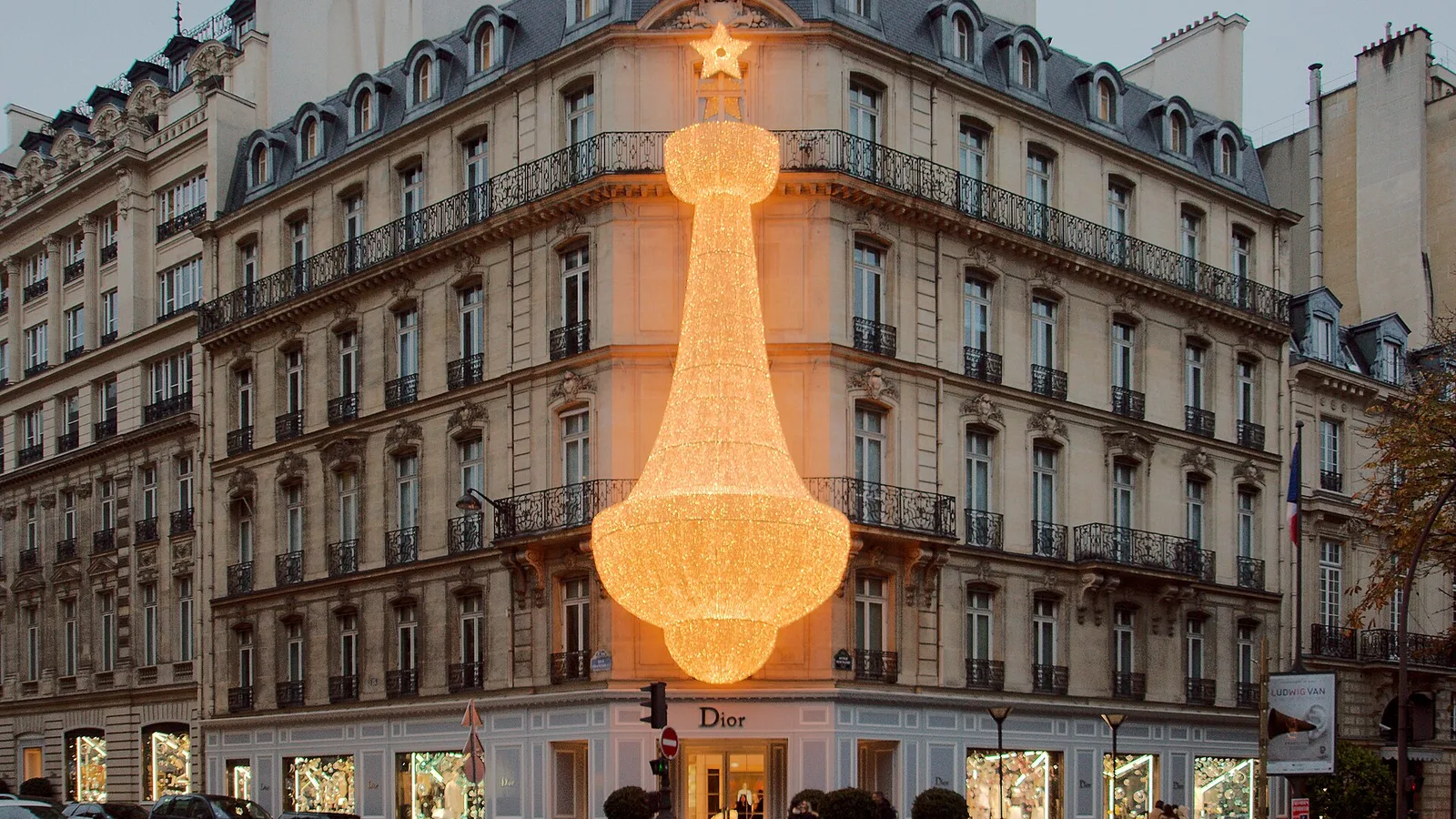
When LVMH reports, the whole luxury industry pays attention. The group owns Louis Vuitton, Dior, Celine, Loewe, Fendi, Loro Piana, Givenchy and dozens of other names, so its quarterly numbers are the closest thing fashion has to a weather report.
On 12 October 2026, LVMH published its third-quarter revenue. The headline was modest growth. The detail was more telling: the division that makes the handbags and ready-to-wear most people associate with luxury went backwards. Here is what the numbers say, in plain English.
LVMH Q3 2026 results at a glance
According to LVMH's release:
- Third-quarter revenue: €18.5 billion, up 1% on an organic basis (that is, excluding currency moves and acquisitions or disposals).
- First nine months: €57.1 billion, up 2% organically, compared with €58.1 billion in the same period of 2025 on a reported basis.
- Fashion & Leather Goods: down 5% organically in the quarter, to €8.2 billion, and down 2% over nine months.
- Watches & Jewellery: up 6% in the quarter.
- Selective Retailing (mainly Sephora): up 8% in the quarter.
- Wines & Spirits: up 6% in the quarter.
In other words, the group grew because beauty retail, jewellery and champagne carried it, while fashion slipped.
Why fashion and leather goods fell
LVMH's own explanation was concise: the division "continued to benefit from the buoyant US market but was affected in the third quarter by the slowdown in demand in China".
WWD added detail from the results webcast. It reported that the 5% decline was worse than the 1.6% fall analysts had expected, and that chief financial officer Cécile Cabanis said demand from Chinese customers was down "in the midteens". WWD also noted that analysts had trimmed forecasts ahead of the results because of "a Chinese tax crackdown on wealthy individuals and the fallout of Louis Vuitton's trademark dispute with Chinese tea chain Molly, which sparked a nationalistic backlash".
Cabanis told analysts and journalists, per WWD: "The news flow has not been particularly good in China in the summer, so this has really weighed on the feelgood factor."
The regional picture
WWD reported the regional split for the quarter:
| Region | Q3 2026 organic change |
|---|---|
| Asia (excluding Japan) | −5% (after +4% in Q2) |
| Japan | +6% (after +14% in Q2) |
| United States | +5% (after +6% in Q2) |
| Europe | +4% (after a flat Q2) |
So the slowdown was concentrated in one region, but it was a big one. LVMH's investor presentation put Asia at roughly 27% of group revenue year to date.
What went right
It would be wrong to read the quarter as a crisis. LVMH's release pointed to several bright spots inside fashion:
- Dior "benefited from the major success of Jonathan Anderson's designs", with demand "especially strong" in ready-to-wear and leather goods. A new House of Dior flagship opened on Via Monte Napoleone in Milan in September.
- Louis Vuitton marked the 130th anniversary of its Monogram with a new Monogram Emblème jacquard, and the release singled out Nicolas Ghesquière's womenswear and Pharrell Williams's menswear.
- Celine under Michael Rider was described as "a major success", as was Fendi's revisited Baguette under Maria Grazia Chiuri.
- Loro Piana "achieved an excellent performance".
Outside fashion, jewellery stood out. Tiffany & Co. and Bvlgari both grew, with Bvlgari's new Eclettica high-jewellery line generating what LVMH called "record-breaking revenue".
You can explore the histories of several of these houses on Casadi: Louis Vuitton, Dior, Celine, Loewe and Fendi.
Portfolio changes: Marc Jacobs leaves the group
The quarter also closed a chapter. LVMH confirmed that "on September 1, Marc Jacobs was sold to WHP Global". The buyers' own announcement describes a 50/50 joint venture between WHP Global and G-III Apparel Group that now owns the brand, with Marc Jacobs staying on as founder and creative director. We explain that deal in full in our Marc Jacobs article.
LVMH also said most of the DFS travel-retail businesses had been sold. Together, these disposals trimmed reported revenue by about 2% in the quarter.
How LVMH compares with Kering
Kering, owner of Gucci, Saint Laurent and Bottega Veneta, has not yet reported its third quarter at the time of writing. Its most recent figures, for the first half of 2026, showed revenue of €7.2 billion, up 1% on a comparable basis, with second-quarter revenue up 2%. Gucci's second-quarter revenue was €1.41 billion, down 2% on a comparable basis, which Kering described as a marked improvement on the first quarter.
The two groups are moving at different speeds for different reasons: LVMH is managing a slowdown from a high base, while Kering is in the middle of a turnaround. Our guide to who owns luxury sets out how the groups compare.
What this means for shoppers
Quarterly results don't change what's in the boutique overnight, but they do signal where houses will put their energy.
1. Expect a sharper focus on icons. When growth slows, houses lean on proven designs. Louis Vuitton's Monogram anniversary and Fendi's Baguette revival are examples already highlighted by LVMH. 2. Watch pricing, not just products. Many analysts have argued that luxury pricing has run ahead of perceived value. Designers have said similar things: former Dior and Fendi designer Kim Jones recently told BoF that luxury pricing "was really getting too expensive". (We cover his new label here.) 3. Resale stays relevant. When new prices climb and demand wobbles, the secondary market becomes a useful reality check. Our look at which handbags hold their value is a good starting point.
What this means for Australia
LVMH does not break out Australian revenue, so we can't say how local boutiques performed. But Australian shoppers buy into the same global price lists, and when a slowdown in one region squeezes margins, pricing decisions tend to be made globally. It's also worth noting that the wider Australian retail climate is difficult, as we explore in our piece on Australian fashion closures.
The outlook
LVMH said it "remains confident" and will keep "continuously enhancing the desirability of its brands". It gave no numerical forecast. The next big moment is the full-year result, usually published in late January.
Frequently asked questions
Did LVMH sales go up or down in Q3 2026?
Up slightly. Group revenue rose 1% organically to €18.5 billion, but the Fashion & Leather Goods division fell 5% organically.
Why are luxury sales slowing in China?
LVMH cited a "less buoyant environment in China". WWD reported that analysts pointed to a tax crackdown on wealthy individuals and a nationalist backlash linked to a Louis Vuitton trademark dispute.
Which LVMH brands did well?
LVMH highlighted Dior under Jonathan Anderson, Celine under Michael Rider, Loro Piana, Fendi's Baguette, Tiffany & Co. and Bvlgari.
Does LVMH still own Marc Jacobs?
No. The sale to a WHP Global and G-III joint venture closed on 1 September 2026.
Where can I compare LVMH's houses?
Use Casadi's brand comparison tool to set houses side by side.
Featured image: Frédéric BISSON, CC BY 2.0, via Wikimedia Commons. Cropped for this page.
