
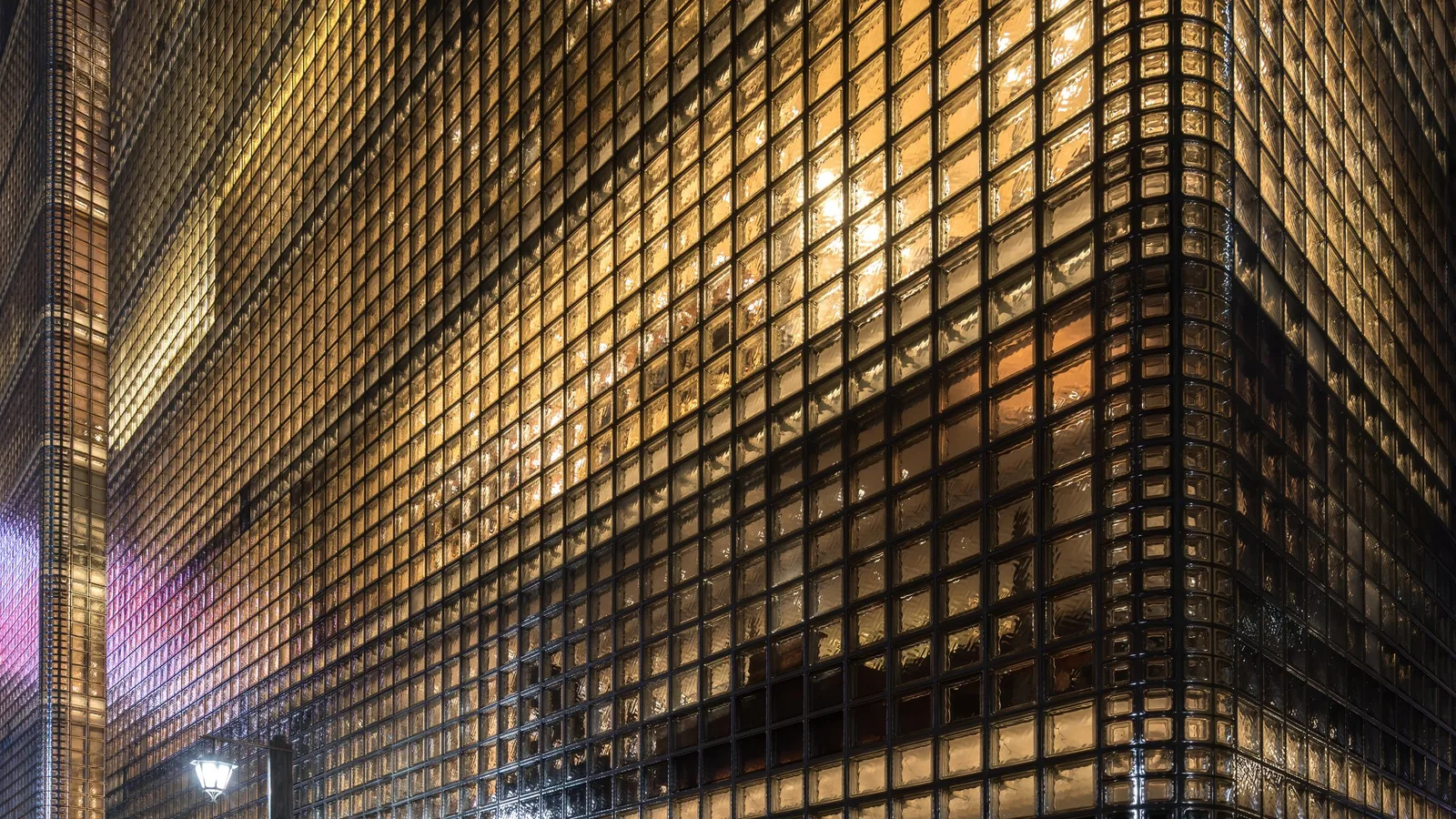
For most of the luxury downturn, Hermès has been the exception that proved the rule: the house whose clients kept buying while everyone else's hesitated. Its third-quarter figures, published in Paris on Thursday 22 October, show that the exception still holds where it matters most, in leather goods, but that it is fraying at the edges.
Revenue for the three months to 30 September was €4,096 million, up 4.3 per cent at constant exchange rates and 5.5 per cent at current rates. Analysts polled by Visible Alpha had expected 5.2 per cent, Reuters reported, and the quarter was the house's weakest since early 2020, when the pandemic closed its boutiques. Vogue noted the slowdown from 6.7 per cent in the second quarter. The shares fell on the day; Reuters said they were already down 36 per cent since the start of the year.
The numbers
Over nine months Hermès sold €12,260 million, up 5.5 per cent at constant rates and 2.9 per cent at current rates. The company put the currency drag at about €310 million.
| Hermès, third quarter 2026 | Revenue | Change at constant rates |
|---|---|---|
| Group | €4,096m | +4.3% |
| Leather Goods and Saddlery | €1,912m | +10.8% |
| Ready-to-wear and Accessories | €1,141m | −2.0% |
| Other Hermès sectors (jewellery, home) | €486m | −1.1% |
| Silk and Textiles | €214m | +1.4% |
| Perfume and Beauty | €128m | +7.5% |
| Watches | €125m | −6.0% |
Source: Hermès quarterly information report, 22 October 2026.
Two businesses moving in opposite directions
The headline masks a split. Leather Goods and Saddlery, home of the Birkin and the Kelly, grew 10.8 per cent, slightly faster than earlier in the year. Hermès credited "strong desirability of both new models and iconic pieces", naming the new Double Longe, Besace Attelée and Bride de Jour bags. Jefferies analysts led by James Grzinic summed it up in a note quoted by Vogue: "Leather has reaccelerated to almost 11%, but the lag in other categories has also worsened to unprecedented levels."
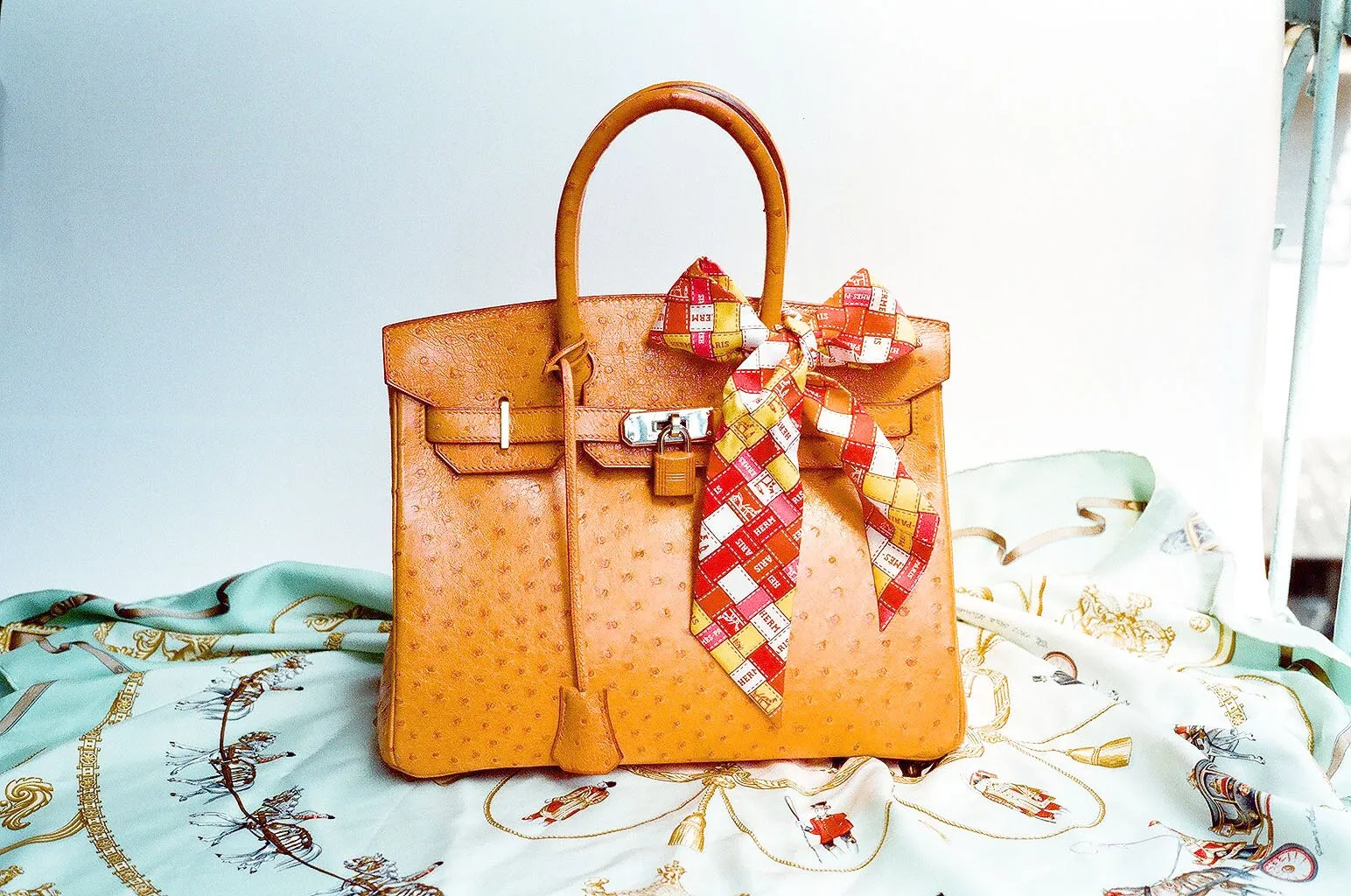

Ready-to-wear and Accessories, which Reuters says accounts for more than a quarter of quarterly sales, went the other way, down 2 per cent: the first decline in years. Finance chief Éric du Halgouët told journalists the drop was chiefly due to weak Chinese demand for high-volume accessories, while the division kept growing in every other region, and that ready-to-wear on its own was up, even including China. Those accessories (belts, gloves, hair clips and the like) matter more than their price suggests: as Reuters points out, they are often a first purchase for newer clients. "It was primarily high-volume categories such as fashion accessories, footwear and watches that suffered in Q3, due to a decline in traffic," du Halgouët said on the analyst call, according to Vogue.
That pattern, with the most expensive and most exclusive products holding up while entry-level ones soften, is the same split we described in our look at LVMH's third quarter. Hermès simply starts from a far stronger position.
China flattens; America and Japan carry the quarter
By region, at constant rates, the third quarter looked like this: the Americas up 8.8 per cent, Japan up 9.6 per cent, Europe outside France up 9.5 per cent, France up 3.6 per cent, Asia-Pacific excluding Japan flat at 0.0 per cent, and the Other area, mainly the Middle East, down 4.5 per cent.
"Until June, we were seeing slight growth in Greater China," du Halgouët said, according to Vogue; the market is now "broadly flat". He called China, the house's largest market, "very difficult", Reuters reported, while adding: "As of the end of September, activity admittedly softened slightly in the third quarter, but it remains stable, which is still a significant feat in this very difficult market." Hermès says it will keep investing there. This year it opened a new store in Sanlitun, Beijing, and reopened enlarged stores at Elements in Hong Kong, Sogo Fuxing in Taipei, Kaohsiung and Taikoo Li in Chengdu.
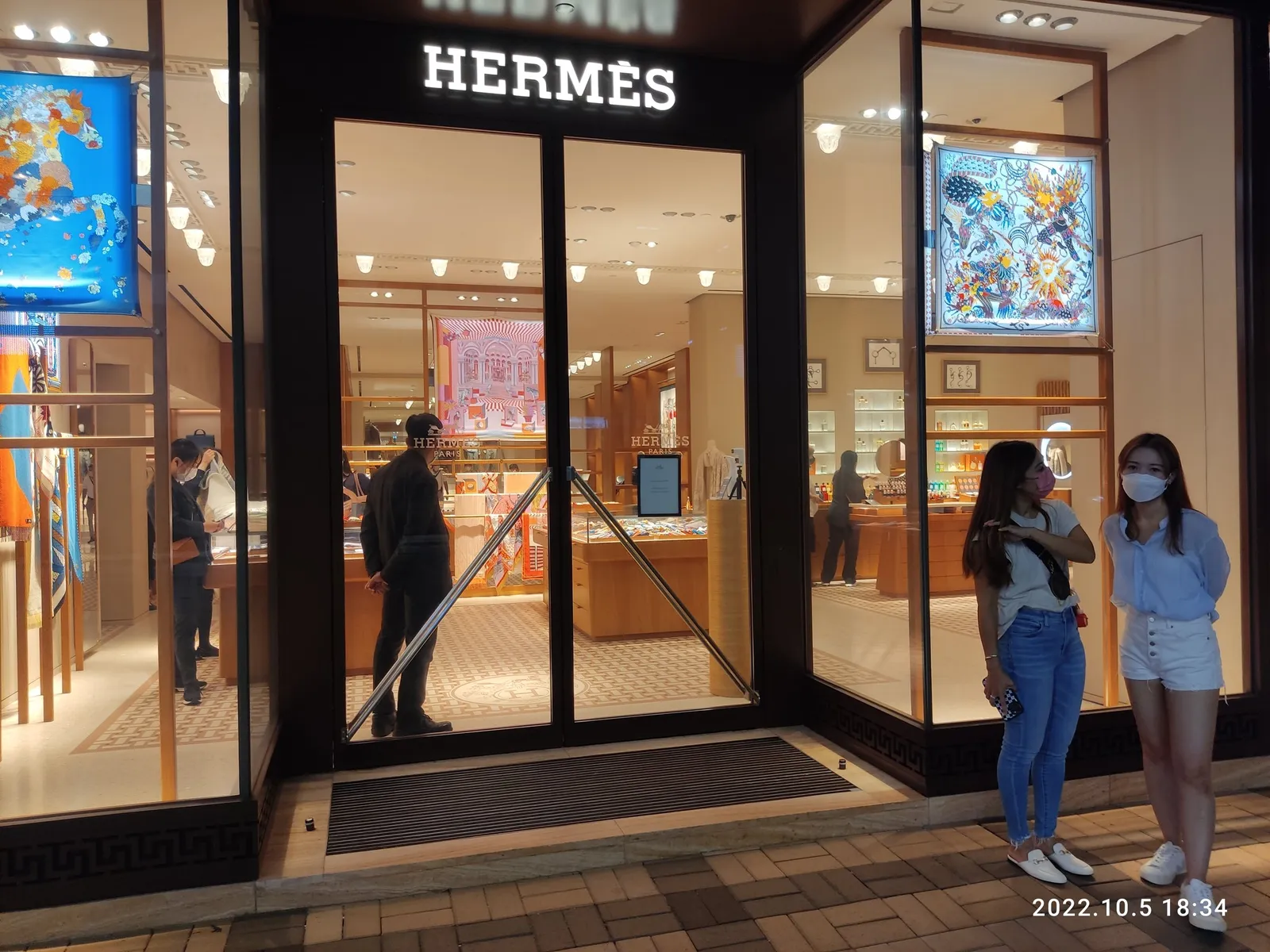

The United States is the counterweight. Du Halgouët said growth there came from every location and every product category, Reuters reported, and the house has been opening beyond the big coastal cities: a new store at Plaza del Lago outside Chicago in August and in Williamsburg, Brooklyn, in September, after an enlarged San Diego store reopened in July. Japan, where the house praised "the loyalty of its local customer base", grew strongly in local terms, although the weak yen meant Japanese revenue rose only 3.4 per cent once converted into euros.
In Europe, Vogue reported, Italy, the UK, Spain and several smaller markets grew by double digits, and the new Maison at 166 New Bond Street in London, opened on 16 June, beat expectations. France slowed to 3.6 per cent from 6.2 per cent in the second quarter, which du Halgouët put down to the summer heatwave keeping shoppers out of the Paris stores. In the Middle East, where the house has six stores, traffic fell by roughly a quarter.

Is the Birkin still the Birkin?
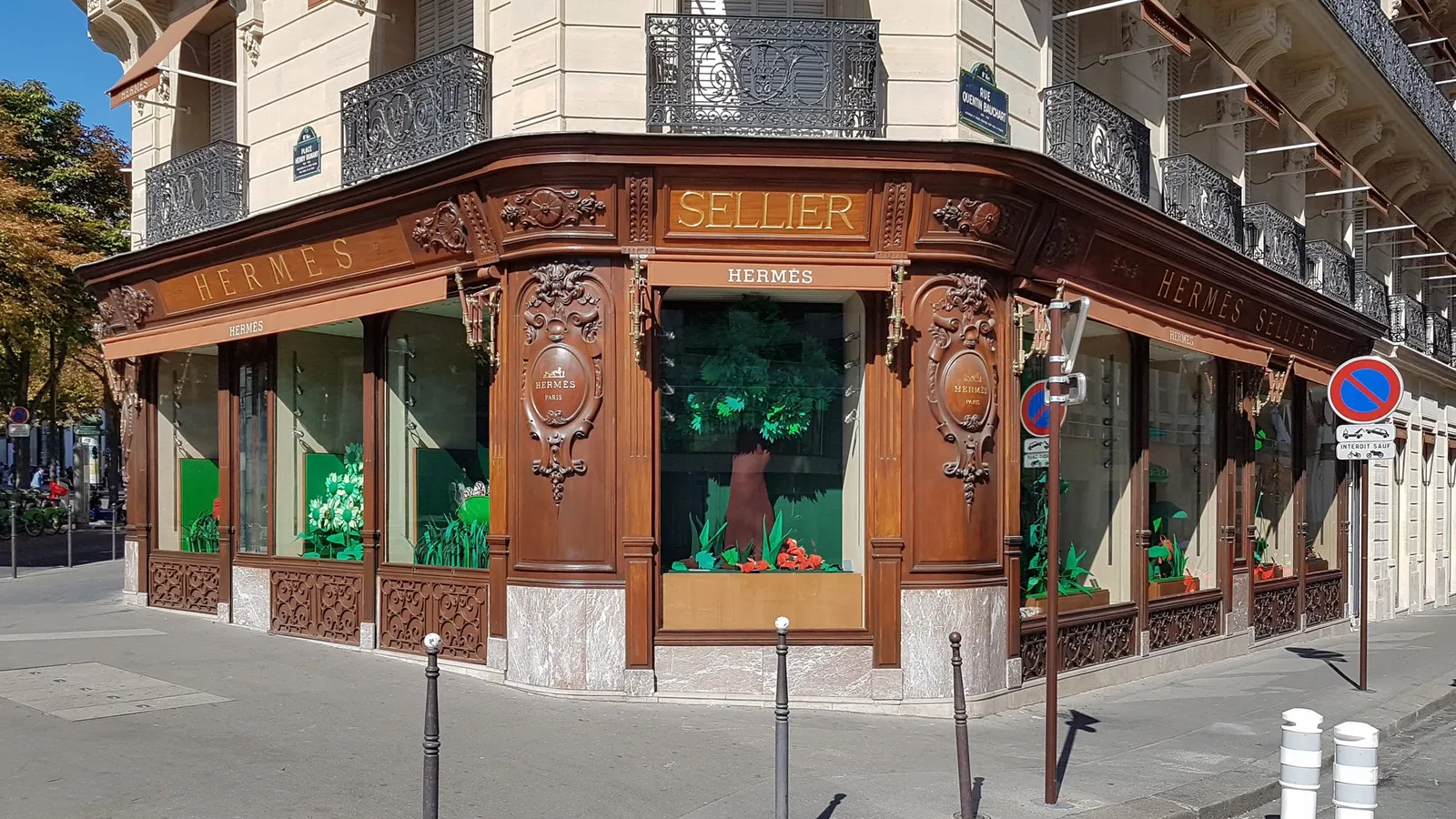
Reuters raised the question the market is really asking. Several resellers told the agency that Birkins have become easier to find on the second-hand market, which would test a business built on scarcity (we looked at what this year's auction results say in our Birkin price explainer). Du Halgouët's answer was that the bag's desirability remains "intact", and that Hermès will keep raising overall production by around 6 per cent a year.
The investment in capacity continues regardless. A 25th leather-goods workshop opened at Loupes, in the Gironde, in April, and three more are planned: Charleville-Mézières by 2027, Colombelles by 2028 and Les Andelys by 2030. Over nine months the company also bought back 94,846 of its own shares for €160 million.
The creative calendar
Executive chairman Axel Dumas chose to end on design rather than demand. "Despite a complex environment, Hermès continues its profitable growth and maintains its course," he said. "It is with great enthusiasm that we prepare for a new year rich in creation, with the first men's ready-to-wear collection signed by Grace Wales Bonner and the introduction of Couture by Nadège Vanhée next January."
Both moves land in the very category that softened this quarter. Grace Wales Bonner was named creative director of men's ready-to-wear in October 2025, succeeding Véronique Nichanian after 37 years, and will show her first collection in January 2027. Nadège Vanhée, who designs the women's collections, will introduce couture the same month; the house has not yet said more about what that will involve.
What to watch
These are revenue figures only: Hermès reports full-year results, with profits, on 12 February 2027. In the meantime, du Halgouët said he did not expect regional trends to change in the fourth quarter, though it was too early to judge whether recent unrest in France, in which the Marseille store was looted, would affect tourism. Richemont, which owns Cartier and Van Cleef & Arpels, reports on 13 November. The question for all of them is the one Hermès has now put on the table: how long the most exclusive products can carry the rest.
Featured image: Basile Morin, CC BY-SA 4.0, via Wikimedia Commons. Cropped for this page; the cropped version is shared under the same CC BY-SA 4.0 licence.
