
Paris house founded as a harness workshop by Thierry Hermès in 1837, known for the Kelly and Birkin bags and the silk carré. Listed in Paris and still controlled by the founder's descendants.
24 rue du Faubourg Saint-Honoré, Paris, France
Hermès
Founded 1837 · Paris, France
Overview
History
Hermès began in 1837, when Thierry Hermès, a harness-maker born in Krefeld, opened a workshop in Paris making bridles and harnesses for the carriages of the city's gentry. The quality of his saddle stitch, worked by hand with two needles, won medals at the Expositions Universelles, and the house's horse-and-carriage emblem still recalls that first trade.
His son Charles-Émile moved the business in 1880 to 24 rue du Faubourg Saint-Honoré, where it remains, and began selling saddles directly to customers. The third generation, Émile-Maurice Hermès, saw that the motor car would end the carriage trade and turned the workshops to luggage, bags and accessories. On a trip to North America he discovered the zip fastener and secured rights to use it on leather goods in France. Under his direction the house introduced the sac à dépêches in 1935 and, in 1937, the first silk square, or carré, printed from woodblocks.
Émile-Maurice's sons-in-law, among them Robert Dumas, carried the house through the middle of the century. Dumas's small strapped bag became famous in the 1950s when Grace Kelly, by then Princess of Monaco, was photographed holding it, and the bag took her name. The orange box and the bolduc ribbon became house signatures in the same post-war years.
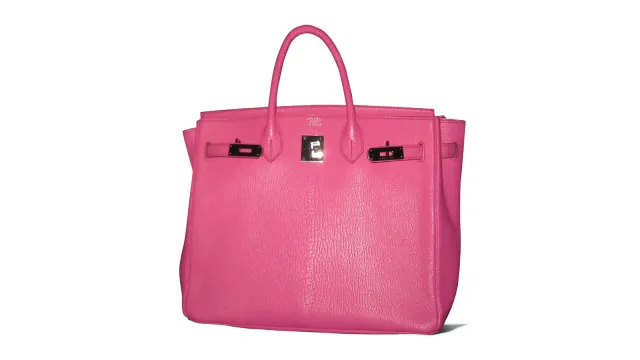
Robert's son Jean-Louis Dumas took charge in 1978 and transformed a respected saddler into a global luxury house. He broadened the offer into watches, tableware and ready-to-wear, opened stores around the world and, after a chance conversation with Jane Birkin on a flight from Paris to London in 1984, designed the bag that bears her name. Hermès listed on the Paris stock exchange in 1993. Dumas also hired designers of real distinction: Martin Margiela for women's ready-to-wear in 1997, followed by Jean Paul Gaultier in 2003, Christophe Lemaire in 2010 and Nadège Vanhée in 2014. Véronique Nichanian, appointed in 1988, led men's ready-to-wear for almost four decades.
In 2010 LVMH revealed it had quietly built a large stake in the company. The family responded by pooling its shares in a holding company, H51, and after a long legal and regulatory fight LVMH distributed its shares in 2014. Axel Dumas, of the sixth generation, became chief executive in 2013, and his cousin Pierre-Alexis Dumas has been artistic director since 2005.
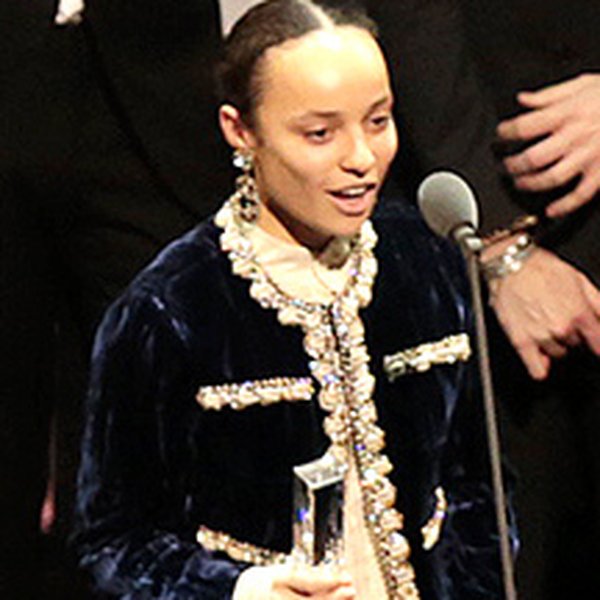
The house continues to make most of its leather goods by hand in French workshops, with each bag usually assembled by a single artisan, and it opens new workshops in France almost every year. In October 2025 it named the British designer Grace Wales Bonner to succeed Nichanian in men's ready-to-wear. Revenue in 2025 was a little over €16 billion, built on scarcity, craft and the patience of its clients.
Creative director of Hermès
Grace Wales Bonner (Creative director, men's ready-to-wear, since Oct 2025 (announced)), Nadège Vanhée (Creative director, women's ready-to-wear, since 2014), Pierre-Alexis Dumas (Artistic director, since 2005) and Pierre Hardy (Creative director, shoes (and fine jewellery from 2001), since 1990).
Before: Véronique Nichanian (1988–2026); Christophe Lemaire (2010–2014); Jean Paul Gaultier (2003–2010); Jean-Louis Dumas (1978–2006).
Creative direction
- Lola PrusacDesigner, womenswear1926–1935
Early Hermès sportswear and knitwear
- Robert DumasHead of house and designer1951–1978
Sac à dépêches, later the Kelly, Silk carrés design programme, Chaîne d'ancre motif
- Catherine de KárolyiDesigner, womenswear1967–1980
- Jean-Louis DumasChairman and artistic director1978–2006
Birkin bag (1984), Expansion into watches, tableware and ready-to-wear
- Véronique NichanianArtistic director, men's ready-to-wear1988–2026
Hermès menswear in soft leathers and precise tailoring
- Pierre HardyCreative director, shoes (and fine jewellery from 2001)1990–present
Oran sandal (attributed in press), Hermès fine jewellery
- Martin MargielaDesigner, women's ready-to-wear1997–2003
Losange (diamond-shaped) scarf, Double-face cashmere coats

Equestrian-inspired womenswear
- Pierre-Alexis DumasArtistic director2005–present
- Christophe LemaireCreative director, women's ready-to-wear2010–2014
Pared-back, functional womenswear
- Nadège VanhéeCreative director, women's ready-to-wear2014–present
Leather-led womenswear


Products
- 'Mallette', ca. 1950ca. 1950 · bags
- Apple Watch Hermès2015 · accessories
- Belt, ca. 1945ca. 1945 · accessories
- Birkin1984 · bags
- Bolide1923 · bags
- Carré silk scarf1937 · accessories
- Chaîne d’ancre bracelet1938 · jewellery
- Collier de Chien1927 · accessories
- Constance1959 · bags
- Eau d’Hermès1951 · fragrance
- Enamel bangle1976 · jewellery
- Ermeto watch1928 · accessories
- Evelyne1978 · bags
- H bracelet (Clic H / Clic Clac H)2000 · jewellery
- Haut à Courroies1900s · bags
- Herbag Zip2009 · bags
- Kelly bag (Sac à dépêches)1935 · bags
- Lindy2006 · Spring/Summer 2007 · bags
- Necktie, 19841984 · accessories
- Necktie, 19851985 · accessories
- Oran sandal1997 · Spring/Summer 1997 · shoes
- Picotin Lock2002 · bags
- Purse, 19531953 · bags
- Scarf, 19401940 · accessories
- Scarf, 1950s1950s · accessories
- Scarf, 1950s1950s · accessories
- Terre d’Hermès2006 · fragrance
- Vest, 19851985 · ready-to-wear
Authentication
Events
No. 01Stores
300 stores
View all 300 stores- United States41
- Japan39
- China36
- France26
- South Korea18
- Italy12
- Germany10
- United Kingdom10
- Switzerland9
- Taiwan8
- Australia7
- Hong Kong6
- Mexico6
- Singapore6
- Canada5
- Thailand5
- United Arab Emirates5
- Macau4
- Spain4
- Turkey4
- Austria3
- Brazil3
- Netherlands3
- Qatar3
- Belgium2
- India2
- Indonesia2
- Malaysia2
- Argentina1
- Bahrain1
- Chile1
- Czechia1
- Denmark1
- Greece1
- Ireland1
- Kazakhstan1
- Kuwait1
- Lebanon1
- Luxembourg1
- Monaco1
- Norway1
- Panama1
- Philippines1
- Poland1
- Portugal1
- Saudi Arabia1
- Sweden1
Top cities for Hermès
Luxury boutiques by country: United States, Japan, China, France, South Korea, Italy, Germany, United Kingdom, Switzerland, Taiwan, Australia, Hong Kong
Latest from the Journal
Recent stories that mention Hermès.
 Sustainability · Feathers Next: LuxExperience Bans Ostrich Plumes Across Mytheresa, Net-a-Porter, Mr Porter and Yoox
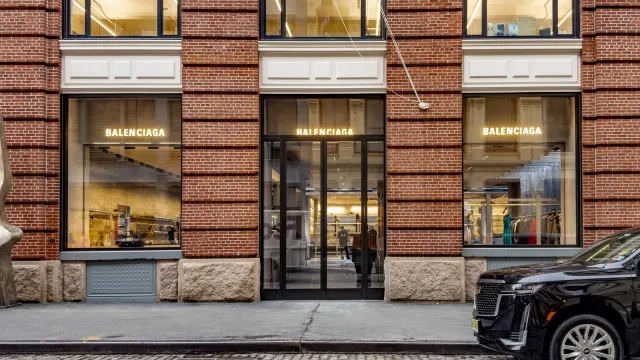 Designers · Martine Rose at Balenciaga: The London Designer Who Helped Build the Demna Look Returns to Lead the House
 Industry · Coach, Polo and the American Advantage: Tapestry and Ralph Lauren Raise Their Sights as Capri Rebuilds
 Market · The RealReal's Record Quarter, and a Resale Market Changing Shape