Robert Dumas was born in 1898 and became, by marriage, part of the third generation of the Hermès family. He married Jacqueline Hermès, one of the four daughters of Émile Hermès, who had led the Paris saddlery house through the interwar years. Émile had no sons, so the business passed to his sons-in-law, and Dumas worked alongside his father-in-law for decades before succeeding him as head of the company in 1951.
He was an exceptional designer as well as a manager. The house credits him with many of its most enduring objects. In 1937 he created the first Hermès silk square, Jeu des Omnibus et Dames Blanches, a printed scarf based on a parlour game. It established the carré, made from silk twill to the house's own standards, as one of Hermès's defining products, and Dumas went on to design many more. He also created the Chaîne d'ancre bracelet, inspired by the anchor chains of boats he watched moored on the Normandy coast, which remains a house classic in silver.
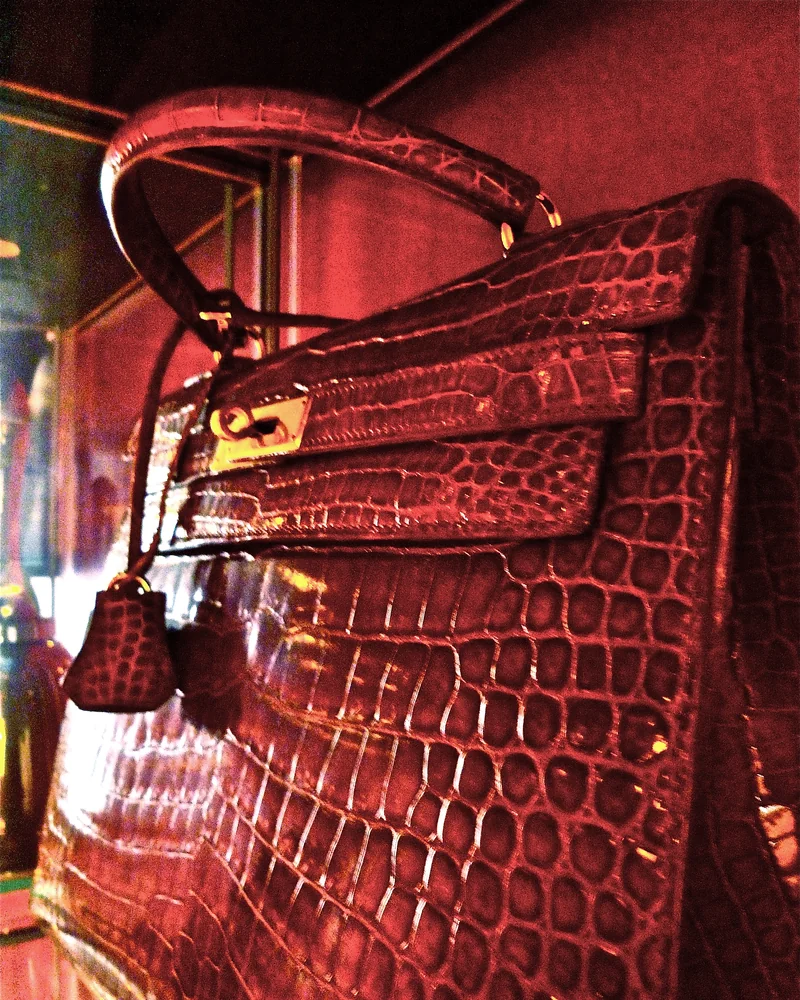
In the 1930s he designed a structured leather handbag with a trapezoid shape and a flap closed by a strap and turn-lock. Its moment came in 1956, when a photograph of Grace Kelly, by then Princess of Monaco, holding the bag was published around the world. Hermès renamed it the Kelly in her honour, and it remains one of the most sought-after handbags in the world.
Dumas led Hermès through the postwar decades, a period when the house moved beyond the equestrian world into silk, ties, women's ready-to-wear and accessories. Hermès began making ties in 1949 after gentlemen refused entry to the Cannes casino without one came looking for them in its nearby shop, and in 1967 it entrusted its first women's ready-to-wear collections to Catherine Karolyi. Robert Dumas died in 1978, and his son Jean-Louis Dumas succeeded him, going on to turn Hermès into a global house. The family still controls the company: Robert's grandson Pierre-Alexis Dumas is its artistic director and Axel Dumas its executive chairman.