
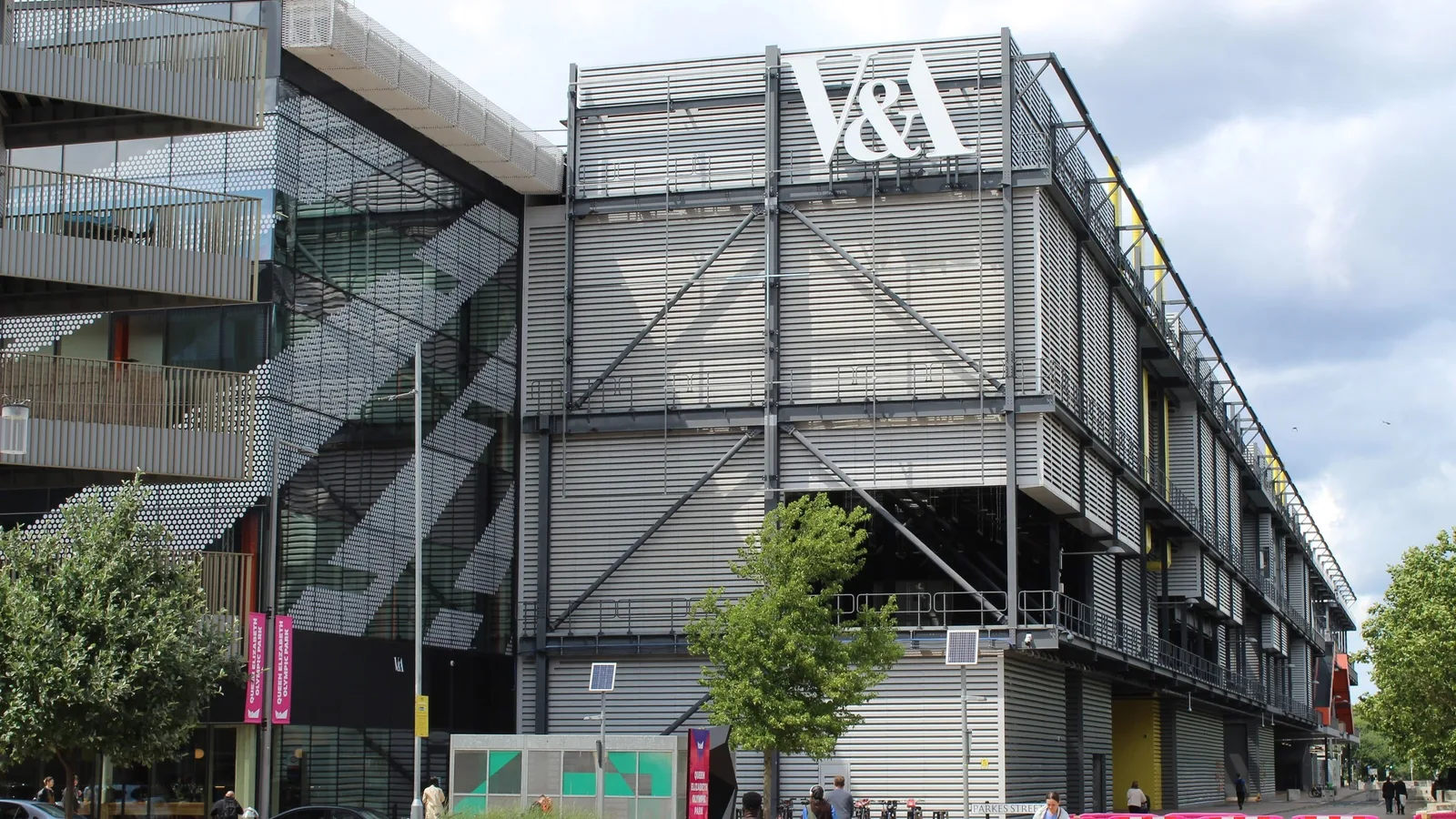
Most fashion exhibitions are about designers. The new season at V&A East is about wearers. The Stories of Clothes, which opened on 14 November across the Victoria and Albert Museum's two sites in Queen Elizabeth Olympic Park, sets out to show how clothes carry stories about who we are, where we come from and the groups we belong to. It has a star object, the silk cloak Kansai Yamamoto made for David Bowie as Ziggy Stardust in 1973, but much of the season's strength lies in the smaller things around it: a darned sampler, a football fan's choice of label, an embroidered bag made to carry mosquito-repelling herbs.
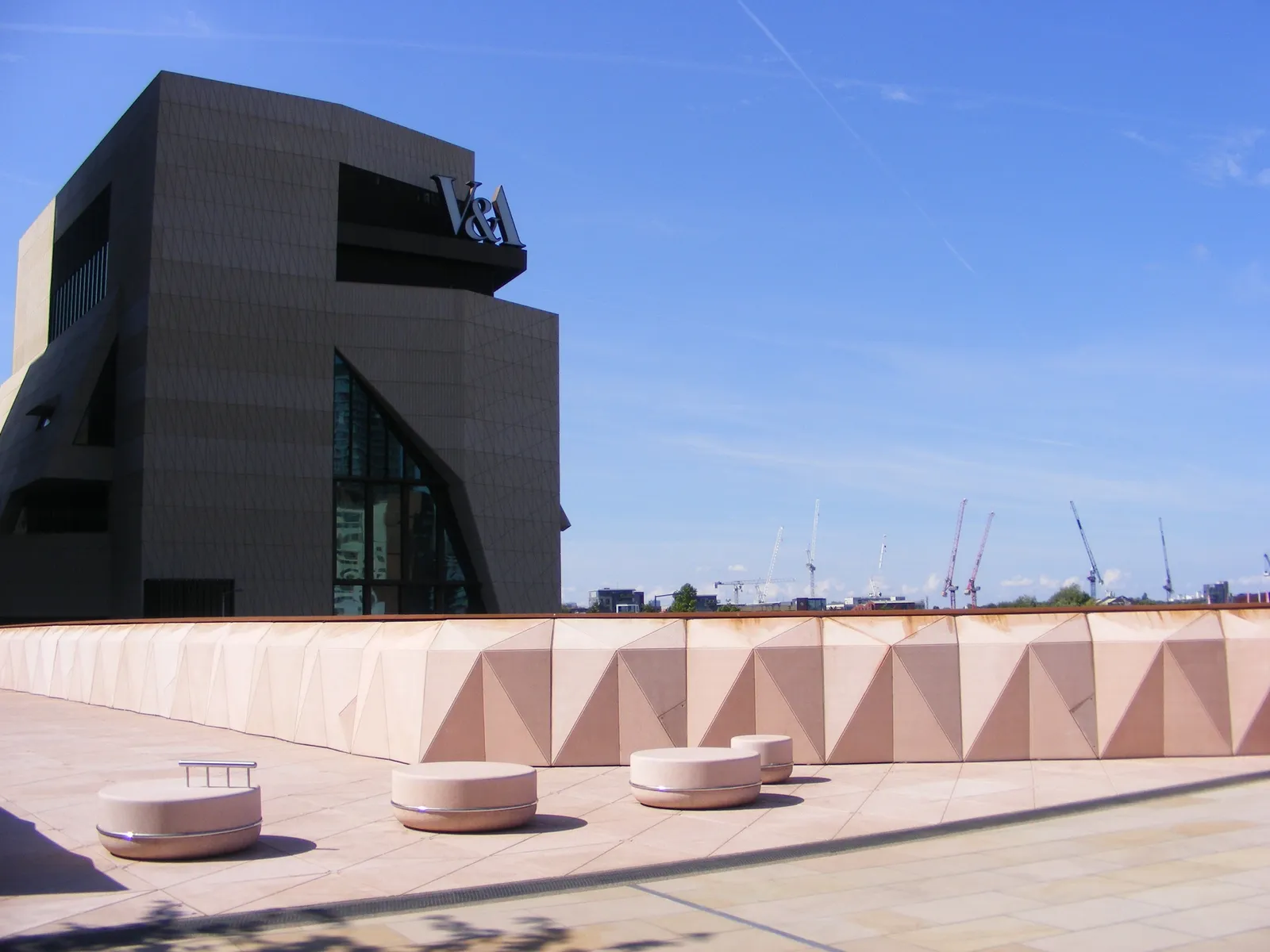
It is free, it runs until June 2027, and it is spread across V&A East Storehouse in Hackney Wick, the museum's open collection store, and V&A East Museum in Stratford, which opened in April.
The key facts
- What: The Stories of Clothes, a season of new commissions, displays, film, installations and events
- Where: V&A East Storehouse and V&A East Museum, Queen Elizabeth Olympic Park, London
- When: from 14 November 2026 until June 2027; the six commissions close on 20 June 2027
- Highlights: Bowie's 1973 Kansai Yamamoto cloak, Terrace Style: A Casual Revolution, Vietnamese Embroidery, and new work by Zadie Xa, Alia Ali and R.I.P. Germain
- Price: free
Bowie, Kansai and kabuki
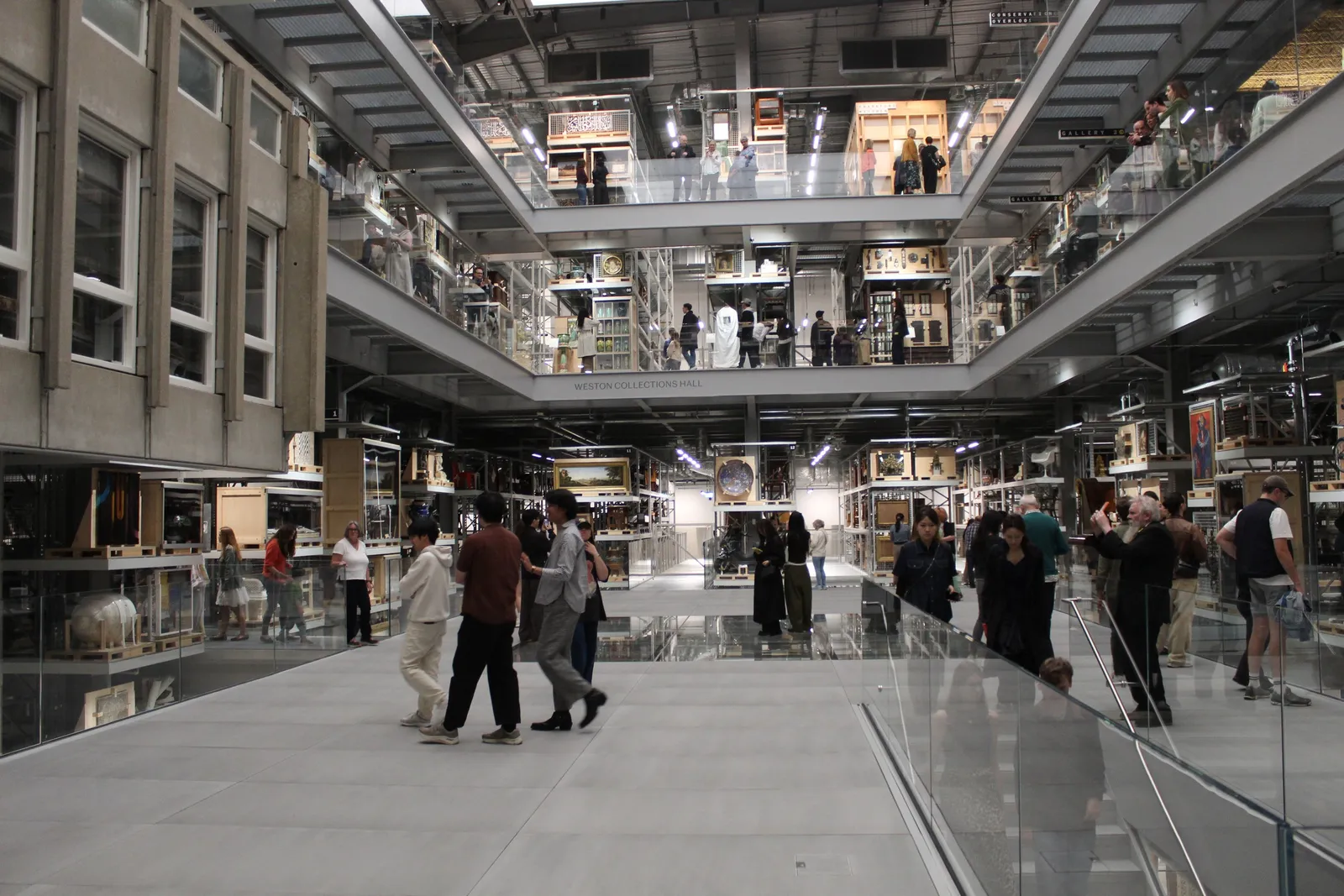
The display everyone will come for is called 'Like some cat from Japan', a line from Bowie's song "Ziggy Stardust". It explores Bowie's fascination with Japanese fashion and kabuki theatre, and it is in the same building as the David Bowie Centre, which opened at the Storehouse in September 2025 as the permanent home of his archive of more than 90,000 items.
At its centre is the cloak. The V&A's catalogue describes a very large, floor-length white silk cloak, more than three metres wide, sewn in triangular panels that radiate from a high collar, lined in red silk and embroidered in black and red with Japanese characters in nine places. According to the museum, Yamamoto gave it to Bowie on his visit to Japan in April 1973, and the characters spell out "Bowie" phonetically, although Bowie was allegedly unaware of this at the time. The display text, by the V&A's David Bowie research fellow Dr Claire Watt, notes that Lady Gaga wore a replica in 2016, a measure of how far the design has travelled.

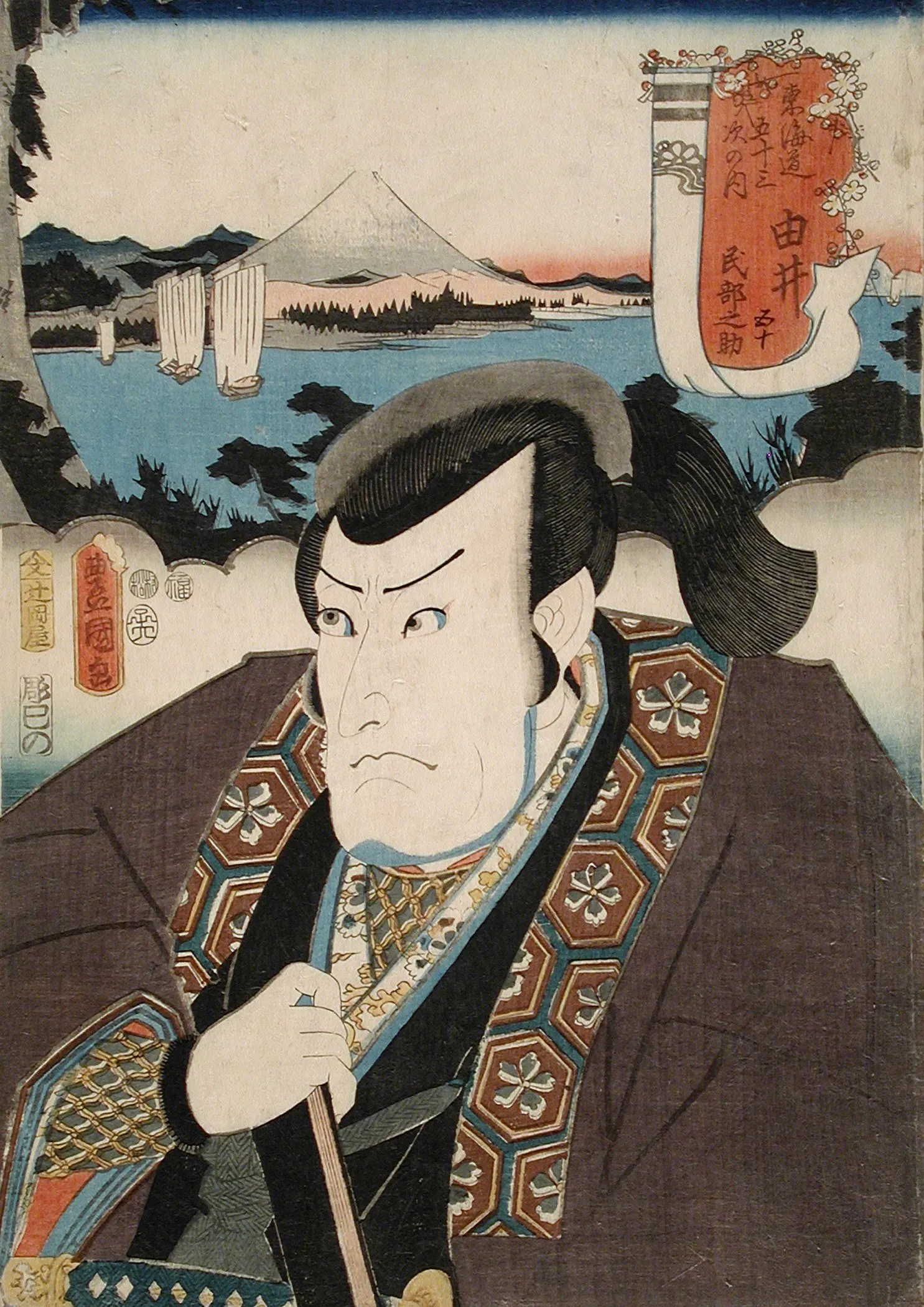
The cloak is shown with Masayoshi Sukita's 1973 photograph of Bowie in Yamamoto's "Tokyo Pop" vinyl jumpsuit and an 1833 woodblock print by Utagawa Kuniyoshi of the kabuki actor Ichikawa Danzō V. That pairing makes the argument of the display. Yamamoto, the V&A notes, was the first Japanese fashion designer to hold a show in London, in 1971, with a presentation that drew on kabuki's use of flamboyant colour and form. Bowie later said that the Ziggy hairstyle "was taken lock, stock and barrel from a Kansai display in Harpers", referring to the magazine's coverage of that show. The most famous look of glam rock, in other words, came out of a conversation with a theatrical tradition more than four centuries old.

Thirteen small shows
The Storehouse has 13 new mini displays, each built from the V&A's collections, and several are among the most rewarding things in the season.
Terrace Style: A Casual Revolution charts how football fans in the late 1970s and 1980s became fashion pioneers, swapping club colours for sportswear and designer labels, including Burberry, Fred Perry and Stone Island, to create a style that, the V&A says, still shapes menswear today. It is a useful corrective to the idea that menswear trends flow only from the runway down.
Vietnamese Embroidery traces a textile heritage the museum describes as often forgotten, from an early twentieth-century embroidered bag made to carry mosquito-repelling herbs to a recent silk jacket by Victoria Roe inspired by royal embroidery traditions. The V&A is running workshops on these techniques with Vietnamese communities in Hackney.
Other displays are quieter. Repair as resistance, written by the Storehouse's floor assistants, starts from the observation that "for as long as we have been wearing clothes, we have been mending them", and includes a sampler worked by Rachel Littleboy in England in 1798, a Sudanese jibba from 1870 to 1890 and a pair of German boots from the 1980s. Weaving place and memory tells the story of Angus McPhee, a folk artist from the Outer Hebrides who wove clothing from local grasses, and of the textile artist Joanne B Kaar, who reinterpreted his designs for the stage using grasses from her home in Orkney.
Six new commissions
The season is also the second edition of New Work, V&A East's rotating programme of commissions. At the Museum, the Los Angeles-based artist R.I.P. Germain shows wheeloffortune, a film installation about how clothing shapes the way people are seen. Zadie Xa's Amulets takes its cue from a nineteenth-century Daoist priest's robe in the Museum's Why We Make gallery, with seven suspended garments that gradually enlarge and shift in form. Alia Ali's Portable Sanctuaries presents three pieces made with materials and craft from across the Indian Ocean, including an indigo-dyed gown inspired by a Yemeni judge's robe, a felted shepherd's kepenek and a shield adorned with talismanic objects. East London Textile Arts, based in Newham, has made What We Love and What We Fear, a large textile installation drawing on the stories of 90 East Londoners.

At the Storehouse, two commissions come from this year's Design Trust Fellows, supported by Design Trust Hong Kong. The industrial design duo Jeon Huxley Khng explores the design history of garment fasteners, from buttons to zips, in Motions and Notions of Fastening. Sian Fan's The Body is a Relic (how the light gets in) draws on her Hakka Chinese and British heritage in a family of life-sized, lantern-like sculptures draped in tapestries inspired by the V&A's Hakka collections.
Two further displays at the Museum, in its rotating X Selects series, respond to the season. The creative research studio Colèchi has chosen objects ranging from a sequinned Anya Hindmarch handbag of 2000 inspired by Walkers Crisps to a handwoven Kuba cloth from the Democratic Republic of the Congo, to ask how fashion could become more ecologically and socially responsible. R.I.P. Germain's selection follows clothing as self-expression, from 1980s hip-hop streetwear to collaborations such as LL Cool J and TROOP, and Supreme and Louis Vuitton.
"Clothing is one of the most universal forms of making and carries a range of important stories within its threads," said Brendan Cormier, chief curator of V&A East.
Our view
Fashion's big museum exhibitions tend to be monographs: one designer, one house, one glamorous career. The Stories of Clothes does something harder to market and arguably more useful. It treats dress as social history, and it puts a Bowie stage costume, a mended boot and a terrace casual's jacket label on the same footing, as evidence of how people use clothes to say who they are.
The format suits the place. The Storehouse is a working store rather than a gallery, and small displays dropped among its racks feel like discoveries rather than set pieces. Not every one will hold a visitor for long, and the season is diffuse by design: seeing all of it means crossing the park between two buildings. But for a museum that holds one of the world's great dress collections, the decision to tell its stories through wearers, fans and makers as well as designers is the right one, and the cloak alone is worth the trip.
For more fashion on display, see our coverage of New York Fashion at PS1 and our review of Look: 40 Years of Fashion at the Musée des Arts Décoratifs, and our guide to the V&A.
Frequently asked questions
What is The Stories of Clothes?
A season at V&A East in London that uses clothing to explore identity, craft and belonging. It includes six new commissions, 13 mini displays drawn from the V&A's collections, film, installations and events.
Where and when is it on?
At V&A East Storehouse in Hackney Wick and V&A East Museum in Stratford, both in Queen Elizabeth Olympic Park. It opened on 14 November 2026 and runs until June 2027; the commissions close on 20 June 2027.
Is it free?
Yes. Admission to both V&A East sites and to the season is free.
Is David Bowie's Ziggy Stardust cloak on display?
Yes. The white silk cloak Kansai Yamamoto made for Bowie in 1973 is shown at V&A East Storehouse in the display 'Like some cat from Japan', with a 1973 photograph of Bowie by Masayoshi Sukita and an 1833 kabuki print by Utagawa Kuniyoshi.
What is Terrace Style?
A display charting how football fans in the late 1970s and 1980s swapped club colours for sportswear and designer labels such as Burberry, Fred Perry and Stone Island, creating a style that still influences menswear.
Featured image: 14GTR, CC0 1.0, via Wikimedia Commons. Cropped for this page.
