
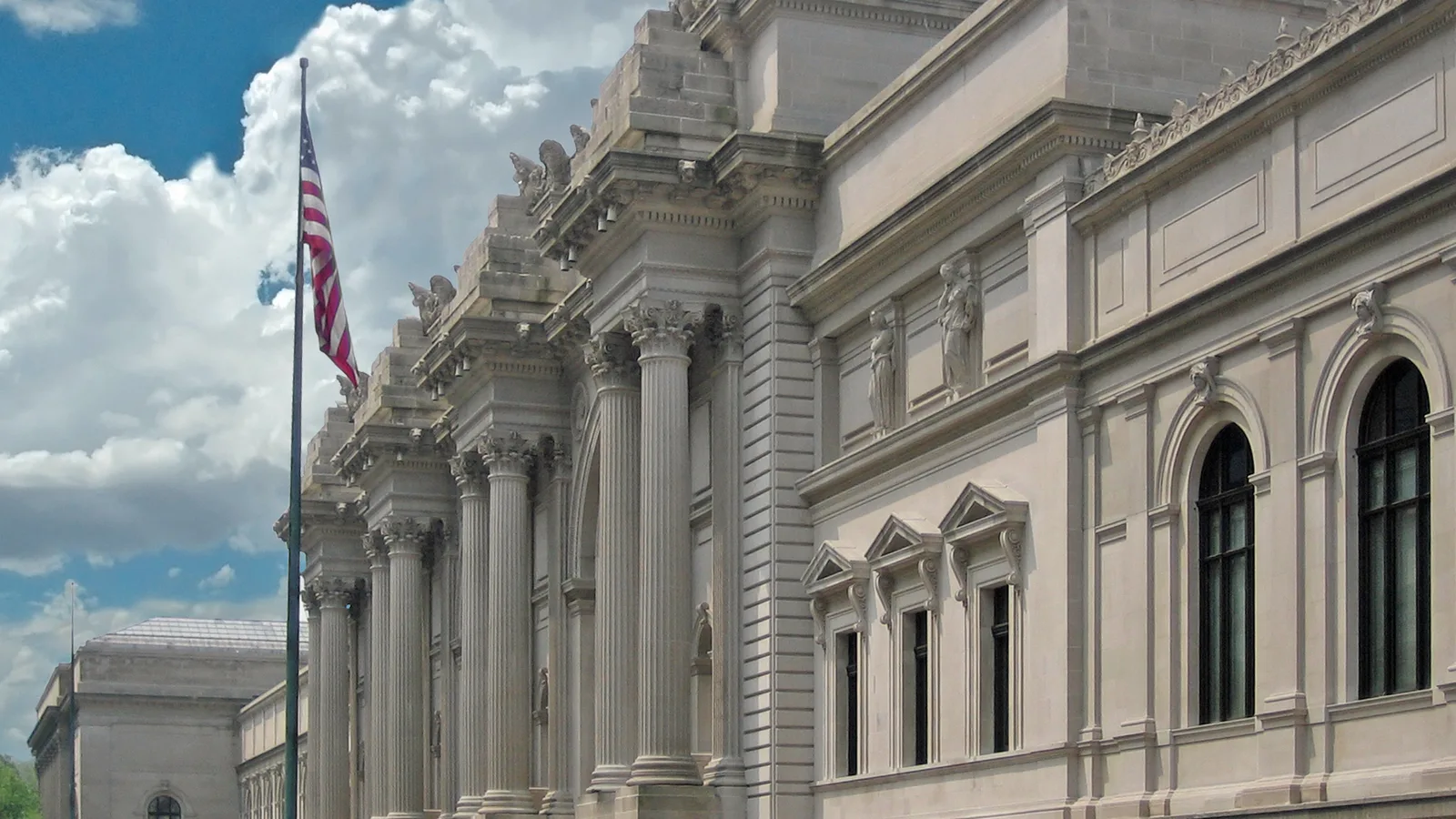
Every year the Met Gala theme is announced months ahead, and every year the fashion world spends those months guessing at dress codes. The 2027 cycle has been different. In the space of about a month, the Metropolitan Museum of Art announced one of the most ambitious, and most debated, Costume Institute exhibitions in its history, and then withdrew it.
As of mid-October 2026, there is no confirmed Met Gala 2027 theme. Here is what was planned, why it was cancelled, and what to look for next.
The short answer: there is no Met Gala 2027 theme yet
On 31 August 2026, The Met and John Galliano jointly announced that John Galliano: Horizons, "previously scheduled to open in May 2027, will not proceed as planned". The museum's statement added that "information on a new spring Costume Institute exhibition and the 2027 Met Gala will be announced at a later date".
Because the gala's dress code is always tied to the spring exhibition, the cancellation means the 2027 theme has effectively been reset. TODAY summed it up plainly: "There is no information on what the new theme will be yet."
What John Galliano: Horizons was meant to be
The exhibition was announced in late July 2026. According to Who What Wear, it was to span Galliano's whole career, from his student work at Central Saint Martins to his designs for Dior, Givenchy, Maison Margiela and his own label.
A show in three parts
Who What Wear reported that the exhibition was to be organised into three sections:
- "Bearings", placing Galliano's work in historical and cultural context;
- "Horizons", exploring his most-cited sources of inspiration, including geography, history, art and performance;
- "Atlas of Transformation", tracing his process through research books, sketches, toiles, fittings and finished garments.
Marie Claire reported that the exhibition was to open to the public on 9 May 2027, after the gala, and run until 9 January 2028.
An exhibition that addressed the past directly
What set Horizons apart was that it did not sidestep Galliano's history. Who What Wear quoted the museum's original announcement, which said the show "will directly address the rupture caused by his antisemitic, racist, and anti-Asian conduct in 2010 and 2011, which resulted in his dismissal from Christian Dior and his eponymous label and his conviction by a Paris court". The same release said the gallery would examine "how memory, experience, cultural values, and historical circumstances continually reshape the reception of a designer's work", rather than offer "a conventional narrative of disgrace and redemption".
That was a bold curatorial idea. It also guaranteed controversy.
Why the exhibition was cancelled
Neither the museum nor the designer gave a detailed account of the discussions behind the decision. What we have are the two public statements.
Max Hollein, The Met's director and CEO, said: "Following thoughtful discussions with John Galliano, we have together decided not to proceed with the exhibition."
Galliano's own statement was longer. He said that "after much reflection and discussion with The Met and all those involved, I have decided, with great sadness, that it is best for the exhibition not to take place at this time". He added that he remains "fully accountable for the pain caused by my words in the past, particularly the hurt I caused to the Jewish and Asian communities", and that "meaningful atonement is not achieved through an exhibition, institutional recognition or a single public gesture". He also wrote that he did not want "the debate surrounding me to place The Met in a difficult position".
Marie Claire noted that the decision came "just one month after the exhibition was announced—and after weeks of conversation about what it meant for the Met to put Galliano at the center of fashion's biggest night". Casadi has not seen any official statement attributing the decision to a specific campaign, sponsor or individual, so we won't speculate.
Who is John Galliano? A brief primer
For readers newer to fashion, the reason this exhibition felt so significant comes down to the scale of Galliano's influence.
From Central Saint Martins to the grand houses
Galliano's graduate collection at Central Saint Martins, the starting point of the planned exhibition, launched a career that took him to the top of Parisian couture. He led Givenchy and then Christian Dior, where his theatrical, historically steeped collections defined the house for a generation. You can read more about the house he helped shape on our Dior brand page and in our history of the New Look.
The rupture and the return
In 2011, after the conduct the Met's announcement described, he was dismissed from Dior and from his own label, and convicted by a Paris court. He later underwent treatment for addiction and publicly acknowledged his actions. His later creative role at Maison Margiela was among the chapters the exhibition intended to cover.
Whatever one thinks of the decision to stage, or cancel, the show, the episode underlines a recurring question in fashion: how institutions should treat great work made by people who have caused real harm.
When is the Met Gala 2027?
The Met has not announced a new date alongside the cancellation. By tradition the gala falls on the first Monday in May, and Marie Claire reported the expected date as Monday 3 May 2027. Treat that as expected rather than confirmed until The Met says otherwise.
For Australian readers, a first-Monday-in-May evening in New York lands on Tuesday morning in Melbourne and Sydney, which is when the red-carpet images usually start flooding in.
What happens to the theme now?
The Met's statement promises a "new spring Costume Institute exhibition". A few practical points are worth keeping in mind while we wait:
- The theme follows the exhibition. Whatever the Costume Institute stages next spring will set the dress code. Rumoured themes are only rumours until the museum publishes them.
- Timing is tight. Major exhibitions take years to plan, and the replacement will have roughly eight months from the cancellation to opening night. That may favour a show that draws heavily on the Costume Institute's own collection.
- The current exhibition is still on. Costume Art remains open at The Met until 10 January 2027. We looked at what critics made of it in our review roundup.
We will update this article as soon as The Met announces the replacement.
Why this matters beyond the red carpet
It's easy to treat the Met Gala as a celebrity spectacle, but the Costume Institute's spring exhibitions are among the most visited fashion shows in the world, and they shape how designers' legacies are written. Horizons would have been one of the first major museum shows to put a designer's misconduct inside the exhibition itself rather than in a footnote. Its cancellation leaves that question unresolved, for The Met and for fashion more broadly.
For collectors and enthusiasts, it is also a reminder that archives and reputations move together. Galliano's Dior pieces remain some of the most sought-after in the vintage market, and debates like this one shape how they are discussed and displayed.
Frequently asked questions
What is the Met Gala 2027 theme?
It has not been announced. The planned theme, built around John Galliano: Horizons, was cancelled on 31 August 2026, and The Met said the new exhibition and gala details would be announced later.
Why was the John Galliano exhibition cancelled?
The Met and Galliano said they decided together not to proceed. Galliano said he did not want the debate around him to place the museum in a difficult position and acknowledged the hurt caused by his past antisemitic and racist remarks.
When is the 2027 Met Gala?
It is expected on Monday 3 May 2027, following the first-Monday-in-May tradition, but The Met has not confirmed the date since the cancellation.
Is the Costume Art exhibition still open?
Yes. The current Costume Institute show, Costume Art, runs until 10 January 2027.
Where can I compare the houses Galliano worked for?
Use Casadi's brand comparison tool to look at Dior alongside other houses, or start with our guide to who owns luxury fashion.
Featured image: Arad, CC BY-SA 3.0, via Wikimedia Commons. Cropped for this page; the cropped version is shared under the same CC BY-SA 3.0 licence.
