
The title is the first joke. Ceci n'est pas une exposition ("this is not an exhibition") echoes René Magritte's painted pipe that is "not a pipe", and it suits its subject. Franco Moschino spent the decade of his own label telling the fashion industry, in print, on runways and in shop windows, that it should not take itself so seriously, and the industry bought every word.
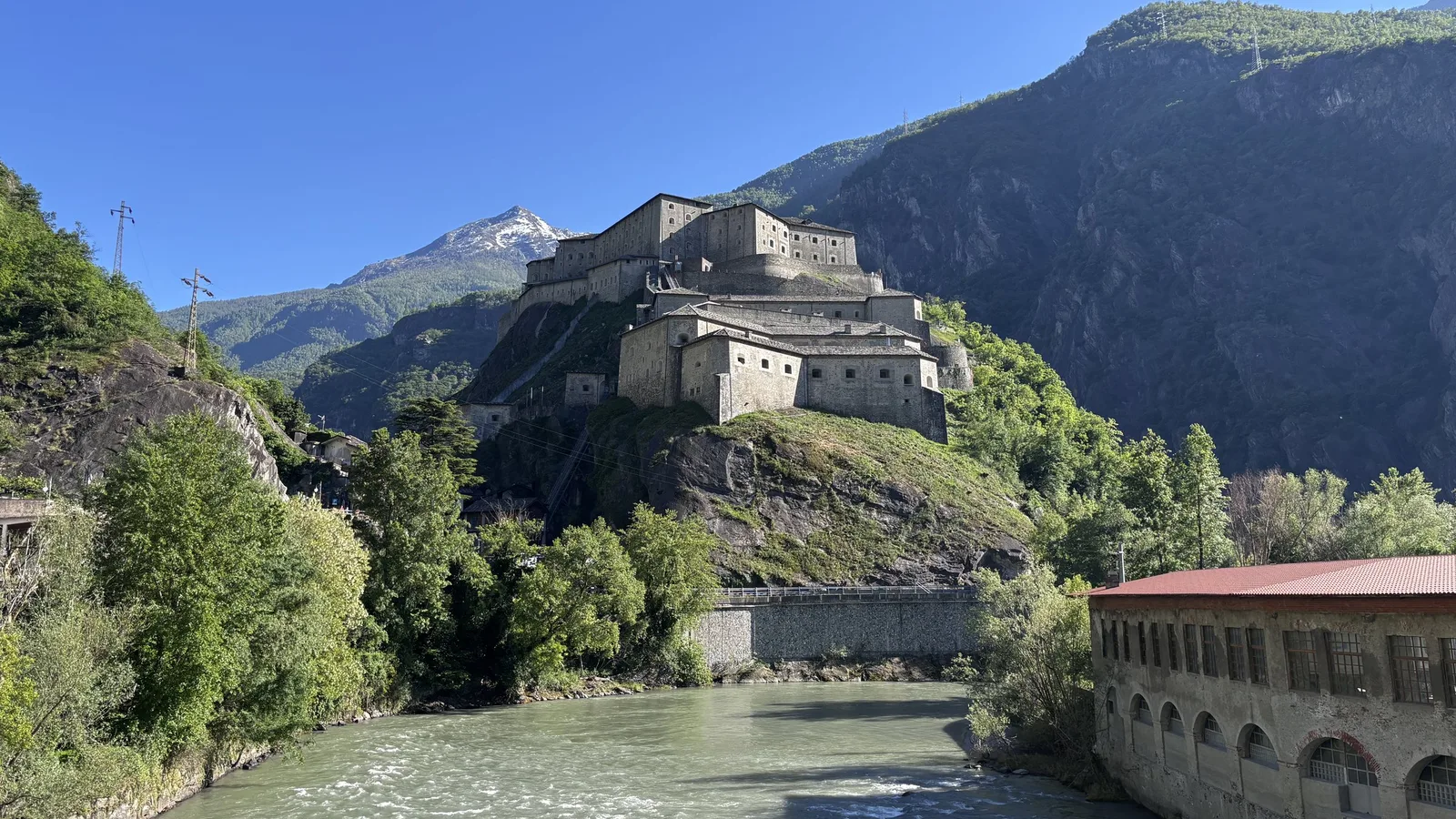
From 31 October 2026 to 29 March 2027, Forte di Bard, a fortress in Italy's Aosta Valley, puts that decade on show. The exhibition brings together more than 200 photographs, original garments, advertising campaigns and archive material across six themed rooms in the fort's Cantine galleries. It is curated by Pier Paolo Pitacco with Catia Zucchetti, with a critical contribution from Giuseppe Mastromatteo, and produced by the Forte di Bard with CZ Fotografia under the patronage of the Art Directors Club Italiano (ADCI).
It is also the third chapter in a run of fashion and photography shows at the fort, after monographs on the photographer Gian Paolo Barbieri and on Gianfranco Ferré.
Six rooms, one argument
According to the local news site AostaSera, which published the programme on 22 October, the show is organised as follows:
- "Ciao Franco" opens with the personal side: portraits, original sketches, private documents and a collection of 44 of Moschino's aphorisms.
- "Comunicare" deals with advertising, the medium Moschino used most mischievously, and includes a wall-sized reproduction of the campaign "MOSCHINO jeans… per quello che sei!" ("for what you are").
- "La vetrina" turns to the window displays of his Milan boutiques on via Sant'Andrea and via Durini, which were treated as part of the brand's message rather than as merchandising.
- "I deal dress = No stress" sets runway photographs beside the ecological and ethical slogans he wove into clothes and campaigns, such as "Difendi la Natura" ("defend nature") and "Too much irony!"
- "Fashion – Fashoff", the centrepiece, gathers original vintage garments with photographic collages of the most representative pieces of his career.
- "Il film" closes with a 1993 documentary on his life and work, alongside interviews and television appearances.
The historical photographs are by Stefano Babic, Sergio Caminata and Stefano Pandini, whose 1988 campaign portrait of the designer illustrates the fort's announcement. Video contributions by Alberto Clementi, Tommaso Basilio and Pitacco collect testimony from friends, colleagues and artists, and a reel of runway moments has been recovered from the original master tapes of the director Sergio Salerni.
The Fondazione Gian Paolo Barbieri adds a further draw: five photographs from Barbieri's archive, four of them portraits of Moschino that have never been shown in public. The foundation describes the pairing as a meeting between a photographer who helped shape the imagery of international fashion and a designer "who challenged its conventions and questioned the system itself".

The painter who chose fashion
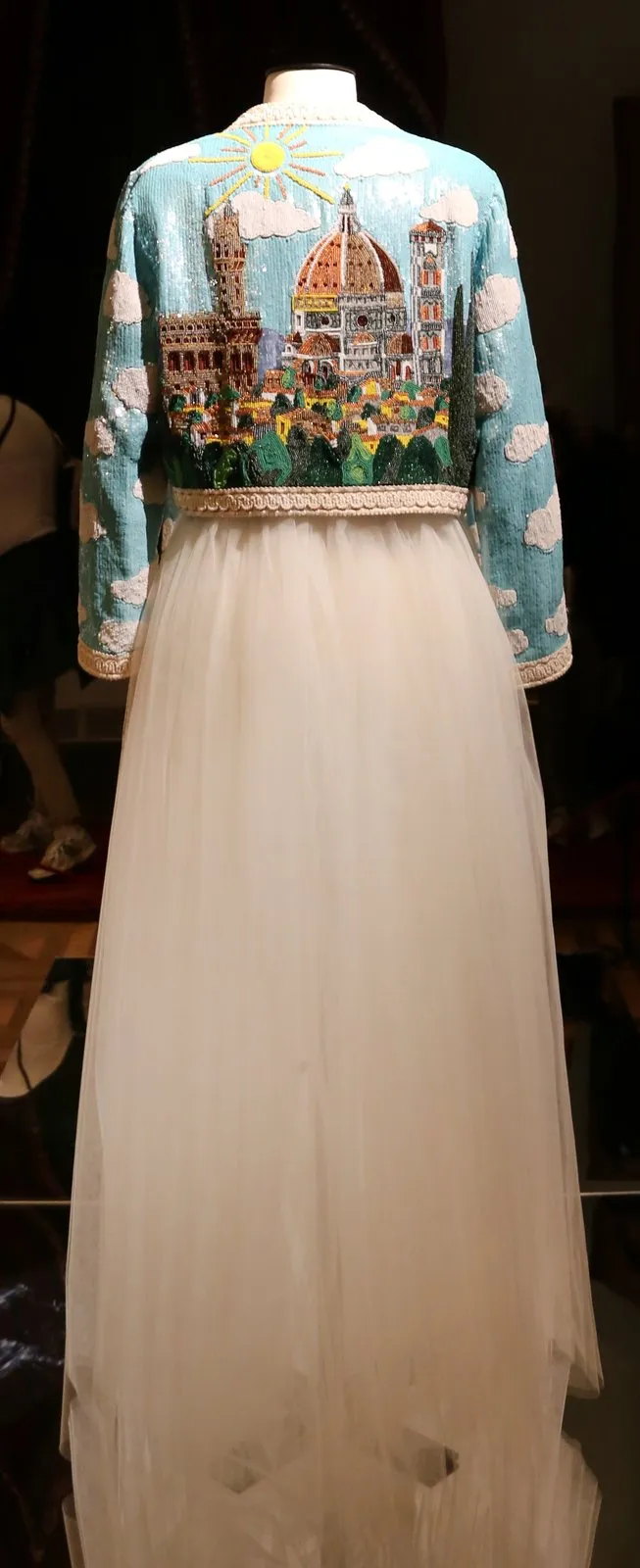
Moschino was born in Abbiategrasso, in Lombardy, on 27 February 1950. In her obituary for The Independent in 1994, the writer Jane Mulvagh recounted that as a boy he drew pictures in the dust on the walls of his father's iron foundry, and that he refused to join the family business, ran away to Milan and studied fine art at the Accademia di Belle Arti from 1968 to 1971, paying his way with illustration work for fashion houses and magazines. He then worked as a sketcher for Gianni Versace from 1971 to 1977 and as a designer for the label Cadette until 1982, before founding his own label in 1983. As AostaSera notes in its preview of the show, although known as a designer, he liked to describe himself as a painter who had chosen fashion as his medium.
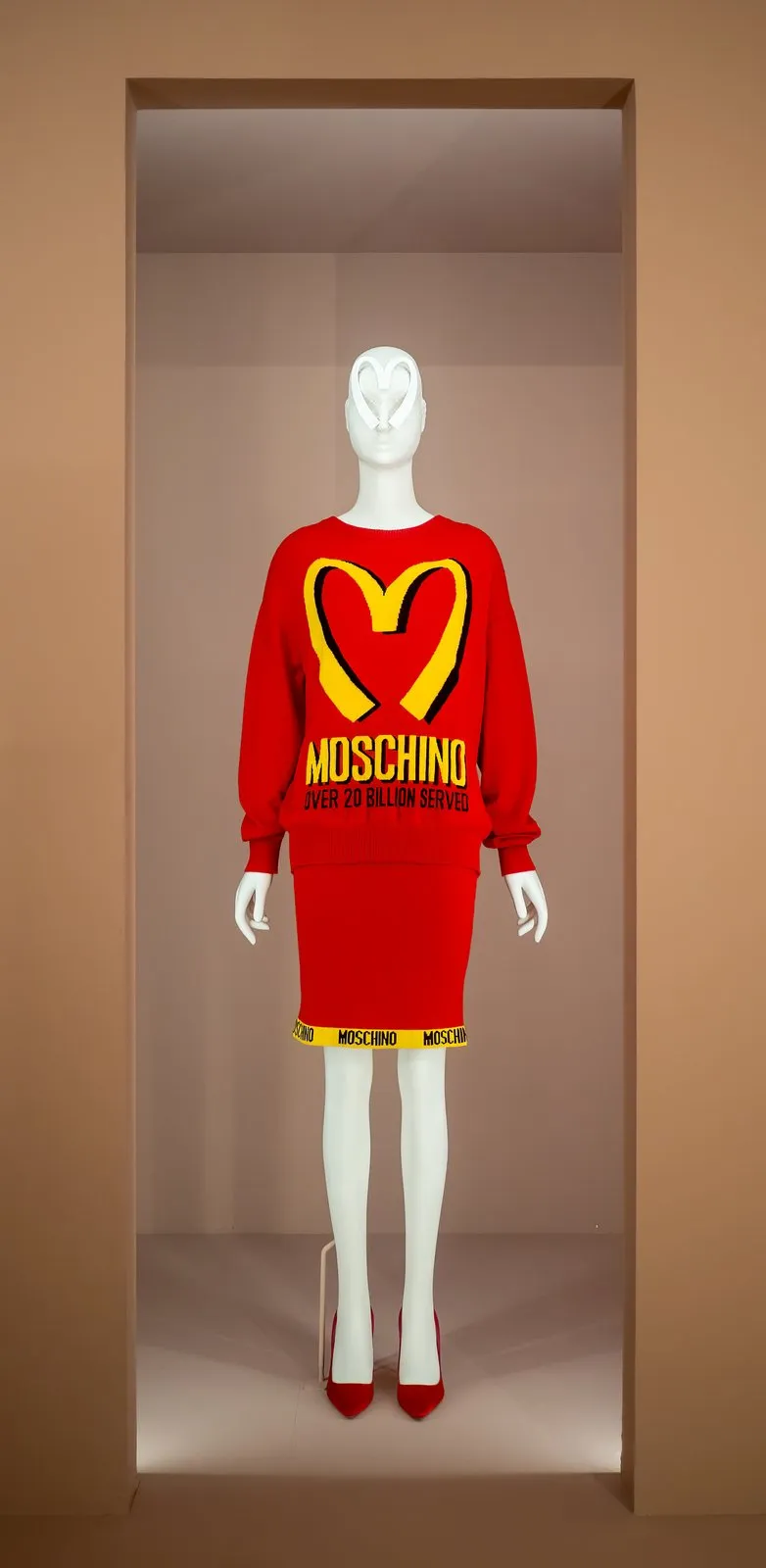
What he made of that medium was commentary. Mulvagh listed the puns: a jacket with "Waist of Money" printed along the waistband, a shirt with ten-foot sleeves embroidered "A shirt for fashion victims only", a camel-hair coat with a camel and the words "hair coat" stitched on the back. One advertisement showed a vampire warning readers to "Stop the Fashion System". She argued that he worked with messages and symbols on a fairly classic range of garments rather than inventing new shapes, and that, technically, "he was an excellent cutter".
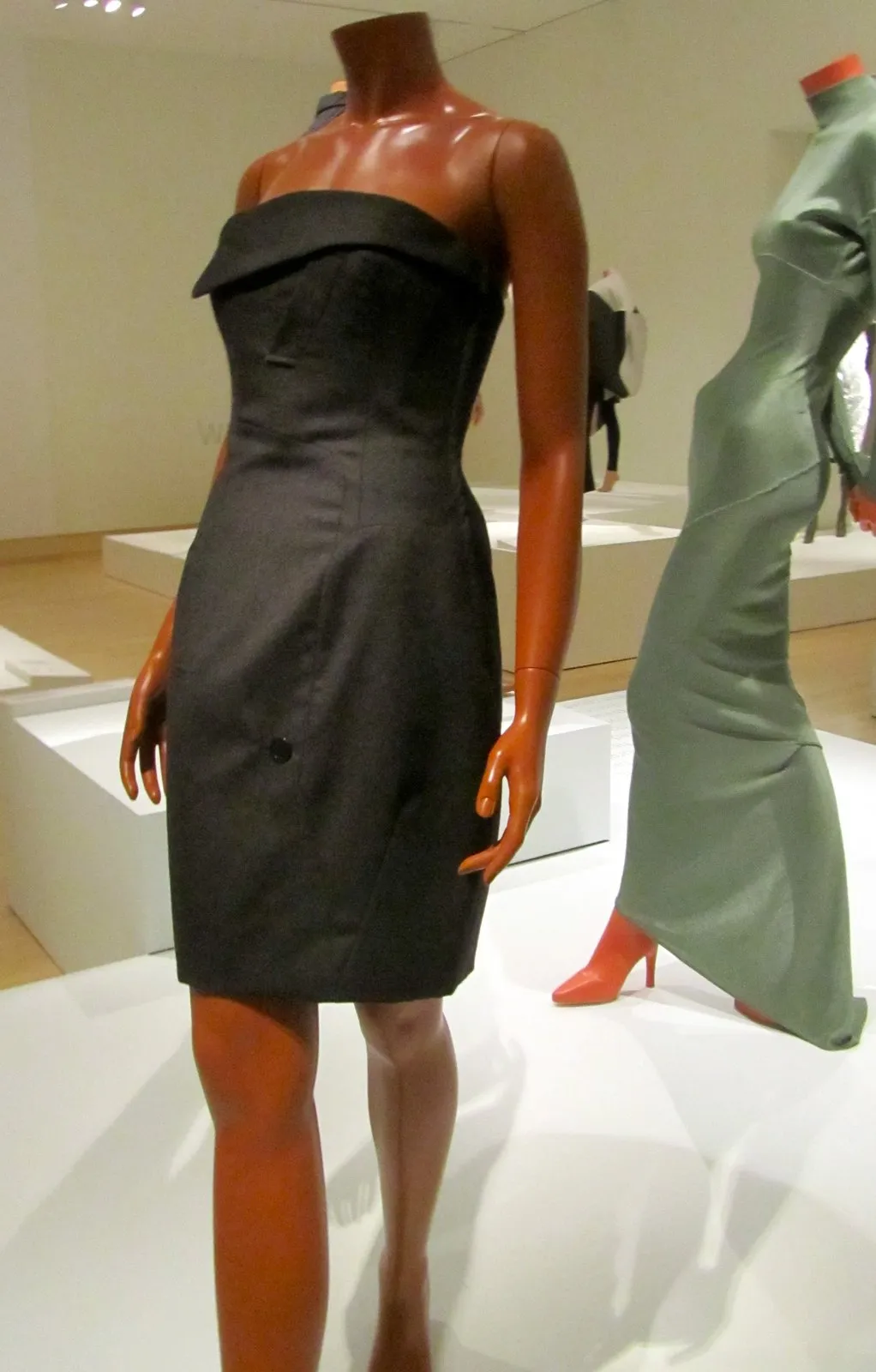

The paradox was obvious, and Mulvagh named it: a protest against fashion's consumerism that became fashionable itself, worn by those who felt they "got the joke" (by the time the Princess of Wales wore Moschino, she wrote, one wondered whether the whole thing had backfired). He kept testing the system all the same. In his final years, the Washington Post reported, he refused to join the round of catwalk shows and invited buyers to watch his designs on video instead. In his final season, according to Mulvagh, every Moschino garment was sold with a letter from him calling environmental concern "the only true and honest Fashion Trend", an idea the "I deal dress = No stress" room now picks up.
He died on 18 September 1994, aged 44, at his villa in Brianza, near Milan. The Washington Post called him the ironic "enfant terrible" of Italian fashion, a designer who had once made a ball gown out of rubbish bags.
Why it matters now
The timing is not accidental for anyone watching Moschino the brand. In September, Simone Rizzo and Loris Messina, the duo behind Sunnei, made their debut as the house's creative directors in Milan, and, as WWD reported, their show notes included the mantra "Reignite Moschino without imitating it". We covered the show in our Milan Spring/Summer 2027 review. An exhibition built from the founder's own aphorisms, windows and campaigns offers a reminder of what the house's humour originally pointed at.
The exhibition also fits a wider season of fashion in museums, which we surveyed in our guide to autumn 2026 fashion exhibitions. The European Fashion Heritage Association includes it in its October round-up of fashion exhibitions. Unlike a retrospective in a capital, this one asks visitors to travel to an Alpine fortress to see it, which is perhaps the kind of contradiction Moschino would have enjoyed.
Visiting
Franco Moschino. Ceci n'est pas une exposition runs at Forte di Bard, Bard (Aosta Valley), from 31 October 2026 to 29 March 2027. The fort lists opening hours of 10am to 6pm on weekdays and 10am to 7pm on weekends and public holidays, and it is closed on Mondays. Full-price tickets cost €15 and reduced tickets €12, and both include entry to two other exhibition spaces of your choice. Under-18s enter free. A bilingual Italian-English book, Breaking the rules. Aforismi and assorted stories, edited by Pitacco with an introduction by Adriana Mulassano, is published by Moebius to accompany the show.
Featured image: Julius Barclay, CC BY-SA 4.0, via Wikimedia Commons. Cropped for this page; the cropped version is shared under the same CC BY-SA 4.0 licence.
