
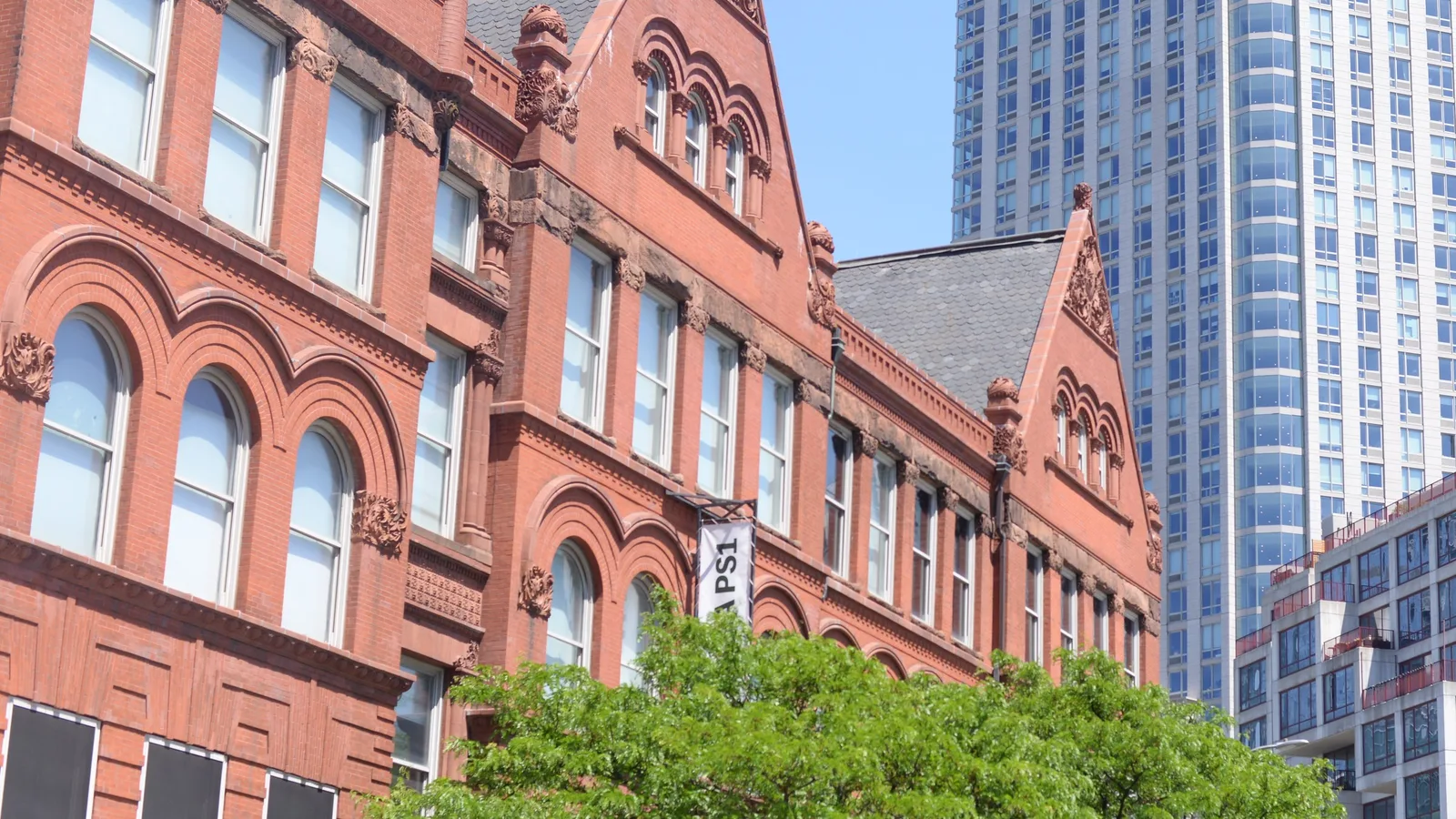
Long before fashion exhibitions became museum blockbusters, a former public school in Long Island City tried something else. In the early 1980s, PS1, then an alternative art space and now MoMA PS1, gave rooms to living designers and asked them to make art. The results were short-lived and largely forgotten. For the museum's 50th anniversary, it has gone back into its archive to find them.
New York Fashion at PS1, 1980–1984, which opened on 5 November and runs until 15 March 2027, revisits the museum's fashion programme through notes, correspondence, photographs, ephemera, original objects and partial reconstructions. It is organised by Kari Rittenbach, assistant curator at MoMA PS1, and centres on the projects realised there by the independent curator Hollywood Di Russo (1946–2005).
The key facts
- Where: MoMA PS1, 22-25 Jackson Avenue, Long Island City, Queens, New York
- When: 5 November 2026 to 15 March 2027
- Curator: Kari Rittenbach, assistant curator, MoMA PS1
- The designers revisited: Julio (1980), Homer Layne's collection of Charles James (1981), Willi Smith (1982) and Betsey Johnson (1983), alongside documents and video
- The occasion: PS1's 50th anniversary; it opened in 1976 with the exhibition Rooms
- Not a costume show: mostly archival material and reconstructions, rather than original garments on mannequins
A school, a curator and a seasonal programme
PS1 was founded by the curator Alanna Heiss in a nineteenth-century school building decommissioned in 1963, and opened in 1976. In 1978, W Magazine reports, Heiss and her staff devised a seasonal programme that put the whole building to use, handing rooms to freelance curators in architecture, dance, performance, poetry, video, film and fashion. The museum places the fashion strand, from 1980, within that wider multidisciplinary programme.
Its curator was a stylist and make-up artist, and a larger-than-life fixture of the Studio 54 set, Galerie reports. "She was a character, dubbed a 'Fashion Femme Fatale,'" Rittenbach told the magazine; Di Russo was born in Florida to a circus family and raised in Texas. Her aim, according to the museum, was to show fashion's influence on visual culture and the arts, outside the commercial realm and the conventions of costume display. "I want to explore… the idea of fashion making us feel things: important or silly, handsome or sexy," she told GQ in 1981, in a line the museum quotes. "We're training our eyes to be more yielding, our hearts to be more receptive."
"Hollywood's approach was to work with living designers," Rittenbach told Galerie. "She was really modeling the program against Diana Vreeland and the Costume Institute, which felt very dead to her."
Four shows, rebuilt from fragments
Rittenbach heard about the forgotten series after joining PS1 in 2022, Galerie reports, as the museum's archives from 1976 to 2000 were being transferred to MoMA. The record she found was patchy. "There are correspondences, notes, photographs, contact sheets, press releases, invitations, posters, videos, but it's not comprehensive," she said.
Julio, 1980. The designer Julio Espada, whose show opened the series, attended the preview and recreated a tissue-paper headdress and bodice inspired by origami for the new exhibition, Galerie reports.
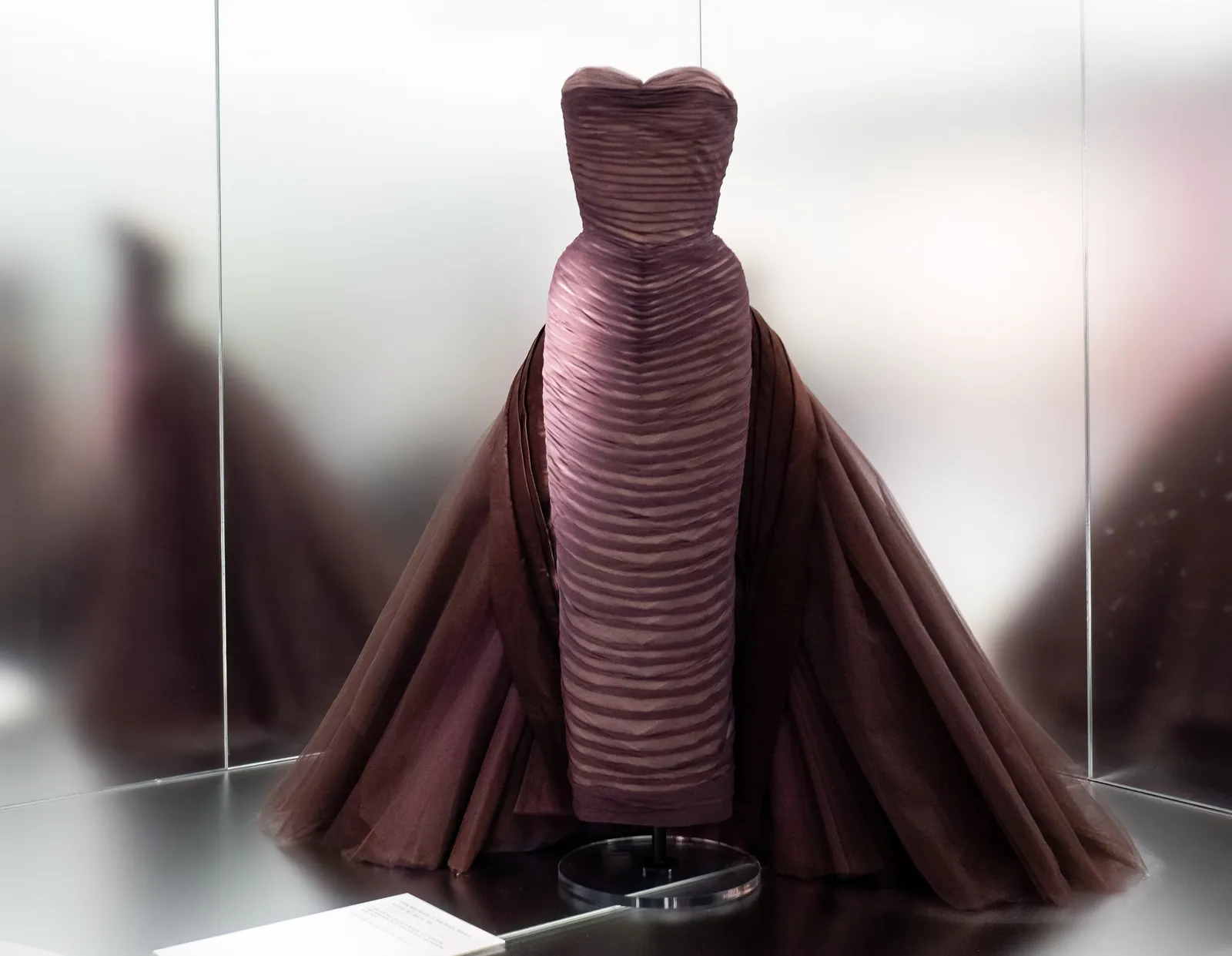
Homer Layne's collection of Charles James, 1981. Layne, Charles James's last studio assistant, who oversaw the couturier's archive, organised a show of 26 of James's creations with original sketches and archival material, which ran from 18 October to 13 December 1981, according to Vogue Adria. The new exhibition includes film shot in 1978 at James's studio in the Chelsea Hotel. "Through show notes, I realized the Charles James show probably had the highest exhibition insurance value in the series," Rittenbach told Galerie. Three decades later, the Metropolitan Museum of Art's 2014 exhibition Charles James: Beyond Fashion brought him back to wide attention.

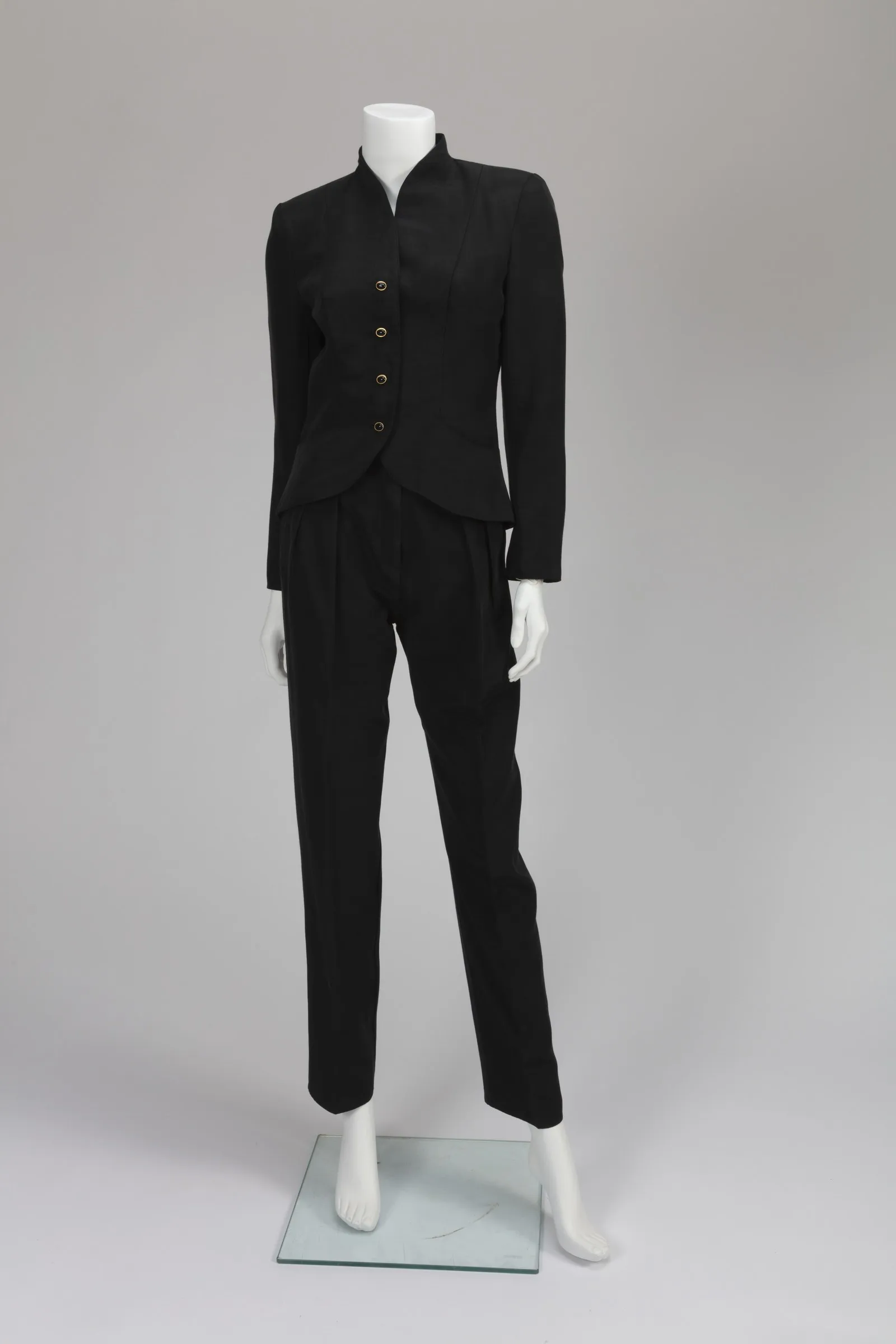
Willi Smith, 1982. Smith dipped his clothes in white plaster and laid them in three linear tableaux on the gallery floor, Galerie reports. Vogue Adria gives the show's title as Art as Damaged Goods and describes visitors looking at the plastered garments through transparent fabric with coloured cards that altered what they saw. For the reconstruction, Rittenbach sourced a vintage Willi Smith Butterick sewing pattern, commissioned a seamstress to make the clothes and had them dipped in plaster; a wall vinyl reproduces the original arrangement. The exhibition also shows a 1984 video in which the dancers Bill T. Jones and Arnie Zane appear among downtown creatives moving through the city's streets.
Smith, who founded WilliWear with Laurie Mallet, died of AIDS-related illness in 1987 and was, according to Cooper Hewitt, Smithsonian Design Museum, considered the most commercially successful Black American designer of the 20th century. "Reflecting on Barbara Kruger's influence on Supreme makes me think of Willi's genius," Rittenbach told Galerie, recalling the artists' T-shirts he produced with Keith Haring, Futura 2000, Barbara Kruger and Jenny Holzer.

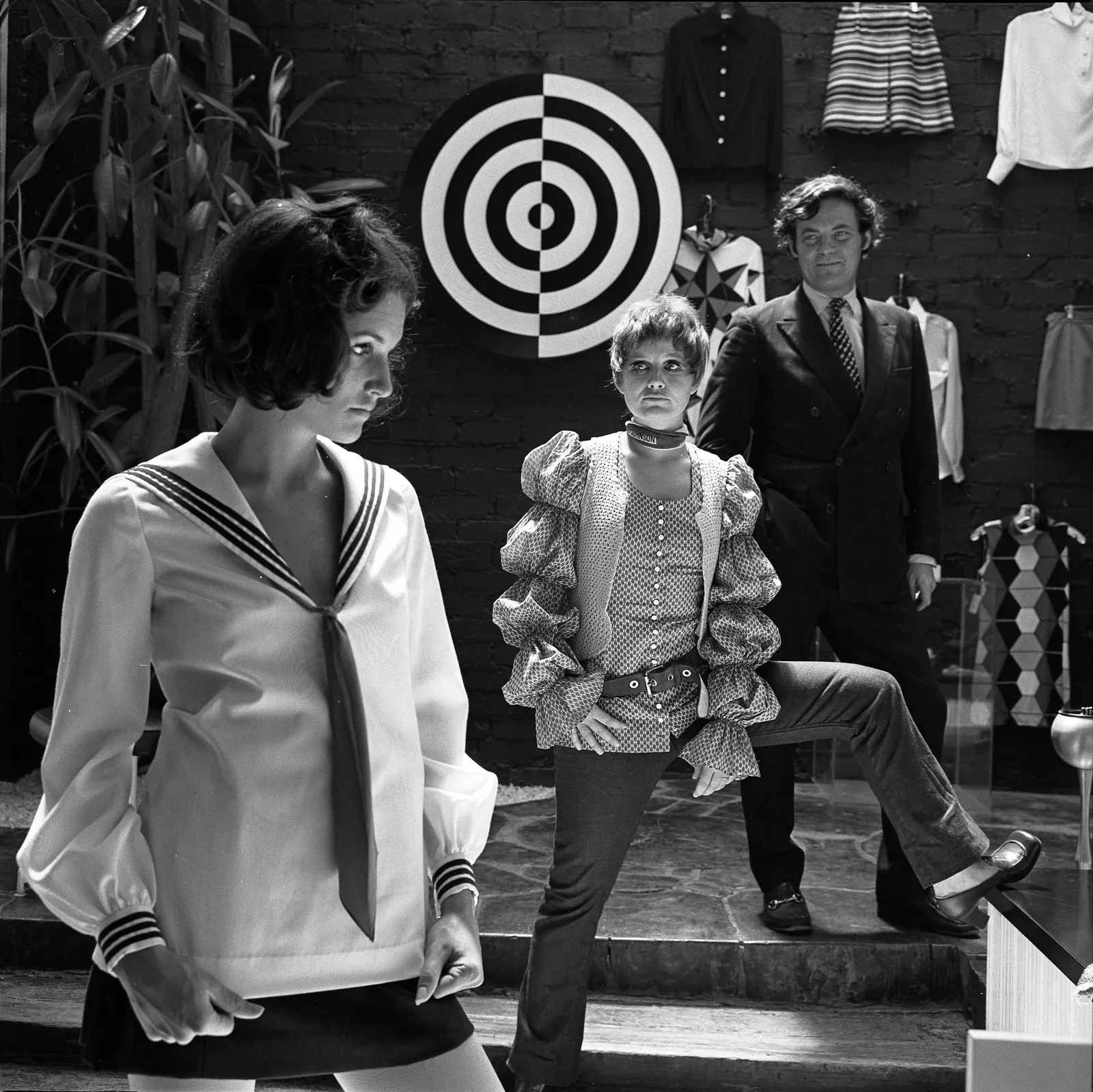
Betsey Johnson, 1983. Johnson's show ran from 16 January to 13 March 1983. She had three days to prepare it, a few borrowed mannequins and museum staff she persuaded to wear her designs, Vogue Adria reports. With Johnson's blessing, the museum has recreated parts of the installation, which drew on her marriage to the musician John Cale, Galerie reports.

Why it stopped, and why it matters now
The series did not last. Rittenbach suggests that it faded once Di Russo's film career took off and after the National Endowment for the Arts cut funding during Ronald Reagan's first term, Galerie reports. The exhibition also includes material from other PS1 fashion projects, among them a show of Yeohlee Teng's work curated by the late Richard Flood.
The timing of the revival is pointed. Fashion has become one of museums' most reliable draws, but mostly as retrospective: finished clothes, often by designers no longer working, behind glass. W Magazine's Kat Herriman writes that the show "begs the question: why are all our fashion exhibitions focused on the retrospective lens?" PS1's own next step suggests it intends to keep asking: a fashion exhibition called Malvestir is planned for spring 2027, according to Galerie.
For a very different kind of fashion exhibition this season, see our preview of Azzedine Alaïa at the Legion of Honor, our guide to autumn's fashion exhibitions and the Met's 2027 Costume Institute theme, extraORDINARY.
Visiting
New York Fashion at PS1, 1980–1984 is at MoMA PS1, 22-25 Jackson Avenue, Queens, New York, until 15 March 2027. Admission to MoMA PS1 is free for all, according to the museum. It runs alongside the exhibition Hard Art.
Frequently asked questions
What is New York Fashion at PS1, 1980–1984?
An exhibition at MoMA PS1 in Queens that revisits the museum's early-1980s fashion programme, curated at the time by Hollywood Di Russo, through archival documents, photographs, video and partial reconstructions of installations by Julio, Homer Layne and Charles James, Willi Smith and Betsey Johnson.
When is it on?
From 5 November 2026 to 15 March 2027.
Who was Hollywood Di Russo?
A New York stylist, make-up artist and independent curator (1946–2005) who ran PS1's fashion series in the early 1980s, working with living designers to present fashion as art rather than as costume history.
Are the original clothes on show?
Mostly not. The exhibition relies on archival material and recreations, such as a Willi Smith installation rebuilt from a vintage sewing pattern, with some original objects.
Featured image: Sashimi-b, CC BY-SA 4.0, via Wikimedia Commons. Cropped for this page; the cropped version is shared under the same CC BY-SA 4.0 licence.
