
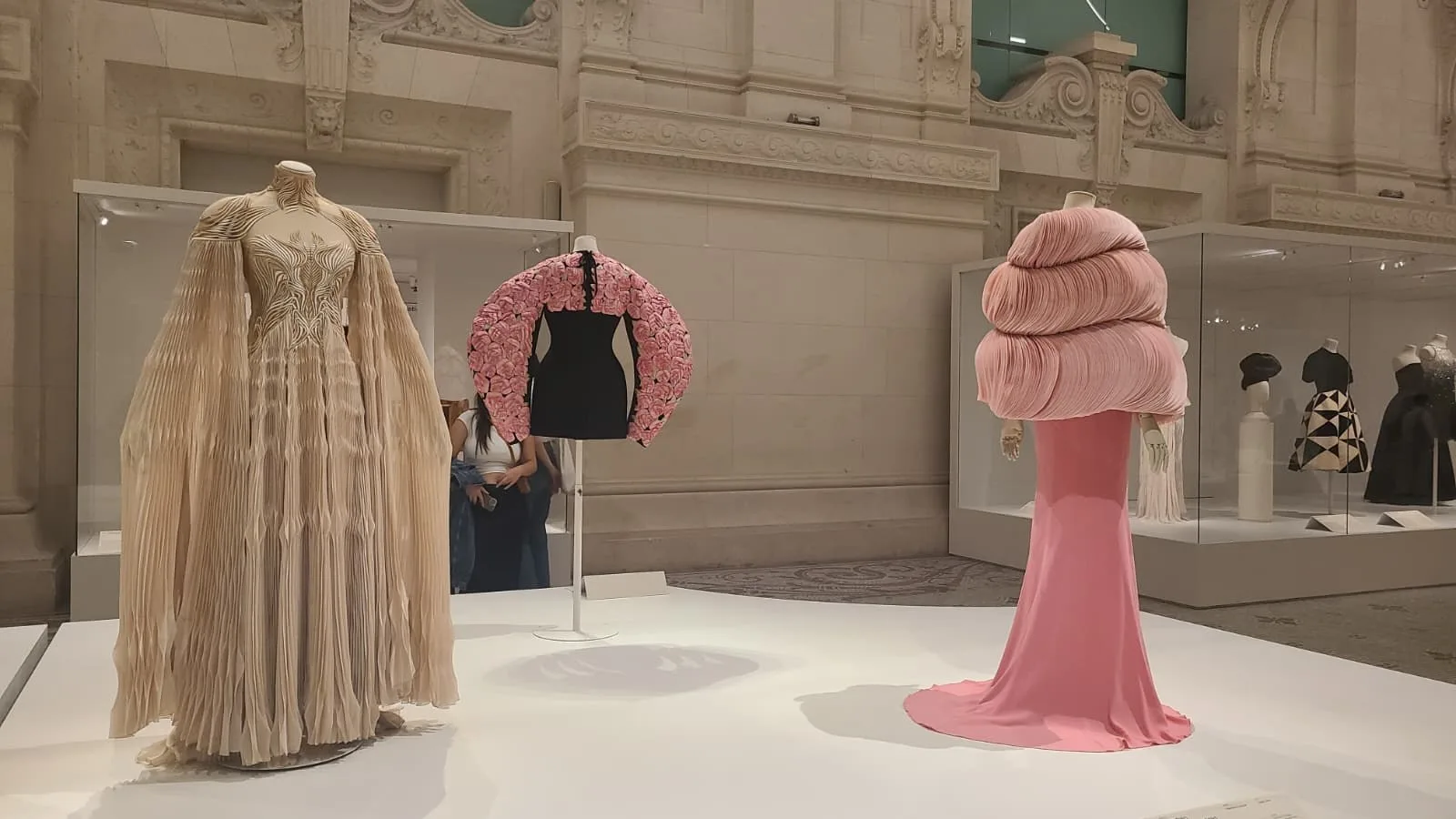
A note on this review: Casadi has not seen the exhibition in person. This piece describes the show from the Musée des Arts Décoratifs' published details and the reporting of critics who have, and weighs their arguments. Every judgement below is attributed. Quotations from French sources are our translation.
Most fashion exhibitions ask you to admire a designer. Look! 40 Years of Fashion at the Museum asks you to admire a process. Its subject is the museum itself: how a dress that was made to be worn for a season becomes an object to be catalogued, stored, restored and shown for centuries.
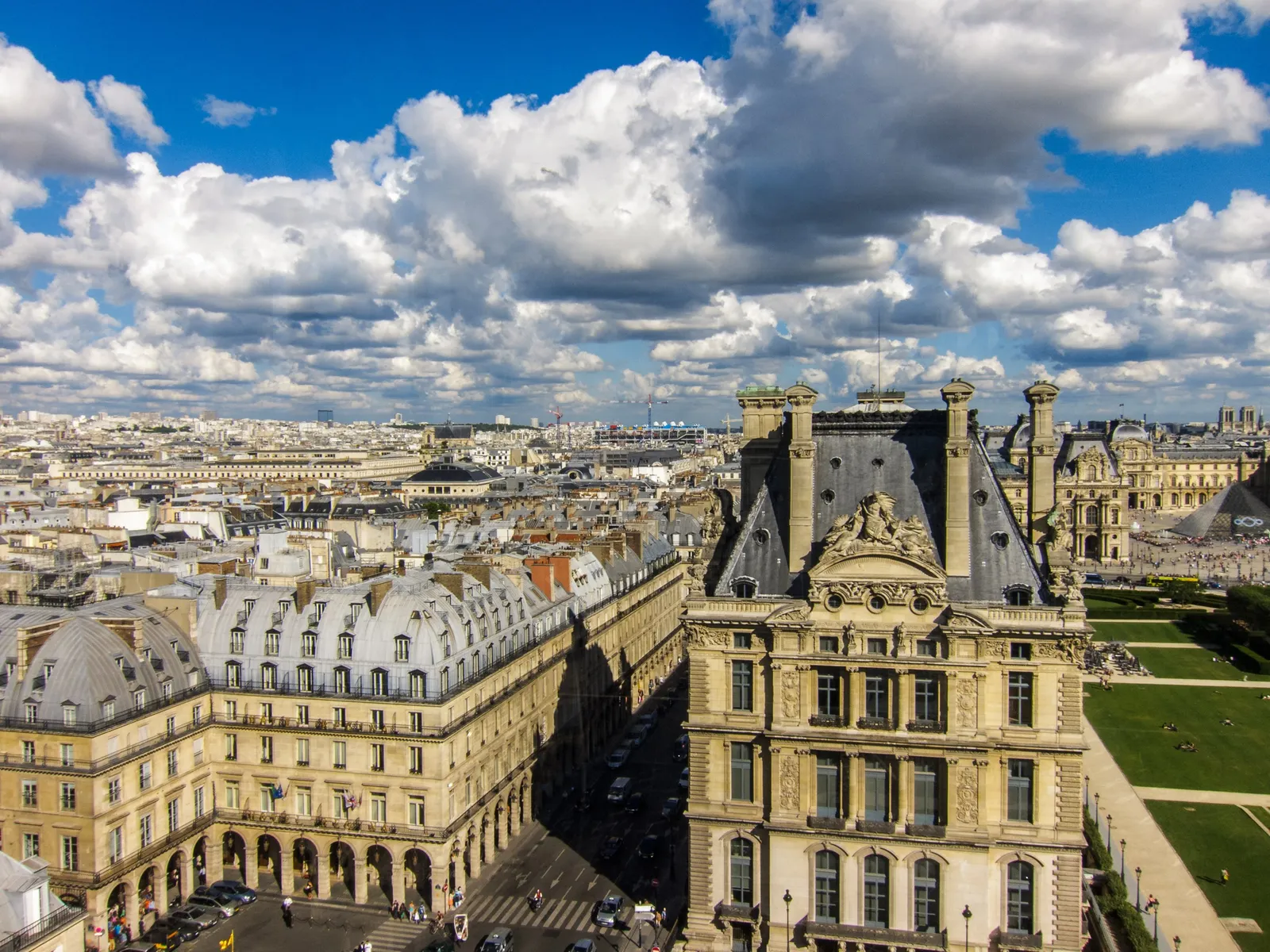
The occasion is a birthday. In 1986 the Musée des Arts de la Mode opened inside the Musée des Arts Décoratifs (MAD), in the Louvre's wing on the rue de Rivoli. Télérama recalls that it was launched at the initiative of Jack Lang, then France's culture minister. It has since been renamed and folded into MAD, which looks after France's national fashion collection, built in part on the holdings of the Union Française des Arts du Costume (Ufac). The exhibition opened on 30 September 2026 and runs until 4 April 2027.
What the exhibition is
MAD describes the show as following "the two lives of the garment": before it enters the collection and after. Its curators are Bénédicte Gady, director of the museums, and Sophie Lemahieu, curator of fashion and textiles made after 1947, assisted by Hannah Morelle. The visitor's booklet sets out three parts:
- Backstage: creating couture. First inspirations, the work of the studio, embroidery and other embellishment, and fashion photography.
- Happy Birthday! 40 years of exhibitions. In the museum's great nave, 40 silhouettes, each standing for one of the exhibitions that MAD says "helped raise fashion to an art". The museum says it has staged more than 70 fashion and textile exhibitions since 1986. The nave is not chronological; the booklet invites visitors to explore it "like a garden".
- How clothing becomes a work of art. Acquisition, storage, documentation, restoration, the making of display mannequins, and publication.
Texts for children aged seven and over, marked with a spool of thread, run through the show and introduce the jobs behind each stage.

Forty silhouettes, forty shows
According to Le Figaro's Valérie Guédon, the show opens with a kimono dress by John Galliano for Dior, from the summer 1998 haute couture collection. "The idea of the first room is to choose forty couture or ready-to-wear outfits that were shown within these walls over the past four decades and seventy exhibitions," Gady told the paper. "This Dior dress naturally found its place."
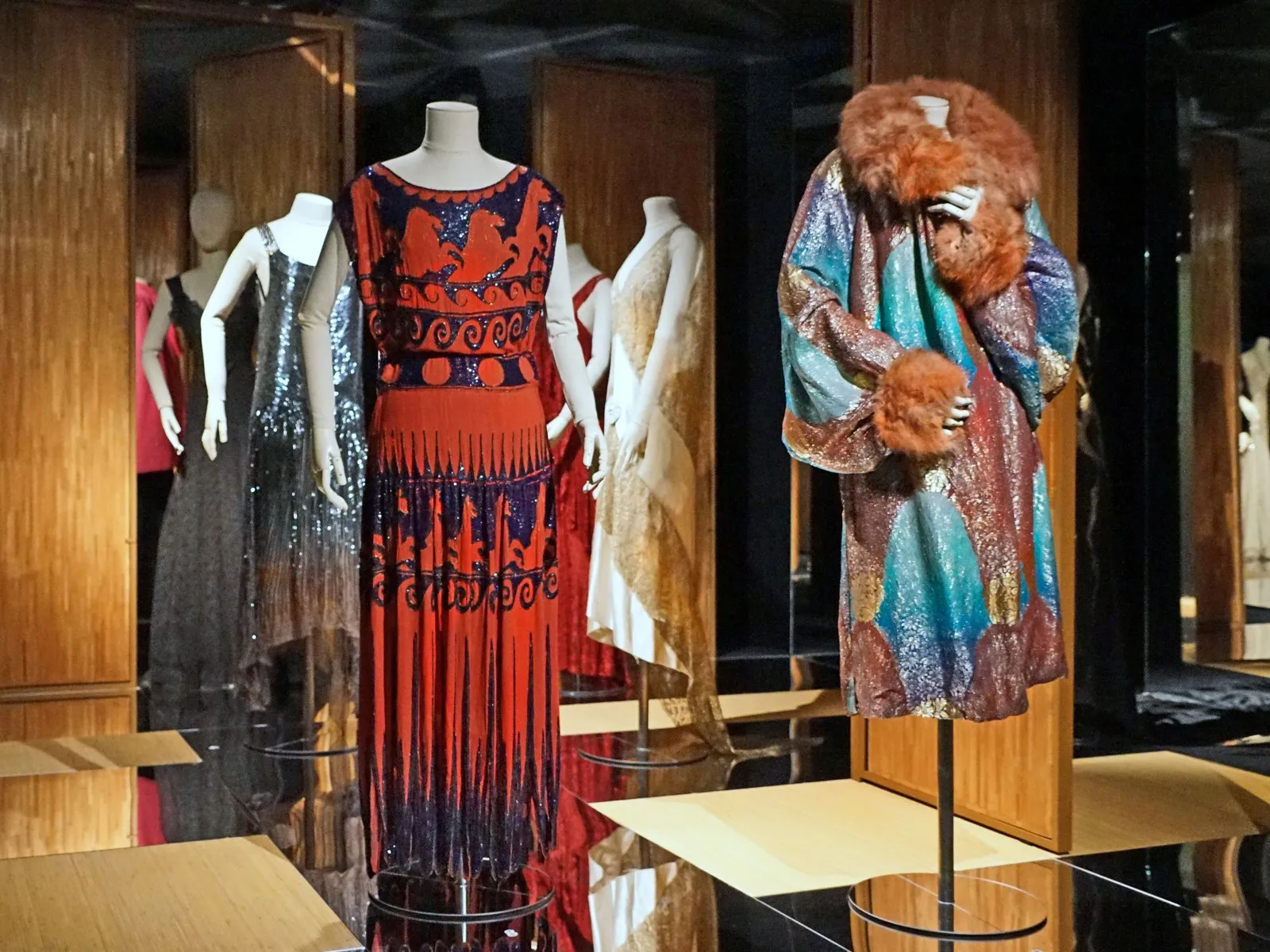
Works the museum highlights on its exhibition page give a sense of the range: an Azzedine Alaïa dress of 1989, shown in Nos années 80 (1990) and Géométrie (1997); a Madeleine Vionnet dress of 1938, from the 2009 Vionnet retrospective; and a Balenciaga dress from autumn–winter 1952. L'Officiel adds Chanel under Karl Lagerfeld, Yves Saint Laurent, Maison Margiela and Schiaparelli. LUI lists a Valentino evening ensemble the couturier gave the museum in 2008 and a Yohji Yamamoto jacket and skirt from autumn–winter 2003–04. Writing for the Costume Society, Dolla Merrillees picks out André Courrèges' 1969 Space Age dress, shown in Harper's Bazaar: First in Fashion (2020), and a pair of French stays from 1740–1760, shown in the 2013 exhibition on the history of the silhouette.
Tony Glenville, writing for A Shaded View on Fashion, was struck by an early 19th-century white Empire gown embroidered with cascading pineapples, and by a Christian Lacroix piece that recalls Christian Lacroix, Histoires de Mode, the 2007–08 show for which the designer worked from the museum's archives.
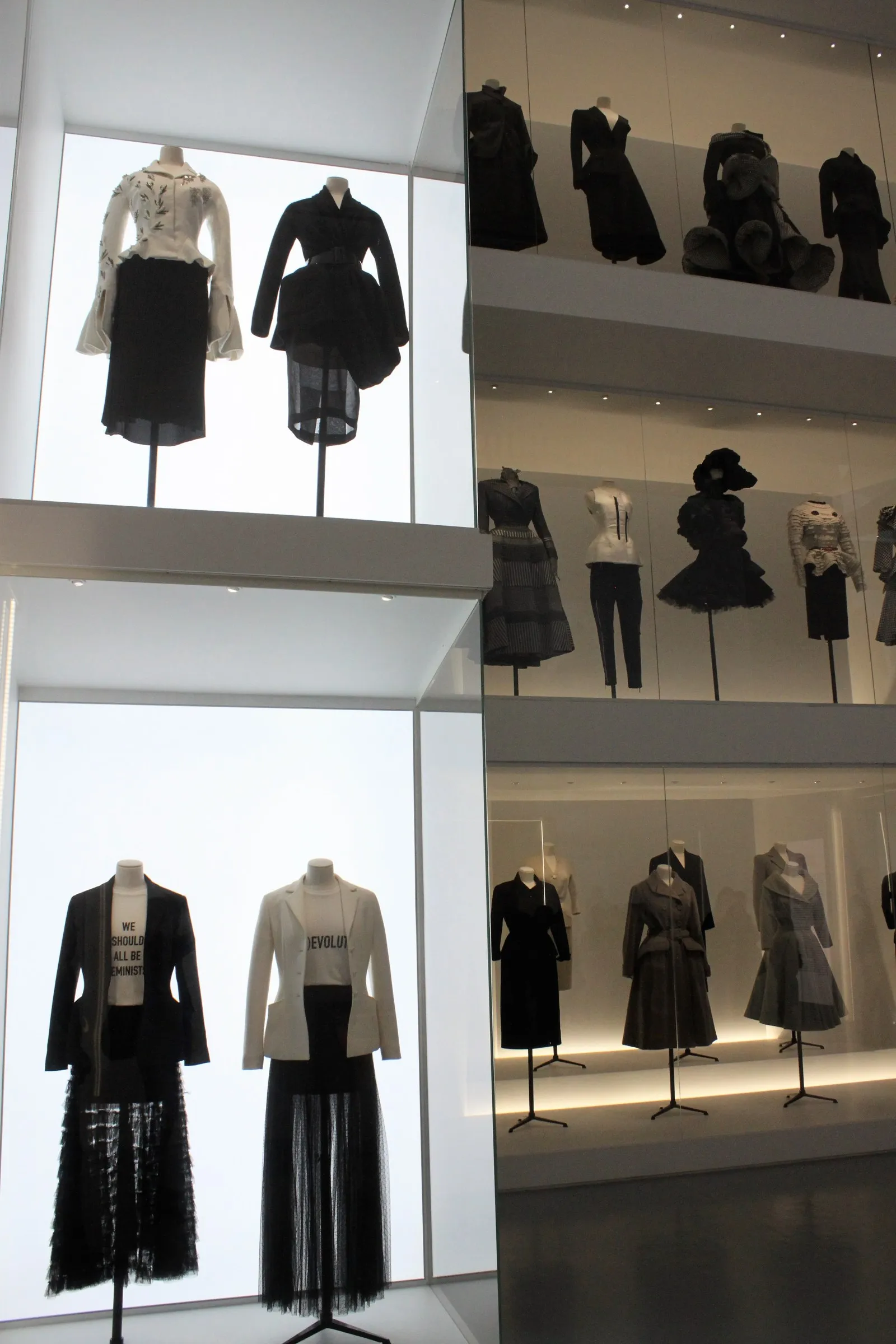

The scale of the museum's past successes is part of the story. Merrillees notes that Christian Dior, couturier du rêve (2017–18) drew more than 708,000 visitors, MAD's most visited exhibition to date. She also lists monographs devoted to Issey Miyake (1988), Balenciaga (2006), Hussein Chalayan (2011), Elsa Schiaparelli (2022) and Iris van Herpen (2023), alongside themed shows on hair, on sport and on the 1980s. FashionUnited's Florence Julienne points to L'Étoffe des héros (1989), an early exhibition on menswear, and Géométrie (1997), which opened the institution under its new name, the Musée de la Mode et du Textile.
The workrooms
Most critics agree that the best of the show is the part that is usually hidden.
In the design section, L'Officiel's Laure Ambroise describes sketches, patterns, toiles, embroidery samples and pleating drawings from the Maison Lognon, with drawings by Pierre Balmain shown alongside Vionnet's research and the image references gathered by Maria Grazia Chiuri. Merrillees notes a wooden dressmaking mannequin used by Vionnet in 1912. Télérama's Xavier de Jarcy describes a doll-sized mannequin showing how Vionnet first worked out her dresses in miniature.
History is part of this section too. The booklet recalls Le Théâtre de la Mode, staged in this same space in 1945, when fabric was still rationed: 53 couturiers dressed 70cm dolls designed by Éliane Bonabel, in sets conceived by artists including Jean Cocteau, to reaffirm the prestige of French couture after the occupation. Glenville notes that the Théâtre de la Mode appears in the show, among mood boards, boxes of samples, patterns and posters.
The museum half is just as specific. The booklet explains why fashion is never on permanent display: textile fibres are extremely sensitive to light and to their environment. Ambroise singles out a 1953 Hubert de Givenchy dress embroidered with lemon peel, restored for the exhibition, and the art of mannequinage: building a made-to-measure figure for each garment so that the fabric bears no strain. She also recalls that in 1986 the museum was already using cut-away "absent body" mannequins made by Daniel Sandron, and that Alaïa later called on the same specialist to show his own work. Glenville was fascinated by an X-ray of a man's leather doublet from 1570–1580, shown with an explanation of how it might be restored. FashionUnited describes a haute couture Yves Saint Laurent jacket from autumn–winter 1980–81 that shows his collaboration with the textile designer Andrée Brossin de Méré: its iris motif came from an earlier textile, with the flowers cut out and appliquéd onto leather. The same section explains the ways a French museum can acquire a work, from gifts, bequests and payment of tax in kind to private purchase and state pre-emption at auction.

What the critics say
The enthusiasts. Glenville calls the show "an absolute winner" and says walking through its small rooms is "like walking into the best book on fashion ever". He found it rich in research but "never heavy in detail or over academic", and busy when he visited. Télérama headlines its review "an elegant exhibition on the life of the garment". Ambroise praises its invitation to slow down, against the pace of social media, and to study "the reverse of a seam, the balance of a cut, the intelligence of a volume".
The reservation. Merrillees, the most searching of the reviewers, admires the access but finds the result "a refined and highly polished, if curiously idealised, account". The exhibition shows the skills, she writes, but "tells us less about the people who practise them", from the specialists who build mannequins to the donors whose gifts filled the stores. She finds the mostly white exhibition design lends "an almost clinical quality". And she notes that menswear, everyday dress and fashion beyond the Western canon have had comparatively little attention in the museum's forty years of exhibitions. LUI makes a related point from another angle: in the nave, it writes, "dresses reign supreme".
The curators do not dodge this. Lemahieu told L'Officiel that fashion's place in the museum is "a conquest that continues". She told Merrillees that the collections still have gaps, particularly in the clothes of different social classes, and that "the aim should not simply be to build collections of haute couture". Asked by Merrillees what the museum should collect now, she pointed to its acquisition of the yellow safety vest that belonged to Ghislain Coutard, whose viral video helped inspire the gilets jaunes protests in 2018.
Should you go?
On the evidence of the reviews, yes, if you care how clothes are made and kept. For collectors and anyone who owns fine pieces, this is the rare exhibition that shows what serious care looks like: the documentation, the made-to-measure supports, the restorers who preserve rather than renew. The 40 silhouettes are a handsome survey; by the critics' account, the workrooms around them are the reason to travel. Go knowing, as Merrillees says, that it is a celebration first and a critique second.
Visiting
Look! 40 Years of Fashion at the Museum is at the Musée des Arts Décoratifs, 107 rue de Rivoli, Paris (metro Palais-Royal, Pyramides or Tuileries), until 4 April 2027. The museum runs guided tours, including tours in English, and workshops for adults and children; many November and December sessions were already full when we checked. Book on the museum's website. The catalogue, published by Les Arts Décoratifs, runs to 248 pages and costs €39. For other shows this season, see our guide to autumn's fashion exhibitions, and Casadi's page on the museum.
Frequently asked questions
When does Look! 40 Years of Fashion at the Museum close?
On 4 April 2027. It opened on 30 September 2026.
Who curated it?
Bénédicte Gady, director of the museums at the Musée des Arts Décoratifs, and Sophie Lemahieu, curator of fashion and textiles after 1947, assisted by Hannah Morelle.
What is the exhibition about?
The 40th anniversary of the Musée des Arts de la Mode, founded at MAD in 1986. Forty silhouettes recall forty of its exhibitions, and the galleries around them show how clothes are designed and made, then how the museum acquires, stores, documents, restores and displays them.
What do the critics say?
Reviews have been warm about its craft and behind-the-scenes access. The Costume Society's reviewer found it polished but "curiously idealised", with too little about the people behind the work.
Featured image: Loutrejoyeuse, CC0 1.0, via Wikimedia Commons. Cropped for this page.
