
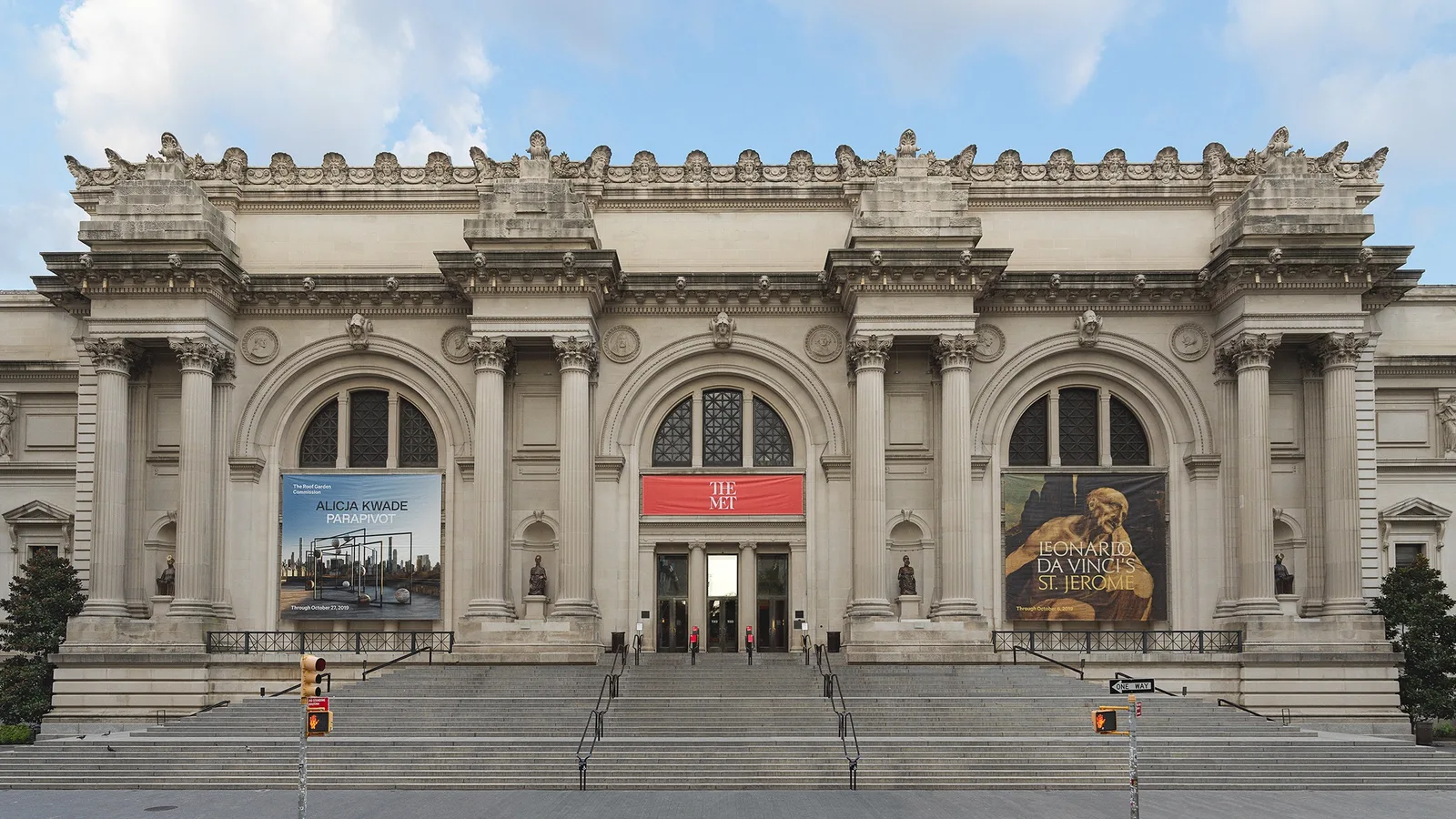
The Metropolitan Museum of Art has found its answer to a difficult year. On 5 November it announced that the Costume Institute's spring 2027 exhibition, and so the theme of the next Met Gala, will be "extraORDINARY: Fashion and the Poetics of the Everyday". The show will look at how designers rework the most familiar clothes and the most ordinary materials: jeans, T-shirts and puffer coats, and paper, plastic and metal.
It replaces the John Galliano retrospective originally planned for 2027, which was cancelled at the end of August after it became what Vogue calls "a cultural flashpoint" (see our report on what happened to the Galliano show). The Met Gala will take place on Monday 3 May 2027, and the exhibition will run at The Met Fifth Avenue from 9 May 2027 to 9 January 2028.
"I didn't have a plan B"
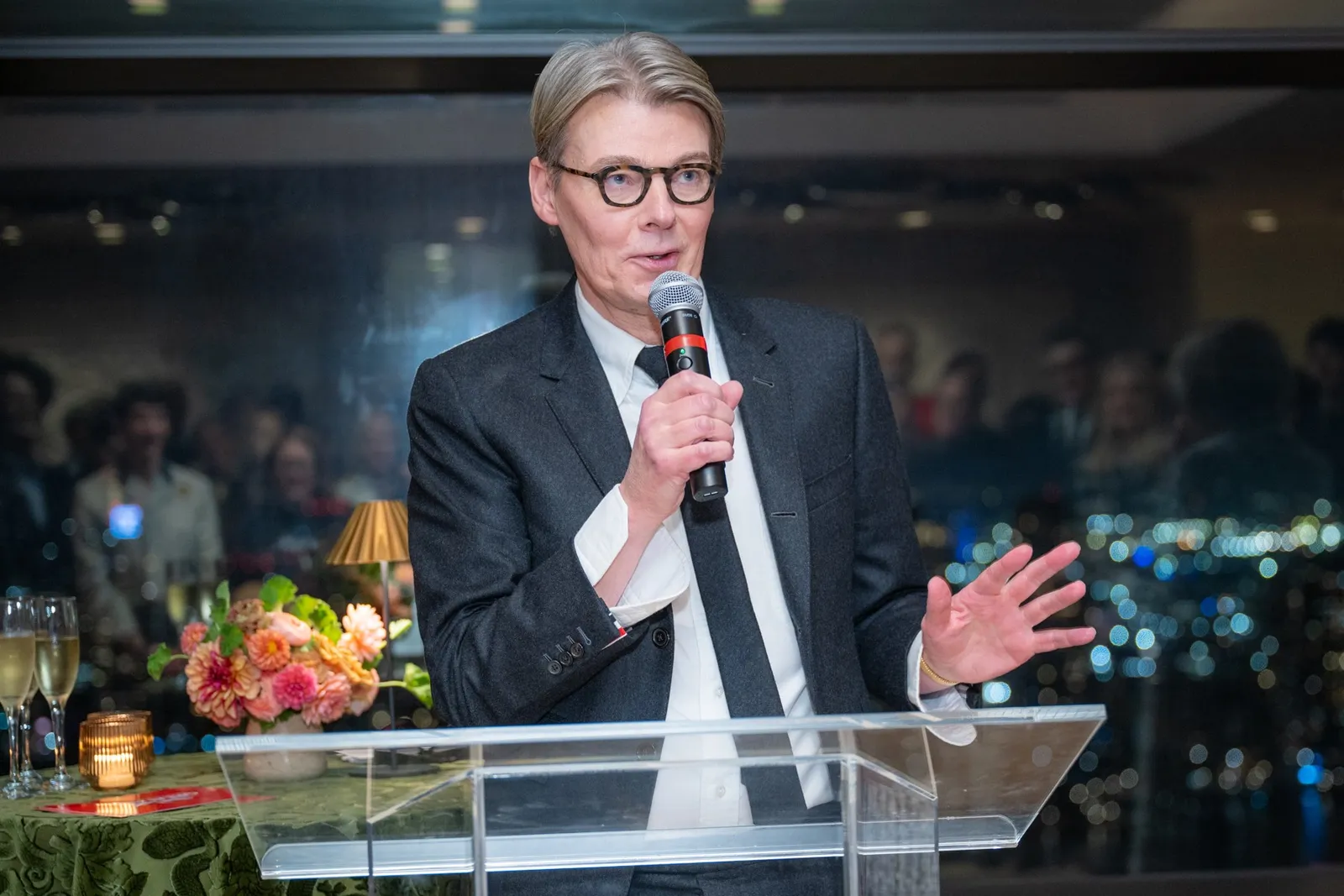
Andrew Bolton, the curator in charge of the Costume Institute, told Vogue that he had to start again from nothing. "I didn't have a plan B," he said. "It was really important to come up with an exhibition that wasn't just a masterwork show or something that we could do a little bit more easily. I wanted it to be as challenging and as provocative and as beautiful as a John show would have been."
His starting point was the current show, "Costume Art", which places the dressed body at the centre of aesthetic experience (read our review of Costume Art). That led him, he told Vogue, to think about how we experience clothing in everyday life "through habit and touch and movement and sensation". In the museum's announcement he put it this way: "The ordinary is never quite as simple as it appears. A pair of jeans, a white shirt, or a sweatshirt can hold traces of a life—the habits, memories, and attachments that make something our own."

What visitors will see
The exhibition opens with garments from Jun Takahashi's autumn/winter 2024–25 collection for Undercover, "Watching a Working Woman". Inspired in part by Wim Wenders's film Perfect Days, the runway show was accompanied by a poem written and read by Wenders about the daily life of a working mother. In the collection, familiar garments are joined and layered so that they become hard to recognise. Bolton told Vogue the pieces "give the exhibition a real human starting point".
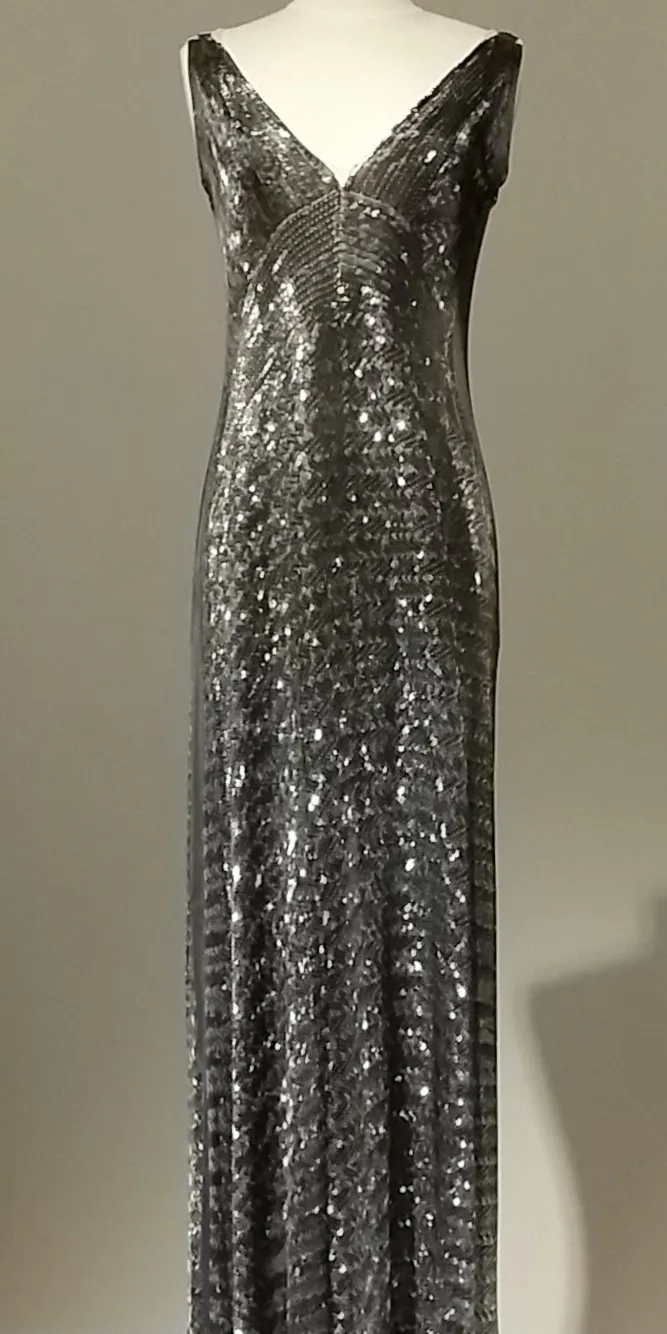
Two main sections follow. "Familiar Forms" groups archetypal garments by type, from jeans and T-shirts to hoodies, biker jackets, trench coats and puffers. The Met names a pair of 2022–23 jeans by Matthieu Blazy for Bottega Veneta (in fact leather, as Vogue notes), a 2006 shirt by Gianfranco Ferré, a 1993 flannel shirt by Marc Jacobs for Perry Ellis, a 2011–12 biker jacket by Junya Watanabe, a 2022 ensemble by Jonathan Anderson for Loewe and a 2019–20 ensemble by Moncler 1 Pierpaolo Piccioli. Vogue adds Virgil Abloh's Off-White T-shirts, trench coats from Anderson at Loewe and "the different designers at Burberry", puffer gowns from Piccioli's collections for Moncler and a Vetements T-shirt gown from spring 2024.
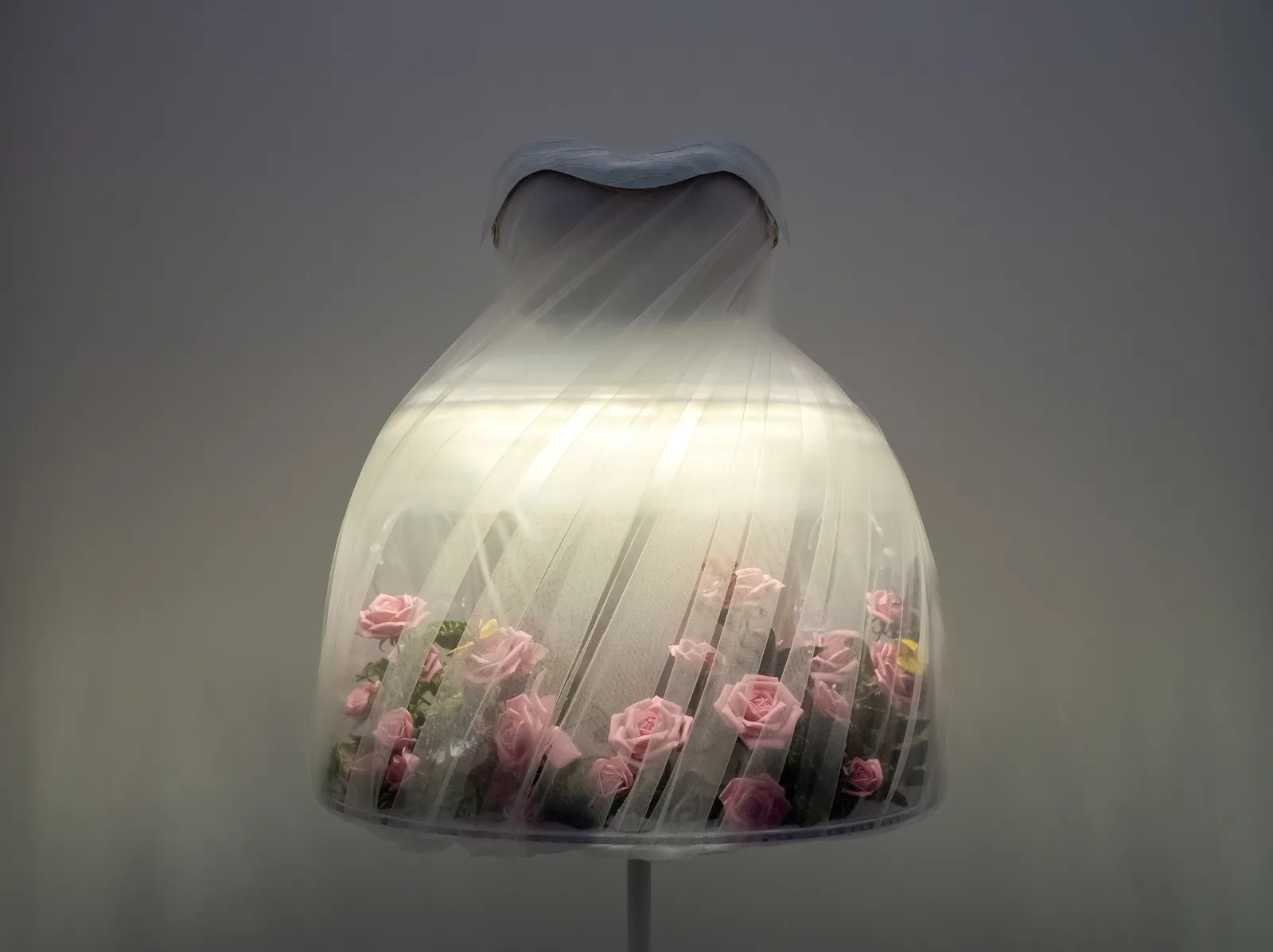

"Common Matter" turns to clothes made from commonplace materials and found objects, in three groups: paper, plastic and metal. Around them, displays of everyday objects include works that incorporate cutlery, broken china and buttons. The Met highlights a 1992 dress by Rei Kawakubo for Comme des Garçons, a 1992–93 ensemble by Martin Margiela, a 2003 jacket by Helmut Lang, a 1998–99 ensemble by Issey Miyake and a 2027 dress by Glenn Martens for Maison Margiela. Vogue describes the Comme des Garçons piece as a paper dress and the Martens design as a silverware bodice, and mentions a splintered china ensemble by Martin Margiela and a spoon dress by Ellen Hodakova Larsson.
"A paper dress can demand as much skill and as much labor as a silk gown," Bolton told Vogue. "And the cost of a material tells us very little about the craftsmanship required to transform it."
The exhibition closes with garments from four collections Kunihiko Morinaga designed for Anrealage between 2009 and 2021: shirts and coats built for cubes, spheres and pyramids, which ask how clothes accommodate different bodies.

Reuse, value and the visitor's own clothes
Recycling, upcycling and reuse run through the whole show, the Met says, raising questions about how value is reassigned and what responsibilities come with making, wearing and throwing away clothes. "It will make us question: what do we overlook, what do we discard, what makes something worth keeping?" Bolton told Vogue.
The exhibition design, by the London studio 1009, is meant to bring visitors' own clothes into dialogue with the works on show. Bolton said he liked the idea of people visiting in "their favorite t-shirt or their favorite pair of jeans or their favorite hoodie". Vogue links the theme to a wider movement on recent runways, where designers have embraced real, recognisable clothes. "Quiet gestures hold so much more meaning than the louder gestures," Bolton said.
What it means for the Gala
The exhibition and Gala are supported by Instagram, with major funding from Moncler and additional support from Condé Nast. The Gala is the Costume Institute's main source of annual funding, and the Met says further details of the event will be announced later. USA Today, reporting the announcement, recalled that the museum had confirmed the cancellation of the Galliano exhibition at the end of August.
The bigger challenge for the red carpet is the brief itself. A theme about the ordinary asks the most photographed guests of the year to make everyday clothes look extraordinary, which is exactly what the designers in the show have spent careers doing. With six months to go, Bolton has turned a cancellation into a brief that could prove more interesting than a substitute.
Featured image: Hugo Schneider, CC BY-SA 2.0, via Wikimedia Commons. Cropped for this page; the cropped version is shared under the same CC BY-SA 2.0 licence.
