
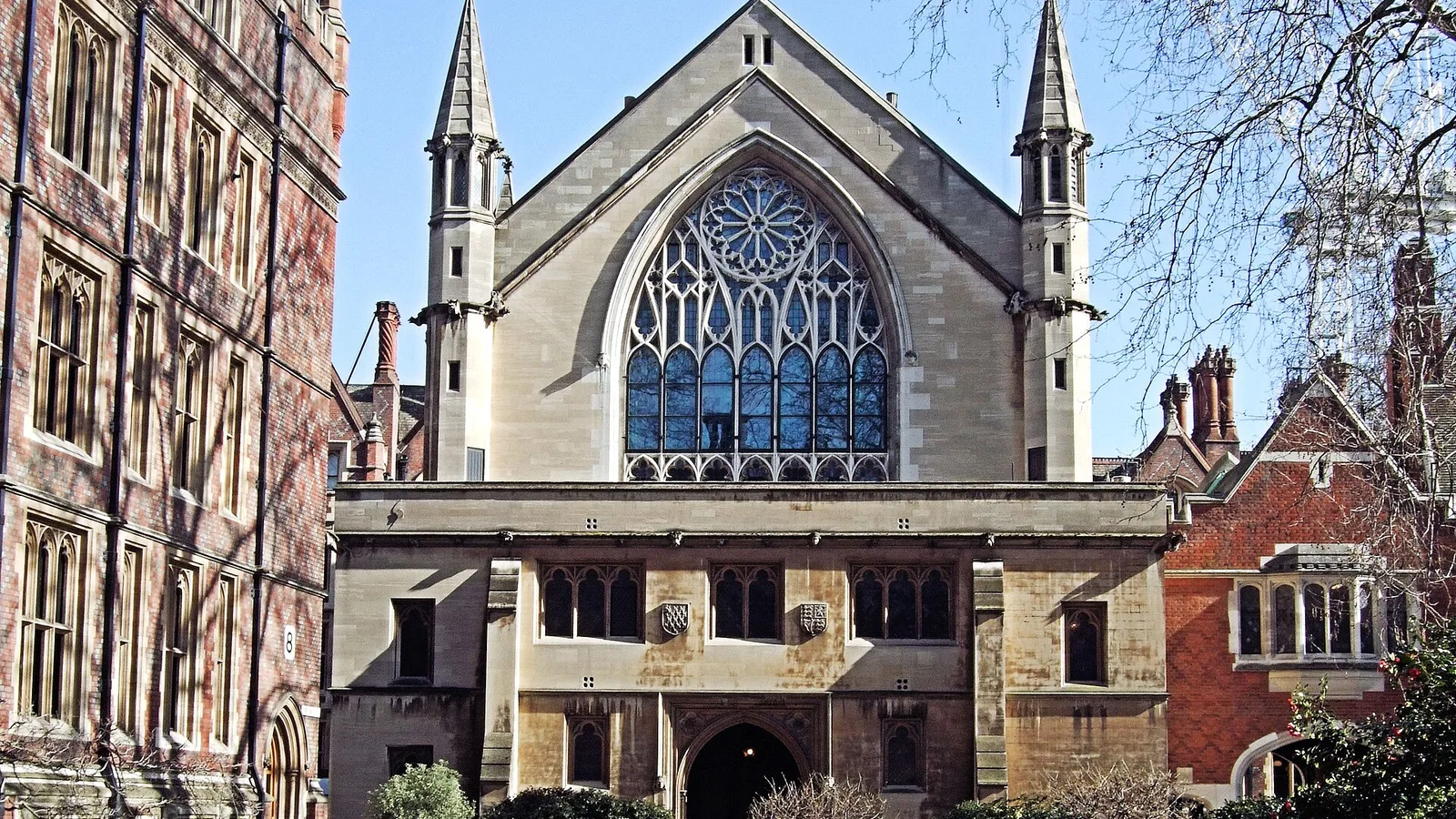
For years, London Fashion Week has been described as the schedule's creative laboratory: brilliant young designers, fewer heavyweight houses. Spring/Summer 2027, held in September 2026, told a different story. A great British house came home, another rediscovered its sense of colour, and one of London's most loved designers returned after three years away.
This is our guide to the three shows that defined the season, why they matter, and what they suggest about British fashion's next chapter. For the wider picture, see our coverage of Paris and Milan.
McQueen comes home
The biggest headline was McQueen's return. Who What Wear reported that creative director Seán McGirr brought the house back onto the official London Fashion Week schedule "for the first time in 25 years", staging the collection beneath the Gothic vaults of Lincoln's Inn Chapel.
Vogue's review, published on 20 September, opened by praising "a fabulous decision by Kering Group CEO Luca de Meo to sanction the return of McQueen to its point of origin: London". The reasoning is easy to follow. As Who What Wear put it, Lee Alexander McQueen "trained on Savile Row, studied at Central Saint Martins, and built a career around translating the contradictions of British culture—aristocracy and anarchy, ceremony and subversion—into fashion".
What McGirr showed
The collection put tailoring and eveningwear back at the centre. Vogue described house suiting with shoulders "built to resemble furled angel wings", harnesses by long-time McQueen collaborator Shaun Leane, open-back corsets that rose above the shoulder line, and "a fantastic dress of interlinked hand-embroidered metal skulls". Metallic leaves were scattered across tailoring and dresses "as if caught there in a gust", while mesh, perforated leather and sporty knits pushed parts of the collection "toward true ravewear".
Who What Wear linked the shift to strategy: the house "is currently sharpening its focus around the categories most central to its heritage, including tailoring and occasionwear", following the arrival of CEO Gianfranco D'Attis. The beauty look, with hair slicked into metallic horns, drew a strong reaction online.
Why it matters
Moving a Paris-shown house back to London is a statement about identity. McQueen's archive is rooted in London's tailoring tradition and its club culture, and this collection drew on both. If the strategy holds, expect McQueen to be judged less on casual ready-to-wear and more on the craft that made its name.
Burberry: Daniel Lee and Celia Birtwell
On the final day of the week, Daniel Lee's Burberry collection brought colour and a famous collaborator. The British textile designer Celia Birtwell, whose prints defined much of the look of the 1960s and 1970s, sat in the front row; Vogue's Sarah Mower called her "an 85-year-old" who delivered "by far the coolest and most youthful subversion of Burberry's customary self-possession and polish".
Florals on the check
Lee and Birtwell reimagined the Burberry check as a trellis on which her florals grew, later turned into badges and beaded embellishment, according to Vogue. Mower highlighted taffeta shirting and shorts embroidered with Birtwell florals, taffeta trenches with puffed hems, and denim in washed pink, trench taupe and black. She singled out "the swimming-pool blue of look 31's parka" and "the sunset orange of look 47's blueberry-embellished trench", and called it "a great shoe show", with 1970s-style strapped clogs.
Who What Wear counted 61 looks, including one worn by rapper Central Cee, and quoted Lee on the idea behind the collection: "There's an intentional imperfection: the idea of owning a piece, living in it."
That deliberate roughness, a slightly rumpled, lived-in finish, was the thread through the whole show. "I like when things don't feel perfect. I like things to feel cool, youthful," Lee told Vogue.
Why it matters
For several seasons, critics felt Burberry was fixated on the trench. Vogue wrote that this collection was still "remorselessly merchandised", but "infinitely more expansive and confident". For a house that relies on its heritage outerwear, adding colour and a strong print story broadens what customers can buy. Explore the house's history on our Burberry brand page.
Mulberry: Christopher Kane's return
Vogue called Christopher Kane's debut as creative director of Mulberry "the most anticipated event of London fashion week". It was held in the Brutalist Queen Elizabeth II Centre in Westminster.
Kane, who founded his own label 20 years ago and closed it three years ago, according to Vogue, works alongside his sister Tammy at Mulberry's Kensington Church Street headquarters. "I wanted this really clean, modern aesthetic for the brand," he said. "I suppose she's very Christopher Kane at the center, but the world is also very Mulberry."
The Bayswater, everywhere
The key idea was the flap of Mulberry's Bayswater bag. Its rounded, double-notched shape appeared on the opening grey leather coat and was then reworked throughout: cut into layers on leather mini skirts and dresses, indented into hems, collars and sweaters. "It's our way of doing a logo, but without saying it," Kane said.
The Kanes also mined the archive of founder Roger Saul, who started Mulberry in the 1970s. Vogue reported a "country" check raincoat, a floral wallpaper print drawn from Saul's interiors work on a strapless cotton dress, and eyelet lace skirts referencing old advertisements. Kane recalled that the Mulberry logo "was taken up by football fans on the terraces in Scotland when we were growing up".
New bag shapes, the Axe and the Chop (one also worn as a backpack), signal where the business is heading.
Why it matters
Mulberry is a leather-goods brand first, and a designer debut is ultimately judged in bags. By building a whole visual language around an existing icon, Kane has given the house a recognisable signature without relying on a logo, a very timeless approach.
What London SS27 tells us
Taken together, the three big shows point in one direction: heritage, handled with a lighter touch. McQueen returned to its tailoring roots, Burberry softened its check with florals and imperfection, and Mulberry made its most famous bag the source of everything. None relied on a logo to say who they were.
How to wear it
- A trench, but softer. A trench in a lighter fabric or unexpected colour is the most wearable Burberry idea.
- One strong-shouldered jacket. McQueen's sculpted tailoring translates to a sharp, defined-shoulder blazer.
- A bag with a recognisable shape, not a logo. The Mulberry lesson: the best "it" bags are identified by their silhouette.
- Strapped clogs. Burberry's footwear is an easy way to add a 1970s note to summer.
Frequently asked questions
When was London Fashion Week Spring/Summer 2027?
It took place in September 2026. Vogue published its McQueen review on 20 September and its Burberry and Mulberry reviews on 21 September.
Why did McQueen show in London?
Under Kering CEO Luca de Meo, the house returned to the official London schedule for the first time in 25 years, reconnecting with its origins in London tailoring.
Who is Celia Birtwell?
A British textile designer whose prints defined much of 1960s and 1970s fashion. She collaborated with Daniel Lee on Burberry's SS27 florals.
What did Christopher Kane design for Mulberry?
His debut collection built a motif from the Bayswater bag's flap and introduced new bags called the Axe and the Chop.
How can I compare British houses?
Use the Casadi brand comparison tool, starting with Burberry.
Featured image: Jim Linwood.jpg), CC BY 2.0, via Wikimedia Commons. Cropped for this page.