
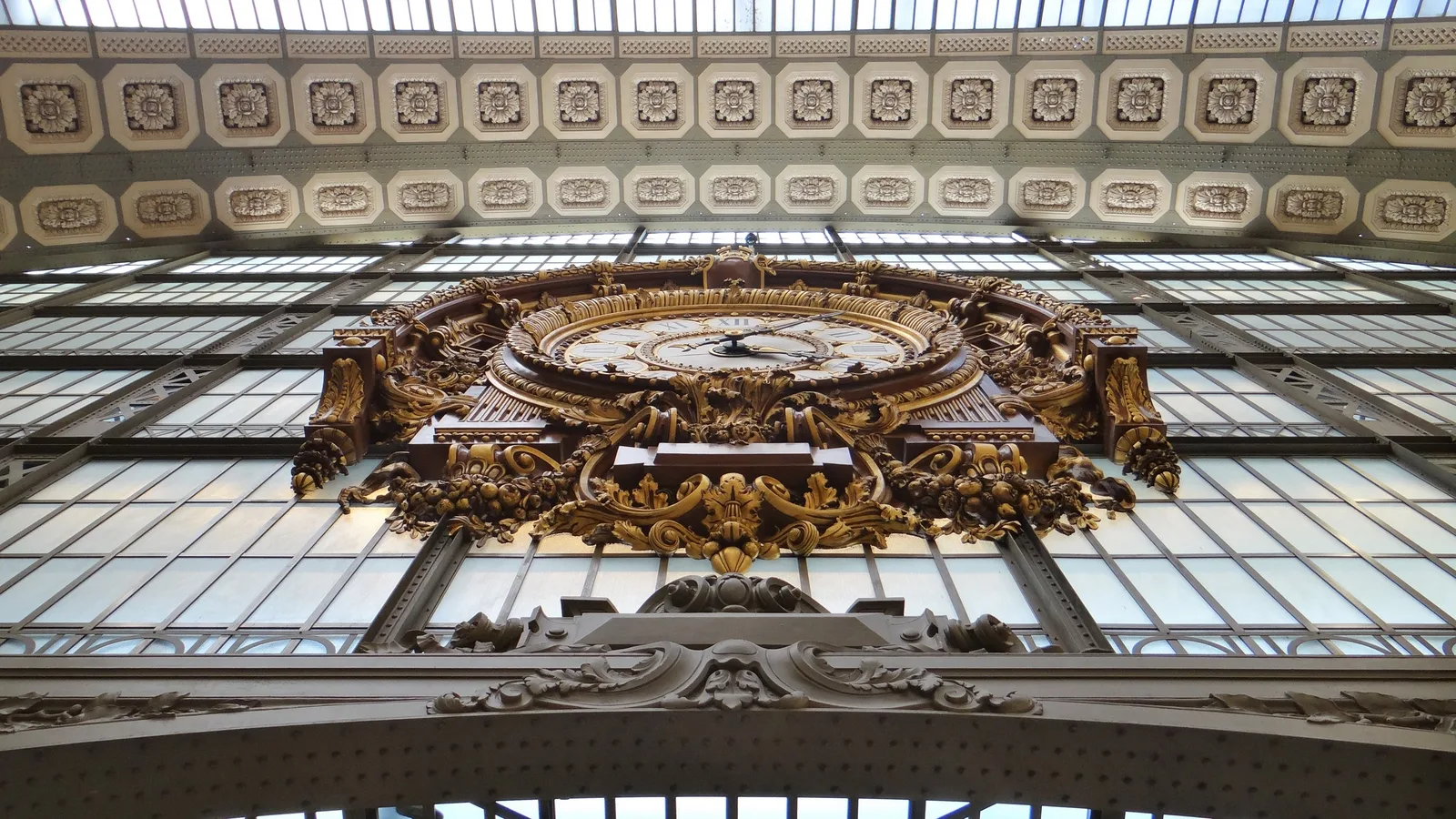
Agnès Troublé has never pretended to be interested in fashion. "I don't do fashion clothes, you know, because they become unfashionable very quickly," the founder of agnès b. told WWD this week. "I don't like that kind of clothing. That's my vision." It is a strange thing to hear from a designer, and it is the key to her latest project. To mark its 40th anniversary, the Musée d'Orsay in Paris has asked her for a capsule collection, and she has answered by going back to a painting she first turned into a jacket in 1977.
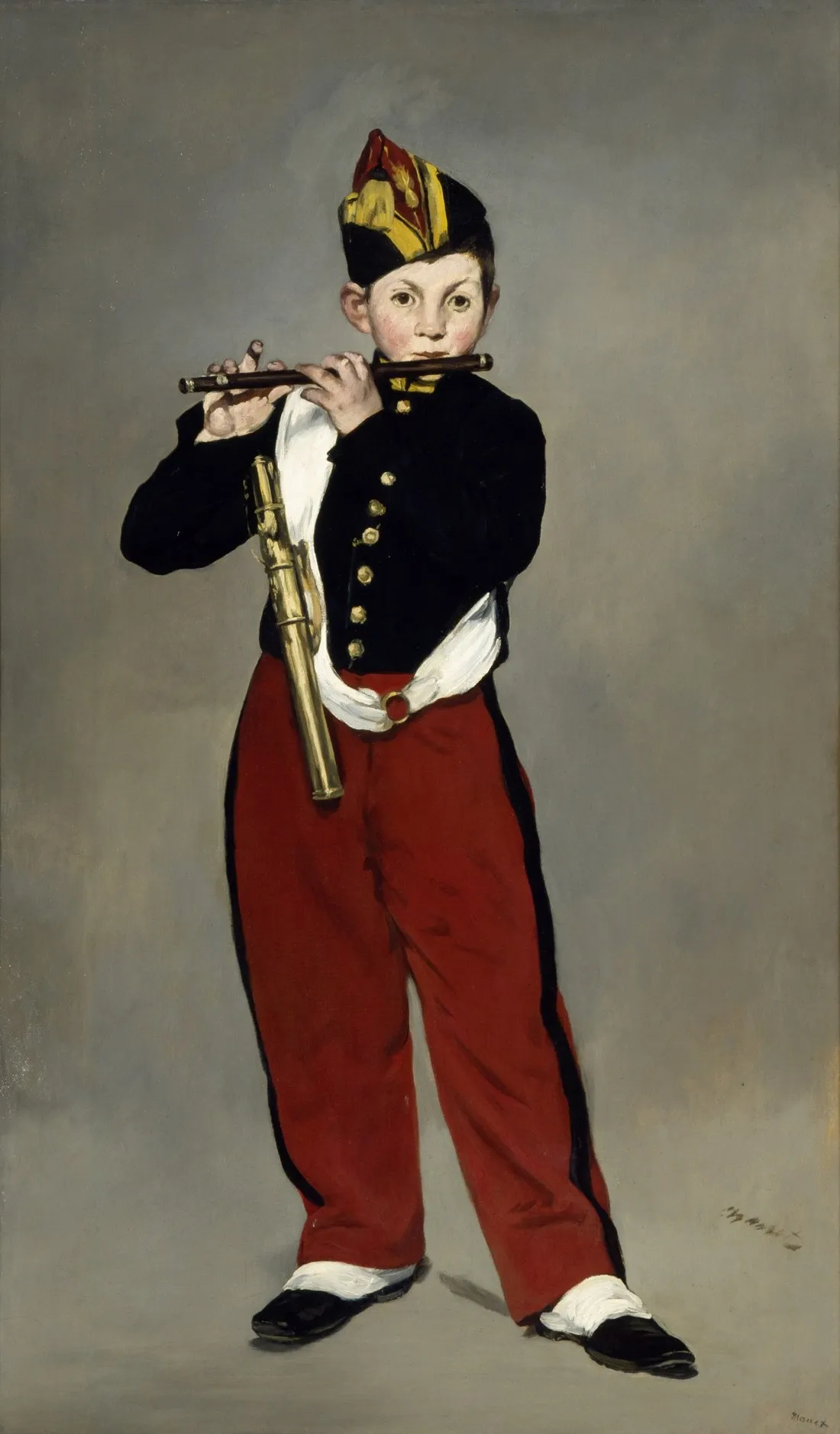
The painting is Édouard Manet's The Fifer (Le Fifre), from 1866. The jacket is the Fifre, a short black jacket that agnès b. still makes every year. Nearly half a century apart, the two now hang in the same story, and the capsule is a neat summary of how one of France's most durable independent designers works: slowly, from the same handful of ideas, with art as a constant source.
The key facts
- What: a limited Orsay x agnès b. capsule of jackets, T-shirts, scarves, a bandana and bags, marking the Musée d'Orsay's 40th anniversary
- Inspiration: Manet's The Fifer (1866), and the two clocks of the former Gare d'Orsay, designed by the station's architect Victor Laloux
- The back story: the agnès b. Fifre jacket, inspired by the painting, debuted in 1977 and is still in the collection
- Who asked: Sylvie Patry, the museum's general curator of heritage, according to WWD
- Prices: from €30 for a tote bag to €245 for a snap-fastened cotton cardigan, on the agnès b. website
- Where: agnesb.com and agnès b.; WWD reports that a display of archive Fifre jackets will move to the brand's rue du Jour boutique in Paris for the launch
What is in the collection
The capsule is small and deliberately plain. On its own site, agnès b. organises it in three parts.
The first is the painting itself. Manet's boy musician, the brand writes, inspired "the garment of the same name" in the 1970s; here, the androgynous figure becomes a snap-fastened cardigan in cotton fleece, priced at €245, and appears screen-printed on a T-shirt (€85), a bandana (€65) and a cotton tote (€30). WWD describes the fleece pieces as black cotton fleece jackets.
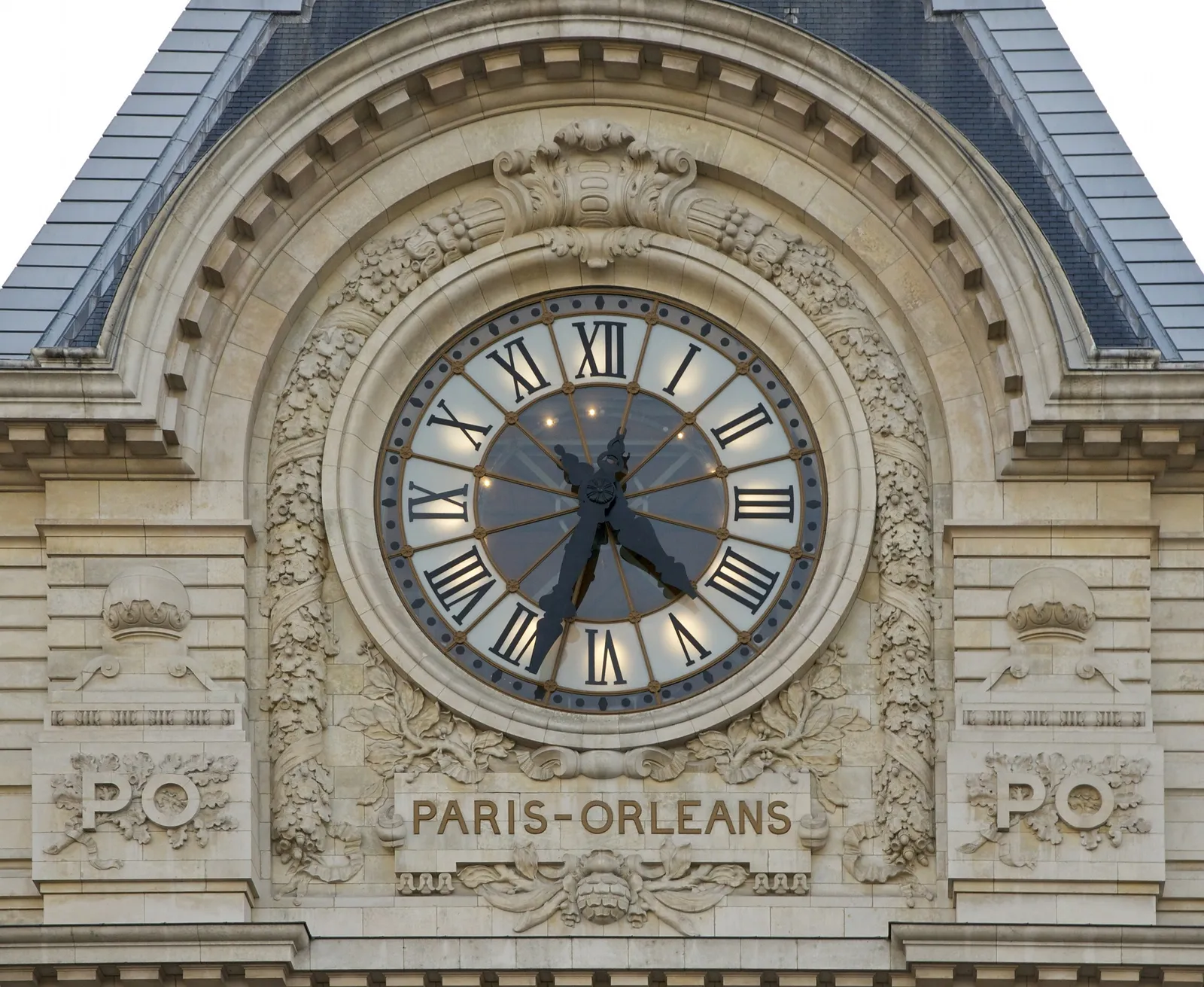
The second part is the building. Troublé has drawn the sculpted details of the old railway station and its two clocks, the one on the great glass wall inside and the one on the façade, "with the simplicity of a black line", as the brand puts it. The drawings appear on a T-shirt (€95), a shopping bag (€65), a tote (€30) and a scarf (€175).
The third is colour. The black, white and red of the painting, with the gold of the fifer's buttons, are, the brand notes, colours already familiar from agnès b. collections. Here they are put together in broad stripes on a unisex T-shirt (€115).
There is nothing in the line-up that the brand's regular customers would not recognise, and that is the point. It is less a costume drawn from a painting than a reminder that the painting was in the wardrobe all along.

A painting that was rejected
The choice of painting is a good one, and not only because of the jacket. Manet painted The Fifer in 1866, after a trip to Spain in 1865 on which he saw the work of Velázquez at the Prado. He set a young uniformed musician against a flat, almost empty grey background, which makes it hard to judge the figure's size or setting. The jury of the Salon of 1866 rejected it, and Émile Zola defended Manet in print. On its own site, agnès b. calls the picture one that was turned away "for its irreverent look".
The painting entered the French national collections in 1911, from the estate of Count Isaac de Camondo, and hung in the Louvre and later in the Jeu de Paume before moving to the new Musée d'Orsay in 1986. Its flat colours, strong outline and single figure also make it, it turns out, an easy painting to wear.
The jacket that started it
The Fifre jacket was one of Troublé's early signatures. WWD reports that it debuted in 1977, drew its inspiration from Manet's depiction of a young military musician, and remains part of the collection every year. At Monday's presentation, versions of the jacket from 1981, 1983 and 1994 were on display, alongside sketches that link the design to the painting.
It belongs to the same family as the snap cardigan, the agnès b. piece that most people know. Troublé designed that in 1979 by cutting open a crew-neck sweater and adding press-studs; it is still one of the house's best sellers. The new Orsay cardigan, in cotton fleece with snaps, makes the connection between the two explicit.

Who Agnès Troublé is
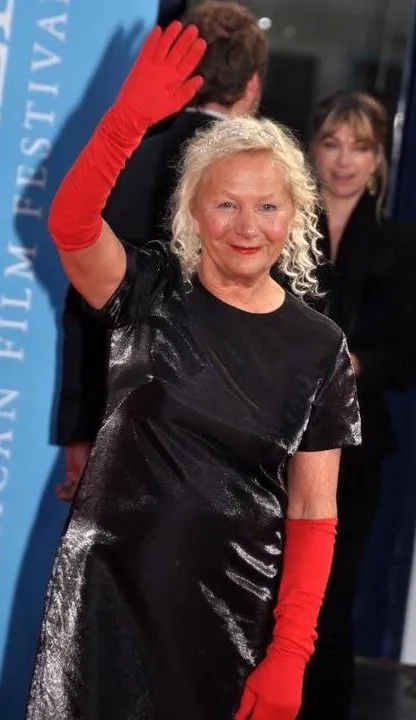
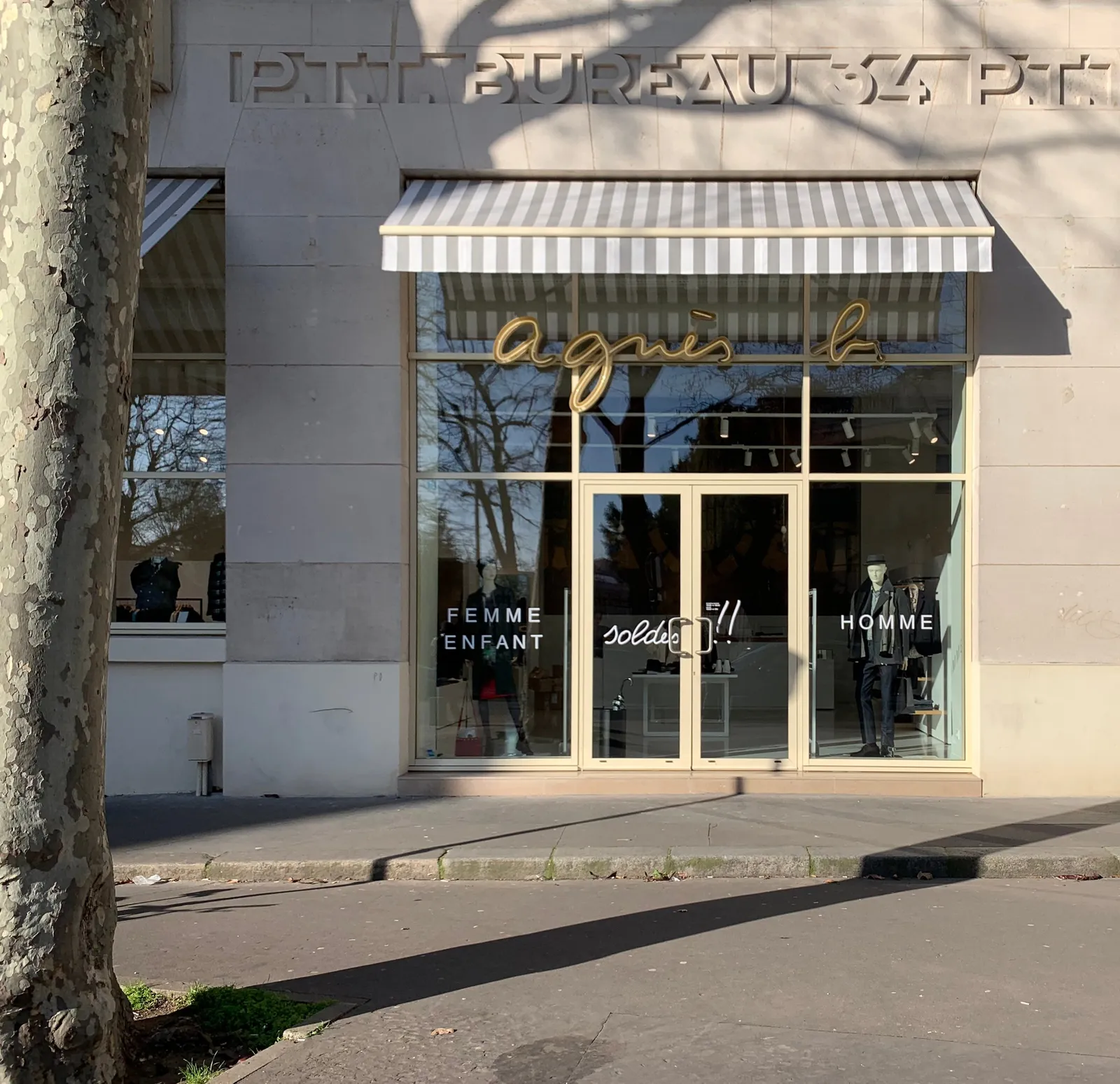
Born in Versailles in 1941, Troublé started out as a junior fashion editor at Elle before turning to design. The "b." in agnès b. comes from the surname of her first husband, the publisher Christian Bourgois. She opened her first shop on rue du Jour, by Les Halles in central Paris, in the mid-1970s, added menswear in 1981 and opened in New York in the early 1980s. The company is still family-owned, as WWD notes.
Unusually for a fashion founder, she has spent decades using the business to back other people's art. She opened the Galerie du Jour in Paris in 1984, showing graffiti artists and photographers, co-founded the contemporary art periodical Point d'ironie, and has helped finance films, including completion funds for Gaspar Noé's Irréversible and Claire Denis's Trouble Every Day. She has directed two documentaries herself.
That record matters for reading the Orsay capsule. When a fashion brand works with a museum, the suspicion is usually that one side is buying the other's prestige. Here the borrowing has gone on for so long that it is hard to say which way it runs.
Why the museums keep calling
This is Troublé's second Paris museum collaboration in a year. In November 2025 she launched a collection with the Louvre, printing two landscapes by Claude Lorrain, Seaport at Sunset and Landscape with Shepherd, on clothes, scarves and leather accessories. The Louvre's announcement recalled that she discovered the museum at the age of eleven and, captivated by Titian's Man with a Glove, dreamed of becoming a curator. "These are trippy landscapes, open to the sea, to the beyond, to otherness," she said of the Lorrains at the time.
Asked by WWD why she keeps doing these projects, she described it as something more personal than commercial. "It's inspiring too for me. It's really inspiring. It keeps me close to art," she said.
Patry, who initiated the Orsay project, described a kinship between the label and the museum. "We have a kind of shared story and shared values. To me, agnès b. is the designer of the Parisienne — this way of never being overdressed. There is a simplicity which is so French, and also Parisian," she told WWD. "We are children of the '80s." She also sees the collection as a way to bring new people to the museum. "You don't necessarily need to access art through knowledge or through history," she said.

Orsay's birthday, and its other partners
The Musée d'Orsay occupies the former Gare d'Orsay, a Beaux-Arts railway station built between 1898 and 1900 for the Paris-Orléans railway, with Victor Laloux among its architects. Converted into a museum of art from 1848 to 1914, it opened to the public on 9 December 1986.
The agnès b. capsule is one of several anniversary projects. WWD lists a special version of Martinelli Luce's Pipistrello lamp in the colours of the central nave (the lamp was designed in 1965 by Gae Aulenti, the architect who also worked on the station's conversion); a collection with the retailer Monoprix; reissued Viennese Art Deco chairs from the museum's collection with the design gallery Écart, founded by Andrée Putman and relaunched by Pierre Yovanovitch; and a Christmas cake with La Grande Épicerie, made in an edition of 400. "These projects also help us reach new audiences," the museum's director of development and international relations, Guillaume Roux, told the paper.
The public celebrations come in December. According to the Paris tourist office, the museum opens free of charge for an anniversary weekend on 5 and 6 December, and on 12 December its nave becomes a dance floor for a "boum" staged by Thomas Jolly, the director of the Paris 2024 Olympic ceremonies.

Our view
The fashion calendar this autumn has been dominated by designers arriving at and leaving big houses, from Martine Rose at Balenciaga to Tod's going without a creative director. Against that churn, the Orsay capsule is a quietly instructive object. Here is a designer in her eighties, running a company her family still owns, who can answer a museum's invitation with a jacket she first made in 1977 and nobody finds it lazy.
That is only possible because the Fifre never really went away. Troublé has spent five decades refining a small vocabulary of pieces, the snap cardigan, the striped T-shirt, the short black jacket, and letting the culture around them do the rest. Most brand-museum tie-ins borrow a painting for a season. This one shows that a painting can become part of a wardrobe and stay there.
It also says something about the value of museums to fashion right now. As exhibitions such as Look! at the Musée des Arts Décoratifs and the Met's 2027 Costume Institute theme show, institutions are increasingly interested in clothes as everyday culture, not only as couture. A €30 tote with a Manet on it is a small thing. A designer who has been treating Manet as everyday clothing since 1977 is a larger one.
Frequently asked questions
What is in the agnès b. x Musée d'Orsay collection?
A snap-fastened cotton fleece cardigan, T-shirts, a bandana, a scarf, a shopping bag and tote bags, decorated with Manet's The Fifer and drawings of the museum's two clocks, plus a striped T-shirt in the painting's colours.
How much does it cost?
On the agnès b. website, prices run from €30 for a tote bag to €245 for the cardigan.
What is the agnès b. Fifre jacket?
A short black jacket inspired by Manet's 1866 painting of a young military musician. WWD reports that it debuted in 1977 and is part of the collection every year.
Why is the Musée d'Orsay celebrating?
The museum, in the former Gare d'Orsay railway station, opened on 9 December 1986, so 2026 is its 40th anniversary. A free anniversary weekend is planned for 5 and 6 December.
Featured image: Ibex73, CC BY-SA 4.0, via Wikimedia Commons. Cropped for this page; the cropped version is shared under the same CC BY-SA 4.0 licence.
