
When John Galliano explains his career to Vogue's Alexander Fury, he divides it into acts. Act one ran from his Saint Martins graduation show to the end of his time at Dior. Act two was the decade at Maison Margiela. Act three, he says, begins with Re{form}, the collection he has made for Zara.
A month after that collection went on sale, the third act has a supporting cast. According to FashionUnited, Inditex has hired Serge Ruffieux, the Italian-Swiss designer who once worked under Galliano at Dior and later ran Carven, as design director for Galliano's team at Zara. It is a small appointment with a large signal: what began as a headline-grabbing collaboration is being staffed like a long-running design programme.
The deal
Zara announced the partnership in March. Harper's Bazaar reported that Galliano, who left Margiela in 2024 after a decade there and led Dior from 1997 to 2011, would spend two years working to "re-author the brand's archive". He told Vogue's Nicole Phelps at the time: "I've been curating some of Zara's recent archives… The idea is that I will re-author them." And, of the timing: "They say act three of your life is the most important, and can be the most fun."
Vogue traced the relationship to Marta Ortega Pérez, Inditex's non-executive chair and the force behind Zara's run of designer collaborations, which has included Narciso Rodriguez and Stefano Pilati. Fury reports that the two first met in 2022, that work on the collection began "in hushed secrecy" in January 2026, and that the contract covers four collections over two years.
The collection's full name is Re{form} Zara Authored by the Couturier John Galliano. Fury notes the wording is partly legal, because the John Galliano name, as a brand, is still owned by LVMH, and partly creative: Galliano is not designing from scratch but reworking garments that already exist.

The collection
Re{form} was unveiled during Paris Fashion Week, on 1 October. FashionNetwork's Olivier Guyot reported that the first instalment comprised 35 looks, each given a French title, with campaign imagery by Steven Meisel. Galliano's starting point was Zara's own back catalogue. "Basically, it was the garments that were sitting around," he told Vogue. "They became my working prototypes." Zara described the techniques as "physical hacking, digital hacking, shrinking, enlarging, filtering, sampling, splicing", and said each reworked piece was produced in new materials.
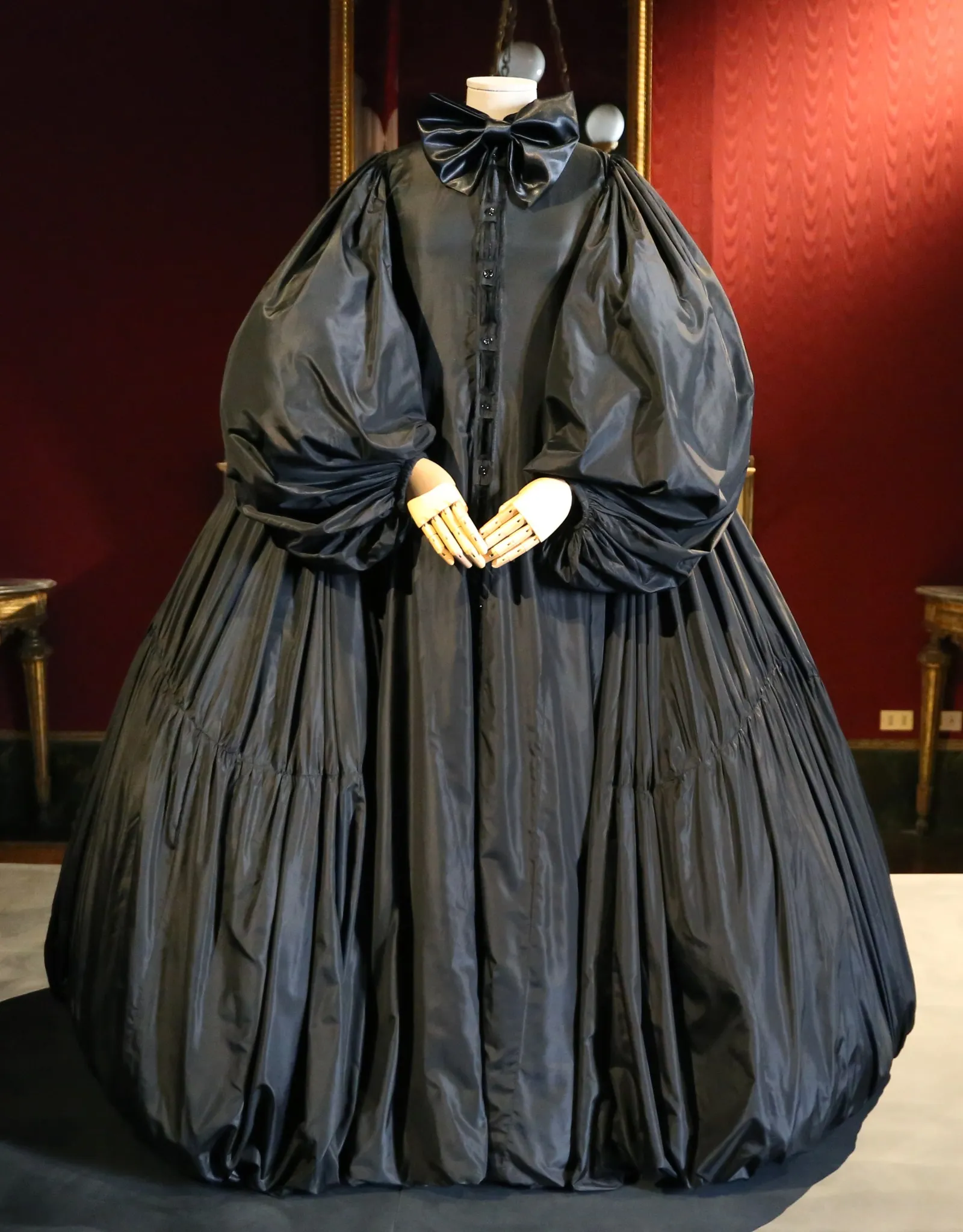
The theme reaches back to Galliano's beginnings. The silhouettes draw on les Incroyables and les Merveilleuses, the dandies and their female counterparts of post-revolutionary France, which were also the subject of his 1984 Saint Martins graduate collection. The range covers menswear and womenswear, from frock coats and culottes to draped muslin and georgette dresses, plus shoes, hats and a bag called the Tri Chic.
Galliano insisted to Vogue that he "had no intentions to dumb down". Ortega Pérez framed it as access: "It's an honor to bring John's magic to a broad audience for the first time."

How it sold
The roll-out was deliberately narrow: online, in Zara's London and Madrid flagships, and at a by-appointment pop-up in a Marais townhouse at 70 rue des Archives from 1 to 6 October. The Guardian reported queues outside the Bond Street store on launch morning.
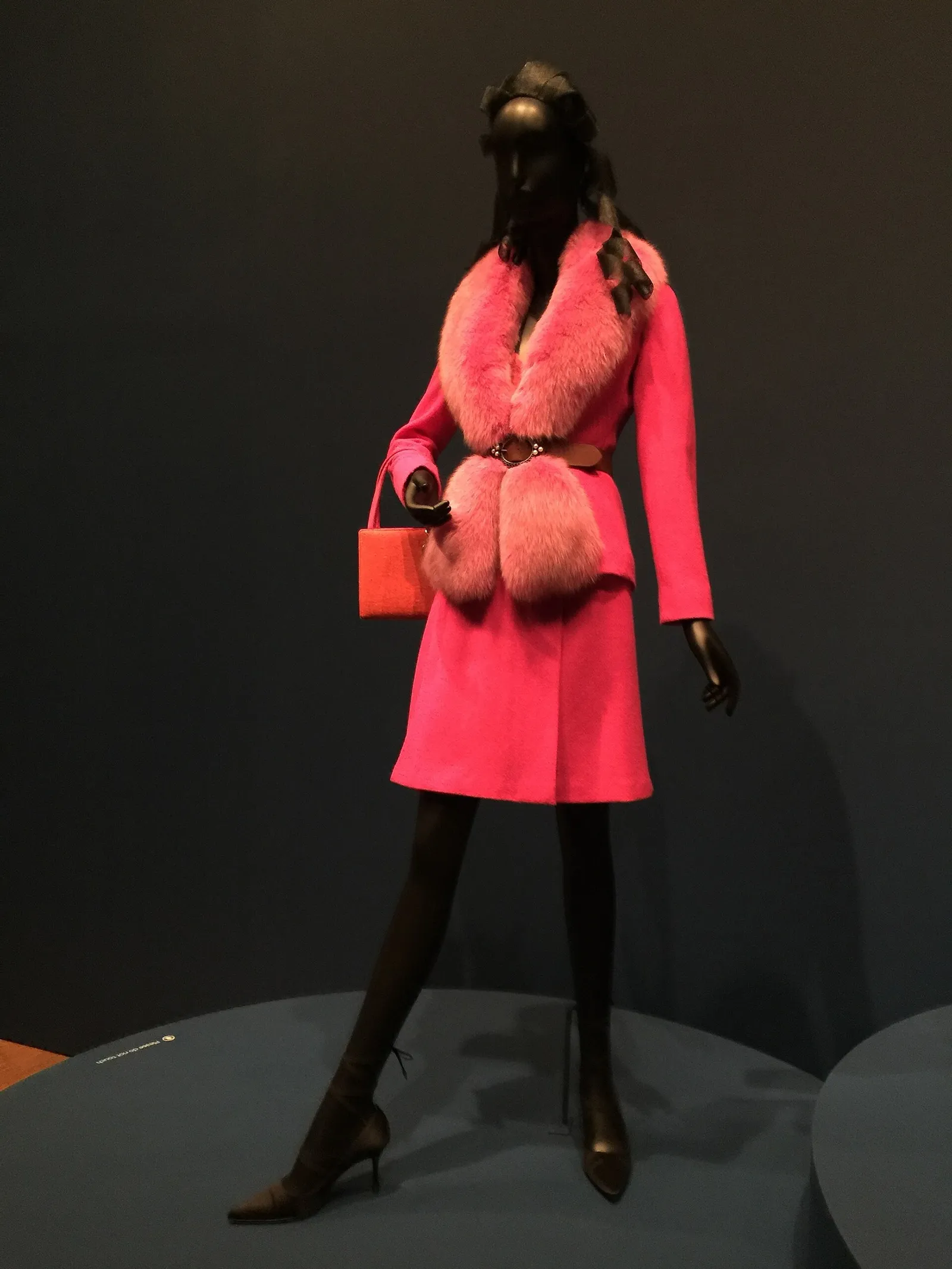
On 2 October, Vogue Business counted 157 pieces in the line, of which 86 had sold out online at the time of writing; Inditex did not respond to its request for comment. Prices are high for the high street. Vogue Business listed a chiffon dress at $999 and a faux-fur-collared coat at $759; the Guardian gave a UK range of £17.99 to £699, and Vogue said the collection starts at $29.90. For comparison, Fury notes that in January a Galliano couture piece for Dior sold at auction for a record €663,000.
Not every buyer was convinced. Vogue Business reported that Millie Adams, owner of Studded Petals Vintage, criticised the prices relative to the fabrics, some of which were polyamide, polyester and viscose. The model and actor Hari Nef, by contrast, bought six pieces.
The controversy that came with it
Re{form} arrived weeks after the Met's planned 2027 Costume Institute exhibition on Galliano was cancelled. As the Guardian put it, Galliano "was found guilty of a hate crime in 2011 after a series of racist and antisemitic rants". In withdrawing from the Met exhibition he said: "I remain fully accountable for the pain caused by my words in the past, particularly the hurt I caused to the Jewish and Asian communities, and I remain deeply sorry for it."
The Guardian's headline asked whether Zara's decision was a "terrible idea or major coup". The designer and author Orsola de Castro called it "the coup of their career, their life, their brand". The fashion critic Philippe Pourhashemi agreed: "For Zara it's still a major coup that they managed to get [Galliano] on board." The fashion historian Tony Glenville saw a limited downside: "If he does a couple of collections a year in small quantities, they get the cachet without too much risk… If it's phenomenally successful, they'll extend his contract." Zara declined to comment to the Guardian.
Enter Serge Ruffieux
On 29 October, FashionUnited reported that Inditex had hired Ruffieux on a freelance basis, and that he has served as design director under Galliano's creative direction since early October. Ruffieux announced the role on social media; neither he nor Inditex has given further details. FashionUnited says he will oversee the realisation of Galliano's concepts and sketches for at least three more seasonal collections for Zara, running through 2027.
His CV explains the choice. Ruffieux held senior roles at Moschino, Sonia Rykiel and Cacharel, and at Dior, where he worked under Galliano. After Raf Simons left Dior in 2015, he led the house's design team in the interim, until Maria Grazia Chiuri arrived in 2016. He was then creative director of Carven from December 2016 to November 2018, worked on projects for Pucci, Jimmy Choo and Marni, and in 2021 co-founded the footwear and accessories label 13 09 SR with the journalist Emilie Faure.

Why it matters
Fashion collaborations are usually one-off events: a designer name, a single drop, a queue, and a sell-out. Zara's arrangement with Galliano is built differently. It is a multi-season contract, the designer is reworking the retailer's own back catalogue rather than lending it his signatures, and Inditex has now brought in a seasoned studio director to make the sketches into product on a fast-fashion timetable.
That makes Re{form} a test of more than one designer's comeback. If it works, it suggests that a mass retailer can buy not just a famous name but a couture method, and run it like a programme. If it doesn't, the critics who questioned both the prices and the choice of designer will have their answer. Either way, the next instalment, now with Ruffieux in the studio, will show whether act three has staying power.
Featured image: Zarateman_2.jpg), CC0 1.0, via Wikimedia Commons. Cropped for this page.