
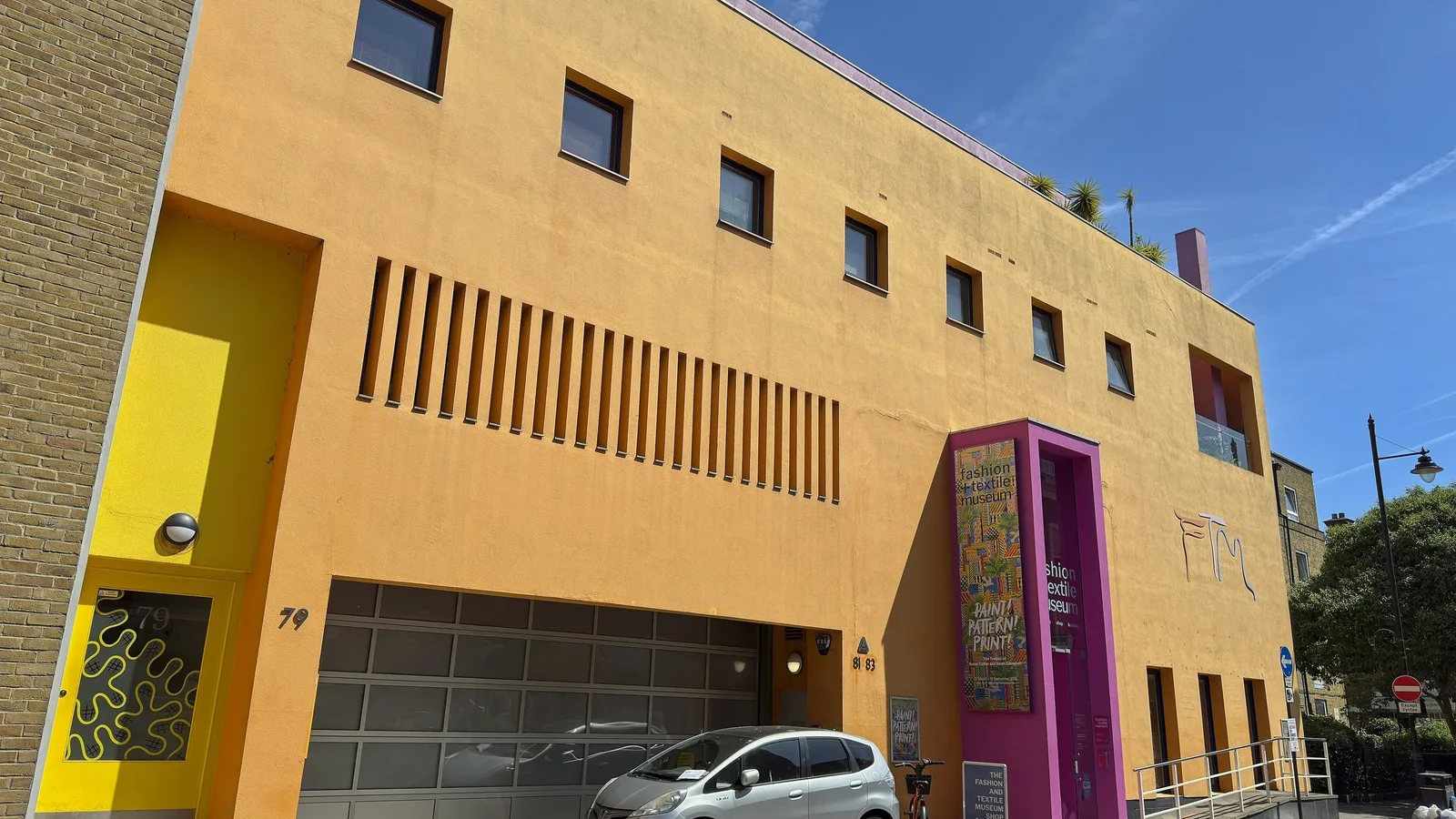
Few partnerships in fashion divide the labour as cleanly as this one. Ossie Clark cut; Celia Birtwell printed. Between the mid-1960s and the early 1970s, his bias-cut chiffon, crêpe and satin and her drifting florals became the uniform of a certain kind of London glamour, worn by musicians, models and the international set. Half a century on, the clothes still fetch attention, and a new exhibition at London's Fashion and Textile Museum puts the two names on equal footing in its title.
The exhibition
Ossie Clark + Celia Birtwell runs at the Fashion and Textile Museum in Bermondsey until 11 April 2027. The museum describes it as an exploration of "the life and work of legendary fashion designer Ossie Clark", whose "glamorous rock-and-roll designs" featured "distinctive prints designed by collaborator and wife Celia Birtwell".
The show draws on a private collection of Clark's designs covering his career "from early work through to his later fashion collections". It is curated by the design historian Teresa Collenette and Dennis Nothdruft, the museum's head of exhibitions, who has led its exhibitions team since Zandra Rhodes founded the museum in 2003. An accompanying book, published on 2 October, draws on the C20 Vintage Fashion collection, with rare sketches and archive photography.
From Liverpool to the Royal College
Clark was born Raymond Clark in Liverpool on 9 June 1942. According to the BBC's British Style Genius, he was evacuated during the war to Oswaldtwistle in Lancashire, which gave him his nickname, and was making clothes by the age of ten with his mother's help.
In Manchester at the end of the 1950s, where Clark had won a place at the Salford School of Art, he met two people who would shape his life: Celia Birtwell, then an art student, and the painter David Hockney. Clark won a scholarship to the Royal College of Art in 1962. He graduated in 1965, the BBC records, with the only first-class degree awarded that year. His graduation collection, inspired by Bridget Riley's Op Art, which he had seen on a trip across America with Hockney, appeared in Vogue within months.
Quorum and the partnership
The setting for what followed was Quorum, the boutique Alice Pollock had founded in 1964. As the V&A's collection notes explain, Pollock invited Clark to join her in 1965, and "he, his girlfriend Celia Birtwell, and Alice Pollock struck up a productive design partnership". Birtwell's textiles were at first used by both designers, "until Clark claimed exclusive use of her fabric prints".
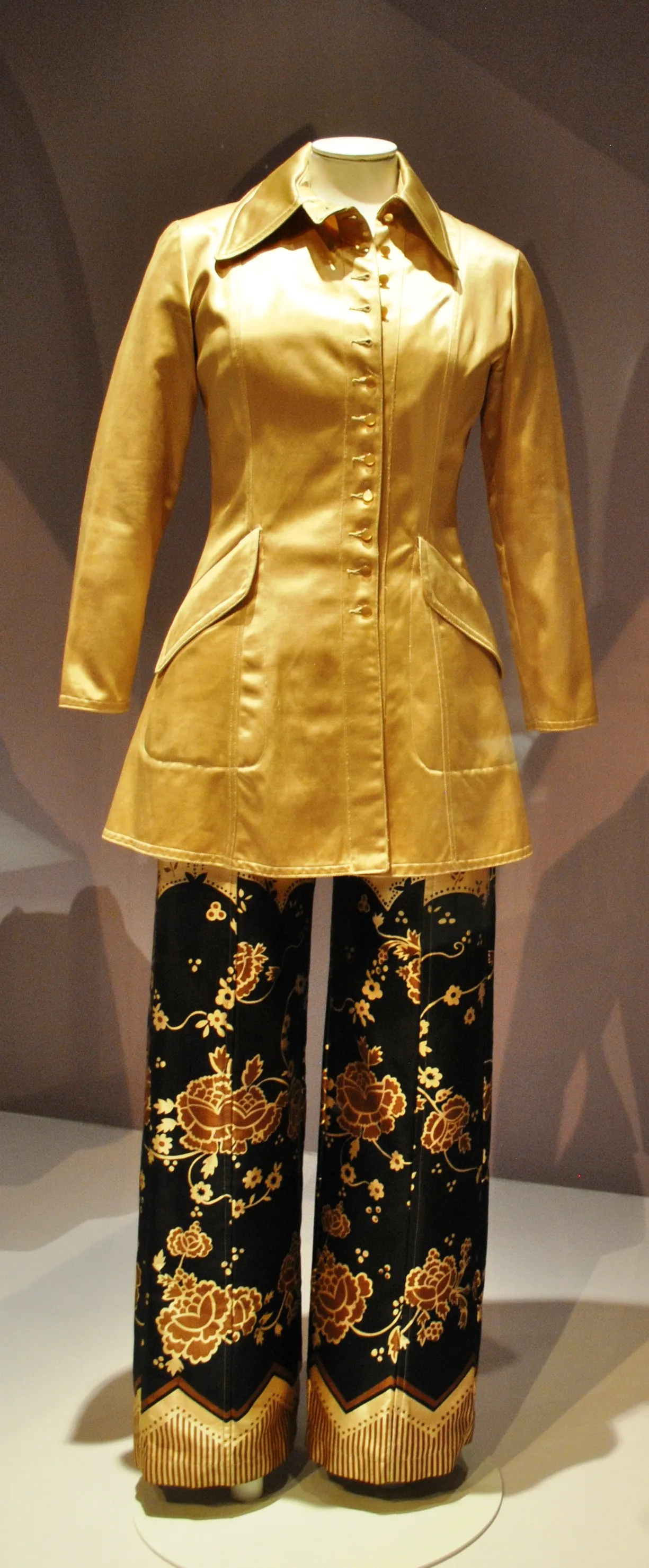
The division of labour was precise. Birtwell's own archive describes how she designed the textiles and chose the colours, anticipating how a pattern would meet across a sleeve, bodice or skirt and change in motion, while Clark understood how to cut, shape and animate those prints around the body. Prints such as Mystic Daisy, Monkey Puzzle, Candy Flower and Michaelmas Daisy became central to the work. At their London shows, models danced to pop music Clark had chosen, so the clothes were seen moving.
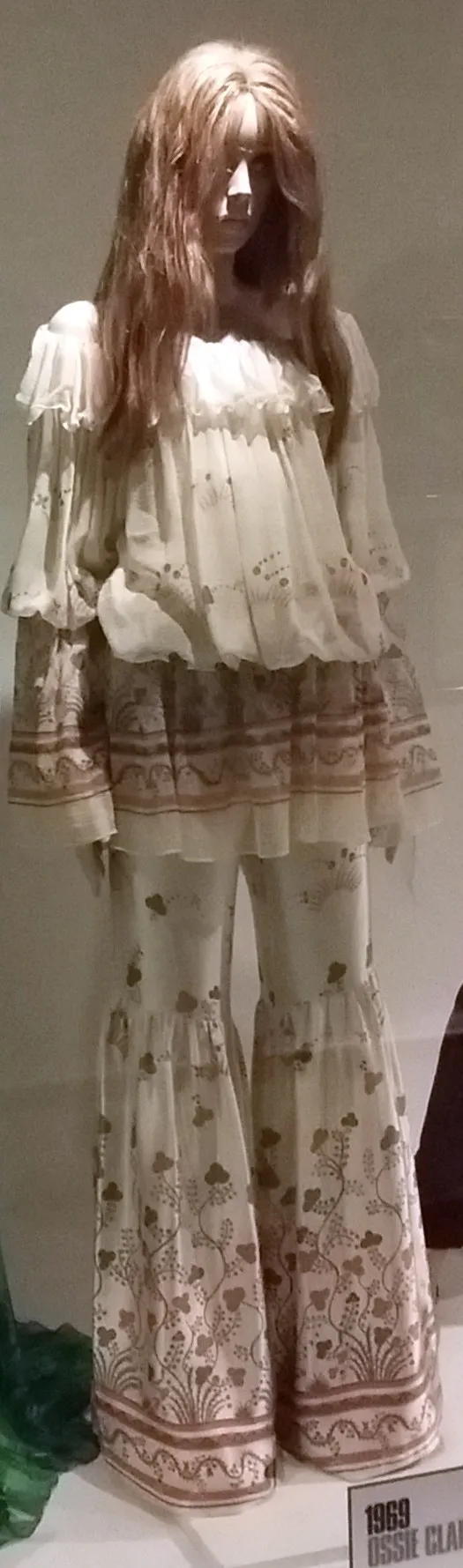

Clark's reputation rested on construction. The BBC calls him "the master cutter", whose evening dresses, inspired by the glamour of Hollywood's golden age, were "often bias-cut to cling to the body", and notes that he often boasted he could make anything, from a bra to a pair of shoes, with his own hands. Clients, by the BBC's account and Birtwell's, included Twiggy, Marianne Faithfull, Talitha Getty, Bianca Jagger, Liza Minnelli, Jimi Hendrix, Jane Birkin, and George Harrison and Pattie Boyd.
Hockney's portrait, and the end of the partnership
Clark and Birtwell married in 1969. Soon afterwards Hockney painted the couple in Mr and Mrs Clark and Percy (1970–71), now in the Tate collection. Birtwell's archive calls it the best-known image in "a lifelong visual conversation" between her and Hockney, made up of drawings, lithographs, photographs and later portraits.
The business side was never as assured as the cutting. The BBC records that Quorum, "burdened with debt", was sold to the fashion house Radley in 1968, where the pair went on designing a diffusion line, and that Clark's talent was "coupled with complete disregard for all financial matters". The couple separated in 1973, according to Birtwell's archive. Clark died in 1996.

Birtwell's second act
Birtwell's career did not end with Quorum. After some years teaching and raising her sons, she moved into home textiles in the early 1980s, and in 1984 opened a shop at 71 Westbourne Park Road in Notting Hill. One early success, Little Animals, was inspired by Jacobean embroidery she had studied in the V&A's archives. In 2006 a sell-out Topshop collection revived prints including Mystic Daisy for a new generation.
Why it still matters
The case for the exhibition is the one its title makes: that the clothes were the work of two designers, not one. The Fashion and Textile Museum puts it in terms of Clark's "skills as a pattern cutter and innate understanding of fit and form", combined with Birtwell's "romantic and playful prints inspired by the Ballet Russe and Art Deco", a legacy it says "continues to shape style today". Anyone who has seen a floaty printed maxi dress or a bias-cut slip on a recent runway has seen some of that inheritance.
Visiting
- Where: Fashion and Textile Museum, 83 Bermondsey Street, London SE1 3XF
- When: until 11 April 2027, Tuesday to Saturday, 11.00 to 18.00 (last entry 17.15)
- Tickets: £12.65 (concessions may apply); timed entry, so arrive within 20 minutes of your slot
For more of the season's shows, see our guide to eight fashion exhibitions worth travelling for, and for permanent collections, Casadi's guide to fashion museums.
Featured image: Bex Walton, CC BY 4.0, via Wikimedia Commons. Cropped for this page.
