

For Frasers Group, the reward for a months-long pursuit of Hugo Boss arrived with an unwelcome footnote. On 23 October Mike Ashley's British retail group told the German fashion house that it had crossed 50% of its share capital. Eleven days later, on 3 November, Hugo Boss cut its outlook for the year.
The new guidance is sharper than the market had been told to expect. Hugo Boss now forecasts currency-adjusted sales to fall by a high single-digit percentage in 2026 and operating profit (EBIT) of €250 million to €300 million. City AM reported that the previous range was €300 million to €350 million, with a mid- to high-single-digit decline in sales.
The quarter in numbers
Third-quarter sales fell 4% in euros to €946 million, or 5% at constant currency. Over nine months, sales were down 7% currency-adjusted, at €2,756 million. EBIT fell 15% to €81 million, a margin of 8.6%.
The weakness was broad. BOSS fell 3% at constant currency, with menswear holding up better than womenswear, which is still being repositioned. HUGO fell 17% as the company refines its focus on contemporary tailoring and trims the range. By region, EMEA fell 7%, with the UK and France weaker than Germany; the Americas fell 3% and Asia/Pacific 2%.
Sales through the company's own websites and online concessions dropped 16% to €59 million, which Hugo Boss attributes to its focus on selling at full price. It closed a net 27 stores in the first nine months of the year, including six in the third quarter.
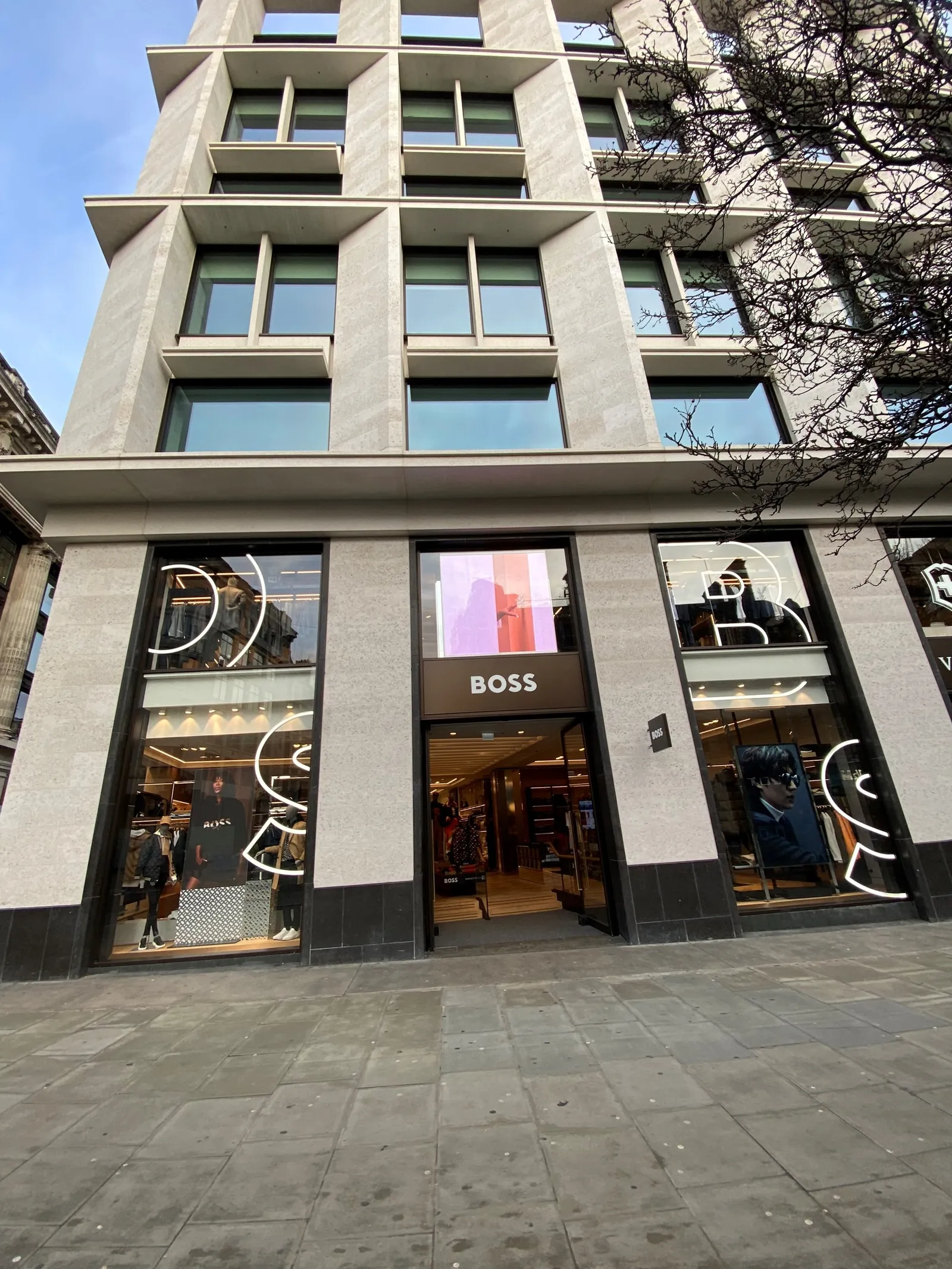

There was better news in profitability. The gross margin rose 220 basis points to 63.3%, which the company credits to sourcing efficiencies and pricing under its CLAIM 5 TOUCHDOWN strategy. Inventories were 14% lower than a year earlier at constant currency, and free cash flow before leases rose to €155 million in the quarter from €66 million. The HUGO BOSS XP loyalty programme grew to 15 million members, up 15% on the year.
The cut to profit guidance has two causes, according to the company: softer demand assumptions for the fourth quarter, and higher non-cash depreciation and amortisation after it shortened the useful lives of some IT and software assets "in light of rapidly evolving AI and technology developments".
"With demand likely to remain volatile in the fourth quarter, we are adjusting our full-year 2026 outlook to reflect a more realistic assessment of the market environment," said Daniel Grieder, chief executive. "Our strategic direction, however, remains unchanged."
What Frasers' control means
Frasers, which Ashley founded as Sports Direct in 1982 and which also owns Flannels and Harvey Nichols, has been building its stake for months. In September, after offering €38 a share to existing investors, it held nearly 48%, City AM reported. Stefan Sturm stepped down as chair of the supervisory board, citing "recent changes in the company's shareholder structure", and was succeeded by Michael Murray, Frasers' chief executive and Ashley's son-in-law. Murray said he wanted to unlock Hugo Boss's "untapped potential".
According to the voting-rights notification Hugo Boss published, Frasers held 50.08% of the voting rights directly on 23 October, plus a further 21.87% through instruments. Frasers said it expected to consolidate Hugo Boss's earnings, assets and liabilities, making the company a subsidiary. Hugo Boss noted that crossing 50% could trigger change-of-control clauses in some third-party agreements, and that it was reviewing them. By 27 October, the latest notification showed a direct holding of 49.41%, with the 21.87% held through instruments unchanged.
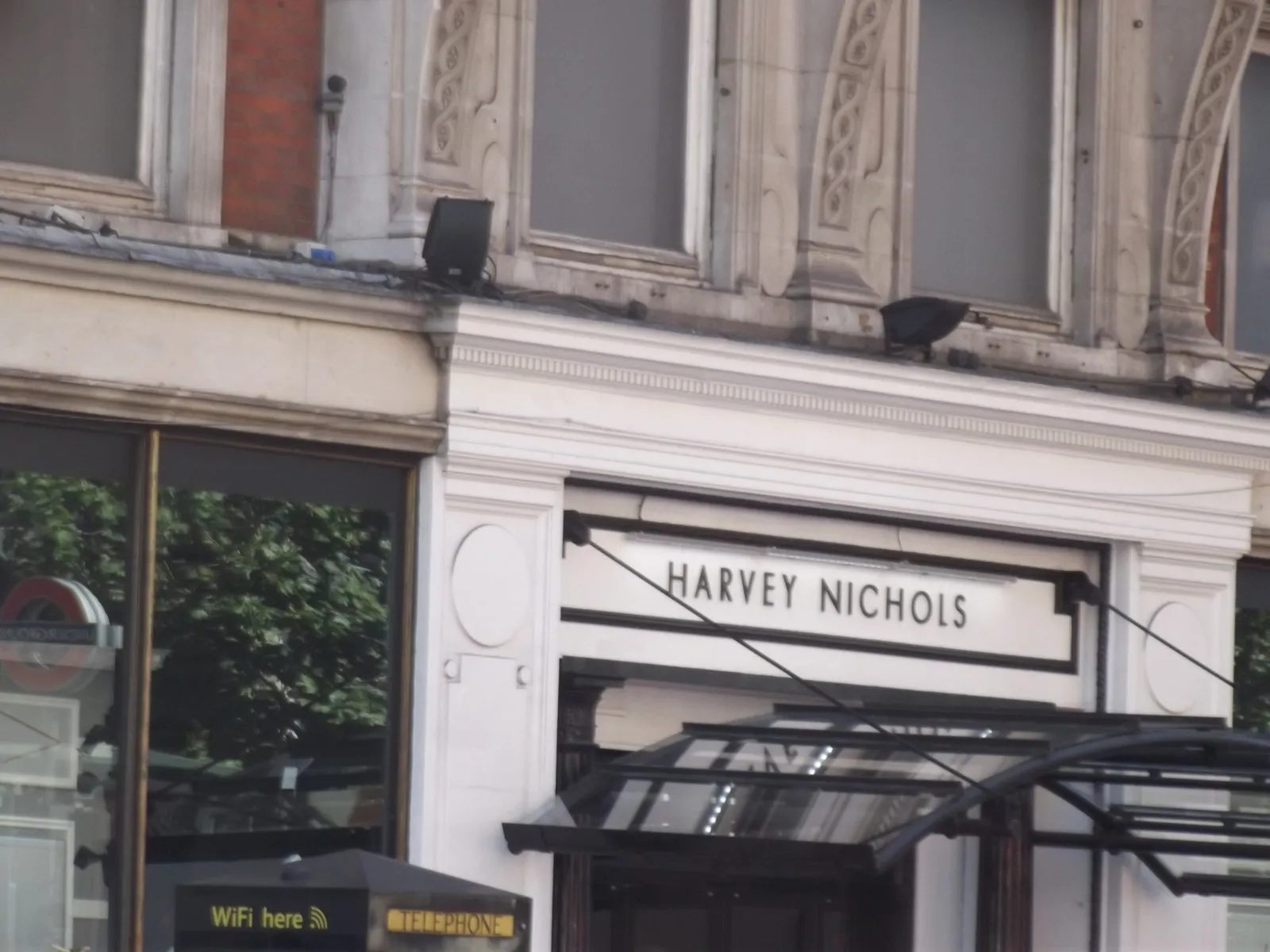

The timing makes the warning a problem for the new owner too. Analysts at RBC called it a "negative read for Frasers Group", Business Live reported, adding that they expected "renewed momentum" next year but that "visibility on this is low, especially given ongoing political uncertainty".
For Frasers, the deal is part of a wider move upmarket, away from Sports Direct's discount roots: it bought the struggling department store chain Harvey Nichols in August to raise the profile of its luxury retailer Flannels, City AM reported. Owning both a brand and the shops that sell luxury fashion could, in principle, give Frasers more ways to work with Hugo Boss, though neither company has set out such plans. Grieder has said he is confident Murray and Frasers support the existing strategy.

What to watch
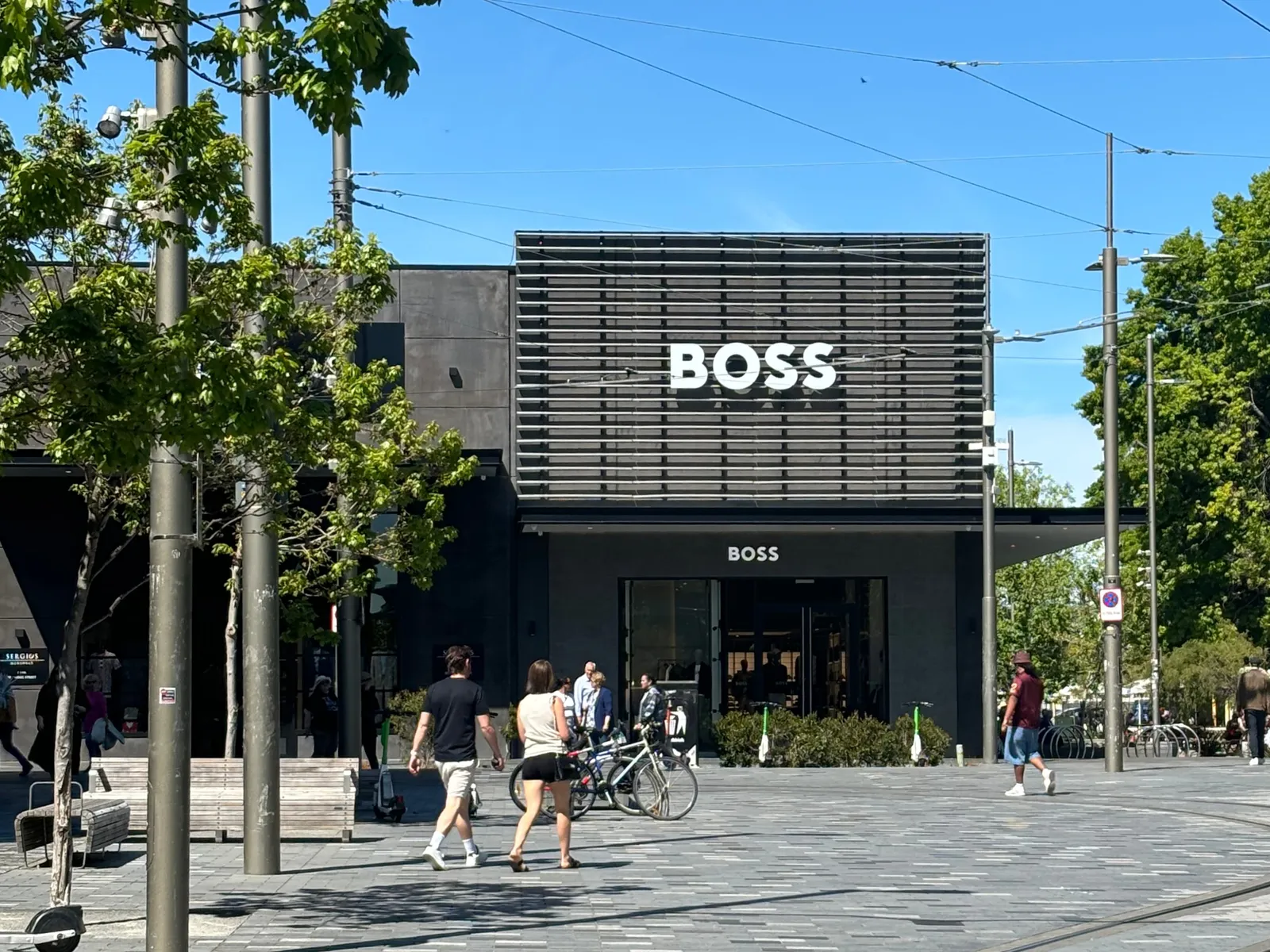
The questions now are practical. Which of Hugo Boss's contracts contain change-of-control clauses, and what do counterparties do? Can the gross-margin gains keep coming while sales fall? And can HUGO, down 17% in the quarter, find its place in contemporary tailoring?
For the house that Hugo Ferdinand Boss founded in Metzingen, this is a new kind of owner: its controlling shareholder is a retailer with its own stores, its own ambitions in luxury, and a reputation, as City AM put it, for using its stakes in other companies "to make aggressive plays for change".
Featured image: Giftzwerg 88, CC BY-SA 3.0, via Wikimedia Commons. Cropped for this page; the cropped version is shared under the same CC BY-SA 3.0 licence.
