
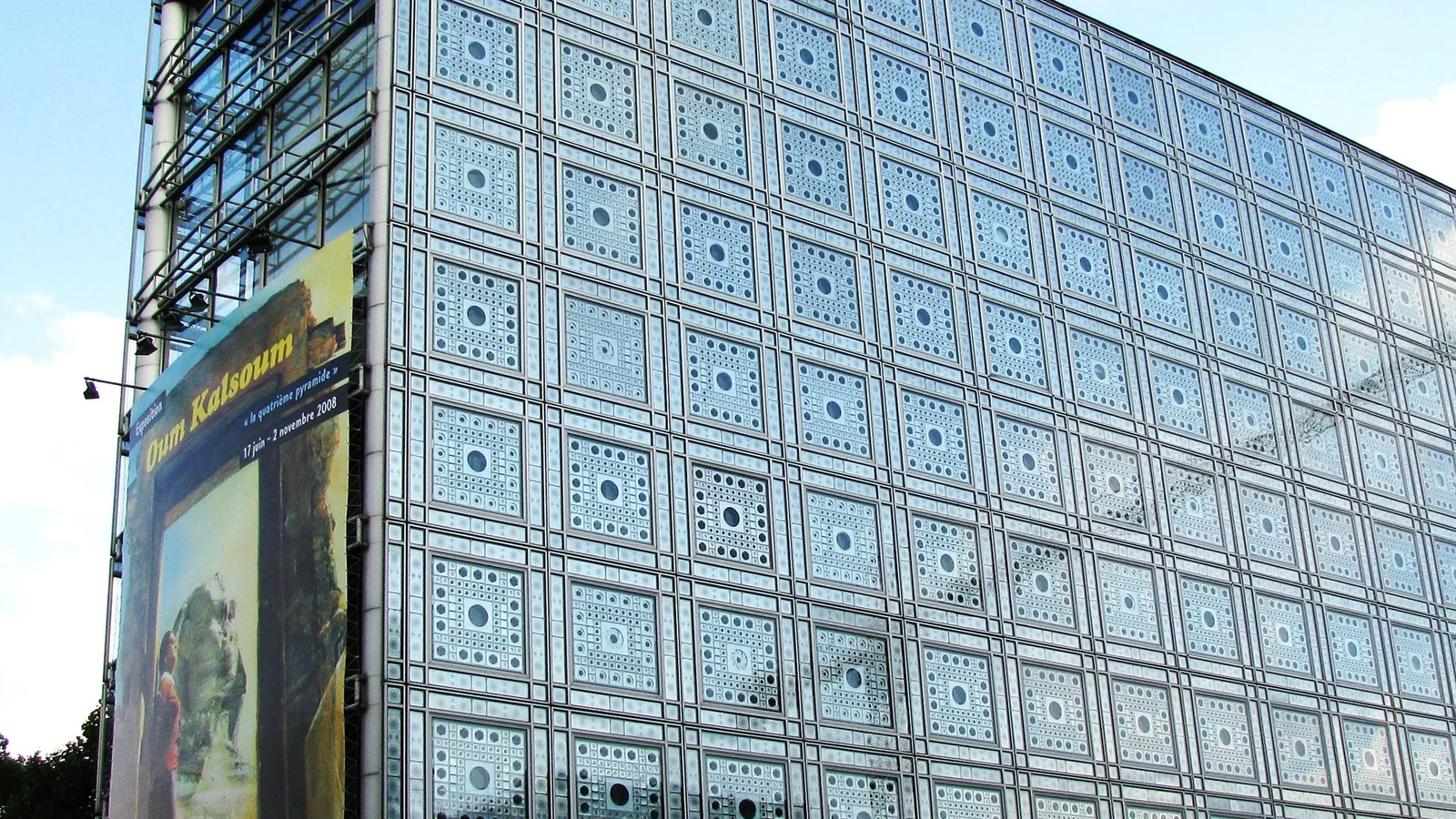
Bridal fashion usually measures change in seasons: a new neckline, a detachable overskirt, a second dress for the evening. The exhibition now running at the Institut du monde arabe (IMA) in Paris measures it in generations. Vive la mariée ! Algérie, Maroc, Tunisie, open until 28 February 2027, brings together around 40 wedding costumes and pieces of jewellery from Moroccan, Algerian and Tunisian collections, dating from the 19th and 20th centuries and, the institute says, never before shown in France. Around them, contemporary artists from the Maghreb and its diasporas ask what these rituals still mean.
The title is a toast, and the tone is festive. One of the Arabic words for a wedding, the IMA points out, is farah: joy.
Casadi has not visited the exhibition. This account draws on the institute's own materials and on published reviews, and every judgement below is attributed. Translations from French are our own.
The key facts
- Exhibition: Vive la mariée ! Algérie, Maroc, Tunisie
- Where: Institut du monde arabe, 1 rue des Fossés-Saint-Bernard, Paris 5e; exhibition halls on levels -1 and -2 and the hypostyle hall
- Dates: 29 September 2026 to 28 February 2027
- Curators: Élodie Bouffard and Nawel Dehina, of the IMA
- What is on show: around 40 costumes and adornments from the 19th and 20th centuries, plus work by 27 contemporary artists, most of them women, according to the institute
- Tickets: €12 full price, €10 reduced, €6 for 12–26-year-olds, free for under-12s
- Context: part of the Saison Méditerranée 2026, run by the Institut français
A wardrobe in many parts
The curators have built the show around the bride, but not only around her. The IMA says it also follows the women around her, from assembling the trousseau and making the garments to accompanying the bride through each stage of the celebrations, and that it draws out regional differences as well as "practices shared, notably between Muslims and Jews".
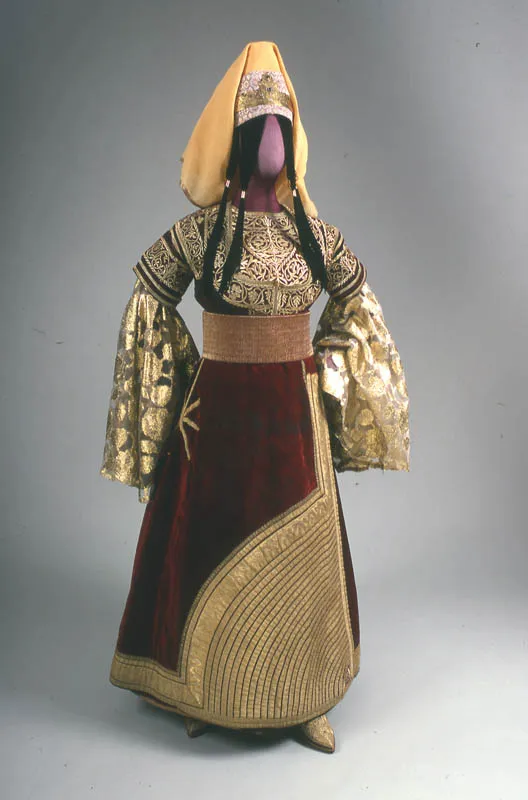
The institute's own example sets the register. A bridal ensemble from Rabat, worn on the sixth day of the wedding (youm el-hzam), combines a touqida ceremonial headdress, a purple velvet caftan trimmed with gold braid, a brocade belt from Fez, 'assaba headbands, a silk sebnya scarf, pearls and gold. The piece is credited to Morocco's Fondation Nationale des Musées and the Musée National de la Parure at the Oudayas in Rabat.
Writing in Beaux Arts Magazine, Malika Bauwens describes how much each region dresses differently: an outfit of the Kel Ajjer from Djanet, in Algeria's far south, with an aubergine drape, an indigo veil and a hammered silver pectoral; a velvet caftan from Sousse in Tunisia, "heavy with gold"; a pearl-strewn parure from Tétouan in Morocco; and the caftans of Annaba and velvet gandouras of Constantine. "To each region of the Maghreb its dress code," she writes. The jewellery, often received as dowry, signals rank or belonging. It is, in her words, "the bride's treasure".
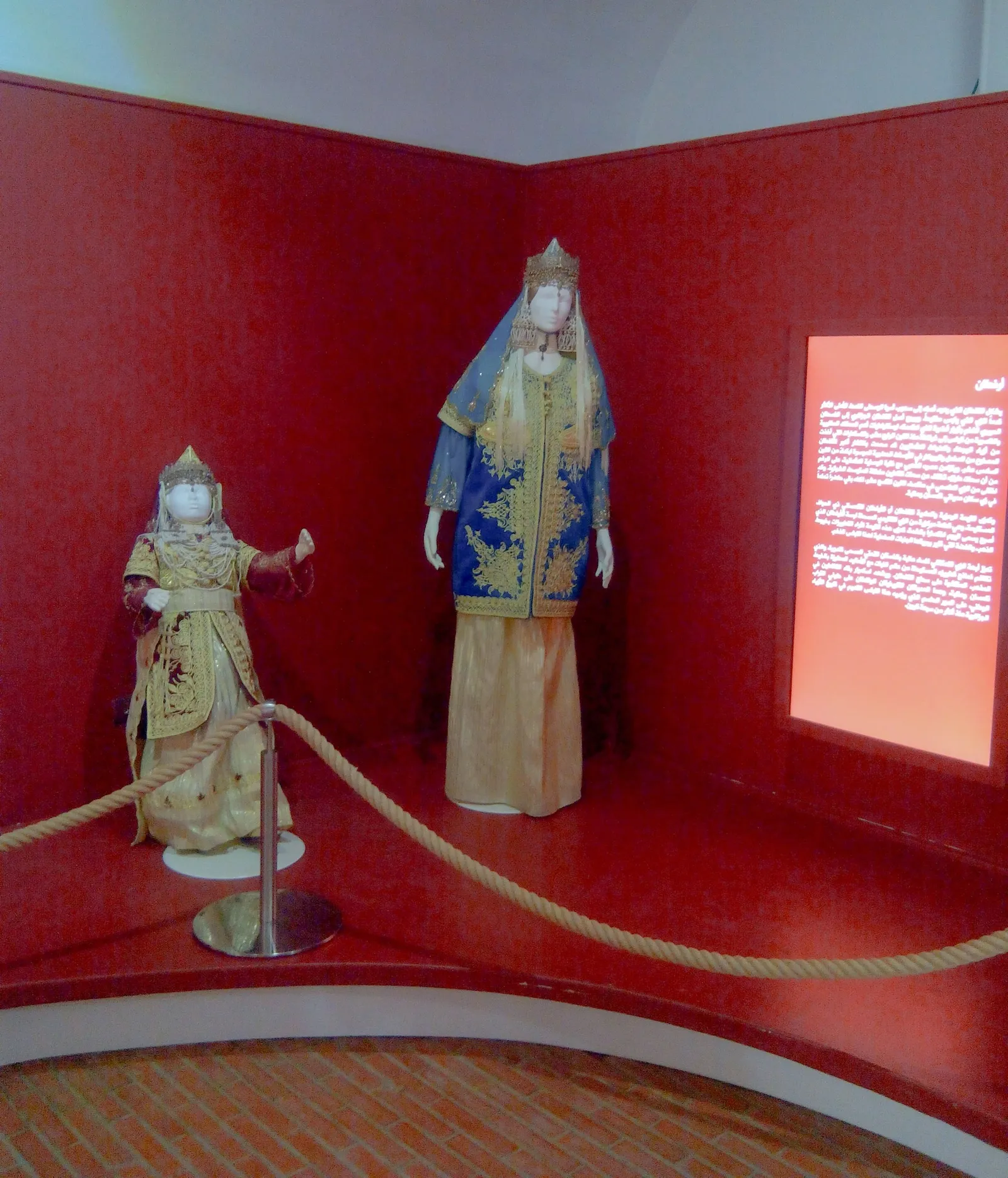

That regional richness has international recognition. In 2012 UNESCO added the rites and craftsmanship of the wedding costume of Tlemcen to its Representative List of the Intangible Cultural Heritage of Humanity. Its description follows the bride from a gold silk dress at her parents' home to an embroidered velvet caftan, jewellery and a conical hat, with "rows of baroque pearls" believed to protect her, and a golden silk veil for the journey out.
Before the day: the hammam and the henna
A Maghrebi wedding is not a single day, Beaux Arts reminds readers. On the eve, the bride-to-be goes to the hammam with friends and the women of her family. Silver water dippers and hammam clogs lent by the Musée Dar Cheraït in Tozeur, Tunisia, recall those rituals of care passed down between women.
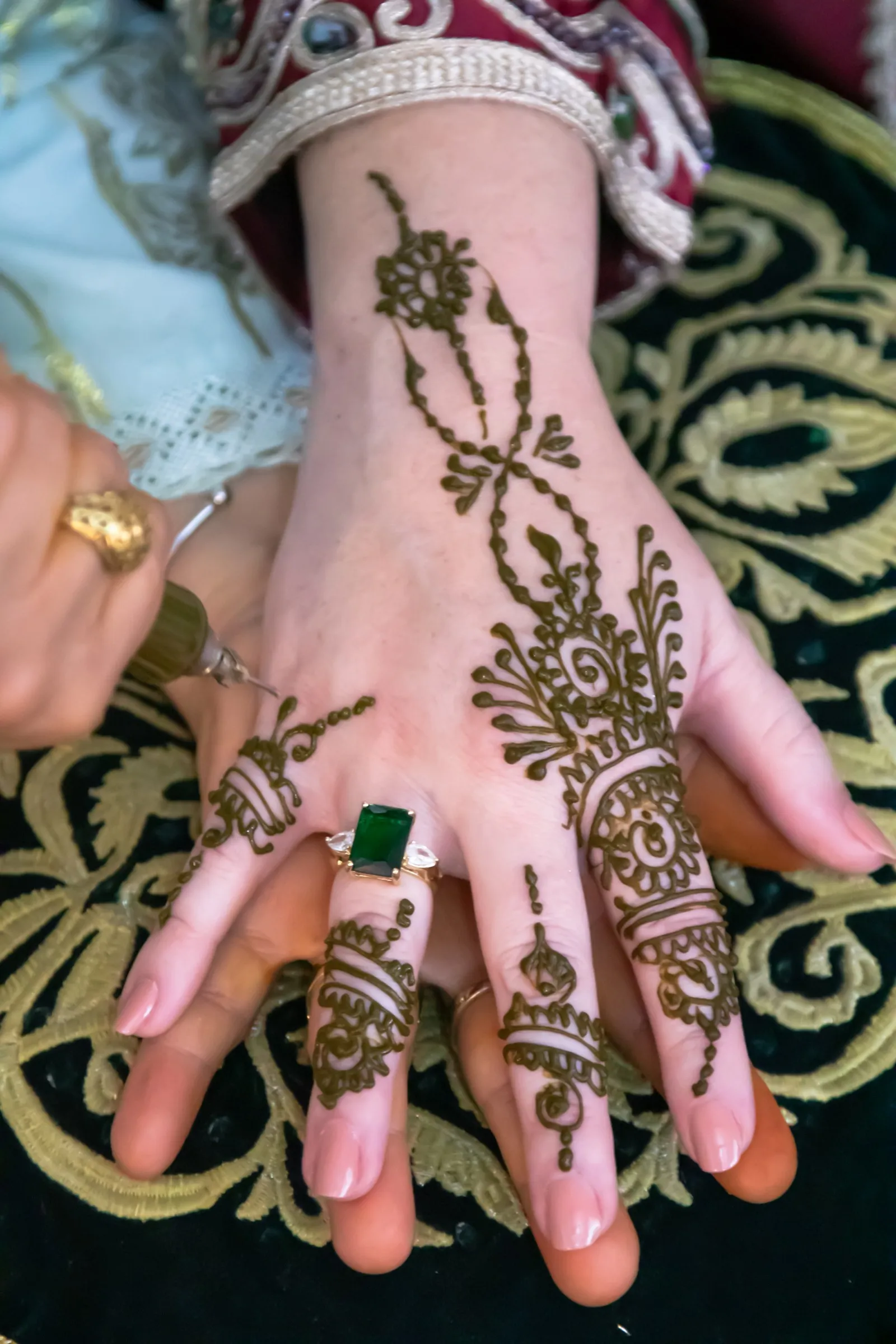
Then comes the henna night. Depending on the pigments and how long they are left, the designs on hands and feet turn from pale yellow to deep red. Henna on the cheeks, in red circles dotted with white, calls for fertility; in lines across the forehead, it acts as a shield, Bauwens writes. The Moroccan artist Khadija El Abyad (born 1991) has made a large sculpted henna installation on site, modelling the motifs of wedding henna in three dimensions.

The artists' view
Facing the heritage pieces, the IMA has invited 27 contemporary artists. Some celebrate the tradition and the collective joy of the feast; others, the institute says, question the heritage of these customs and the ideologies they carry.
Among those Beaux Arts singles out: Sophia Kacimi, known as Zoubida (born 1991), who invites visitors to sit on velvet and brocade "sugar cubes" beneath five embroidered hangings co-created with students of an arts-and-crafts school in Fez; the photographer Lazhar Mansouri (1932–1985), who posed couples before a leafy curtain in Aïn Beïda in the 1960s; and the Franco-Tunisian artist Shourouk Rhaiem (born 1980), whose work is on the exhibition poster, covering family photographs with antique fabrics, Nabeul embroidery, sequins and Swarovski crystals. Carolle Bénitah (1965–2024) embroidered in red over the faces of everyone in a wedding photograph except the bride and groom.
The show does not keep to celebration. "Without closing its eyes," Bauwens writes, the exhibition also recalls that in the Maghreb the home and intimate life remain political, governed by family codes in which polygamy and repudiation persist, an issue that, she notes, mobilises feminists campaigning for equality.

What the critics say
Reviews have been warm. For Les Inrocks, Jean-Marie Durand calls it "a historical, social and festive look at weddings in Maghrebi culture" and says the route sheds light on "a sociability at once codified and joyful, which reinvents its forms with the diaspora in France". JDEED Magazine judged that "the wedding wardrobe alone is worth the visit", while welcoming the way the show refuses to leave the traditions in the past. Beaux Arts frames the whole exhibition as a wedding procession through the institute: "Make yourselves welcome!"
The exhibition was preceded by a festive parade, Raconte-moi ton mariage ("Tell me about your wedding"), directed by the artist Mohamed Bourouissa on 4 July, which Les Inrocks describes as an imaginary wedding built from collected stories, moving between Gennevilliers and Paris.
Why it matters for bridal
The idea of a wedding wardrobe, rather than a single dress, is something we explored in One Bride, Three Looks. Vive la mariée ! is a reminder that, across the Maghreb, multiple looks, ceremonial jewellery and days of ritual dressing are far older than any runway trend. It is also a reminder of how much of a wedding's meaning is carried by dress: in the jewellery a bride receives, the garments the women around her make, and the photographs that keep it all.
Frequently asked questions
When is Vive la mariée! on?
From 29 September 2026 to 28 February 2027 at the Institut du monde arabe in Paris.
What is in the exhibition?
Around 40 wedding costumes and pieces of jewellery from Moroccan, Algerian and Tunisian collections, from the 19th and 20th centuries and never before shown in France, alongside work by 27 contemporary artists.
How much are tickets?
€12 full price, €10 reduced, €6 for visitors aged 12 to 26, and free for children under 12, according to the IMA.
Who curated it?
Élodie Bouffard and Nawel Dehina of the Institut du monde arabe.
Featured image: jphilipg, CC BY 2.0, via Wikimedia Commons. Cropped for this page.
