
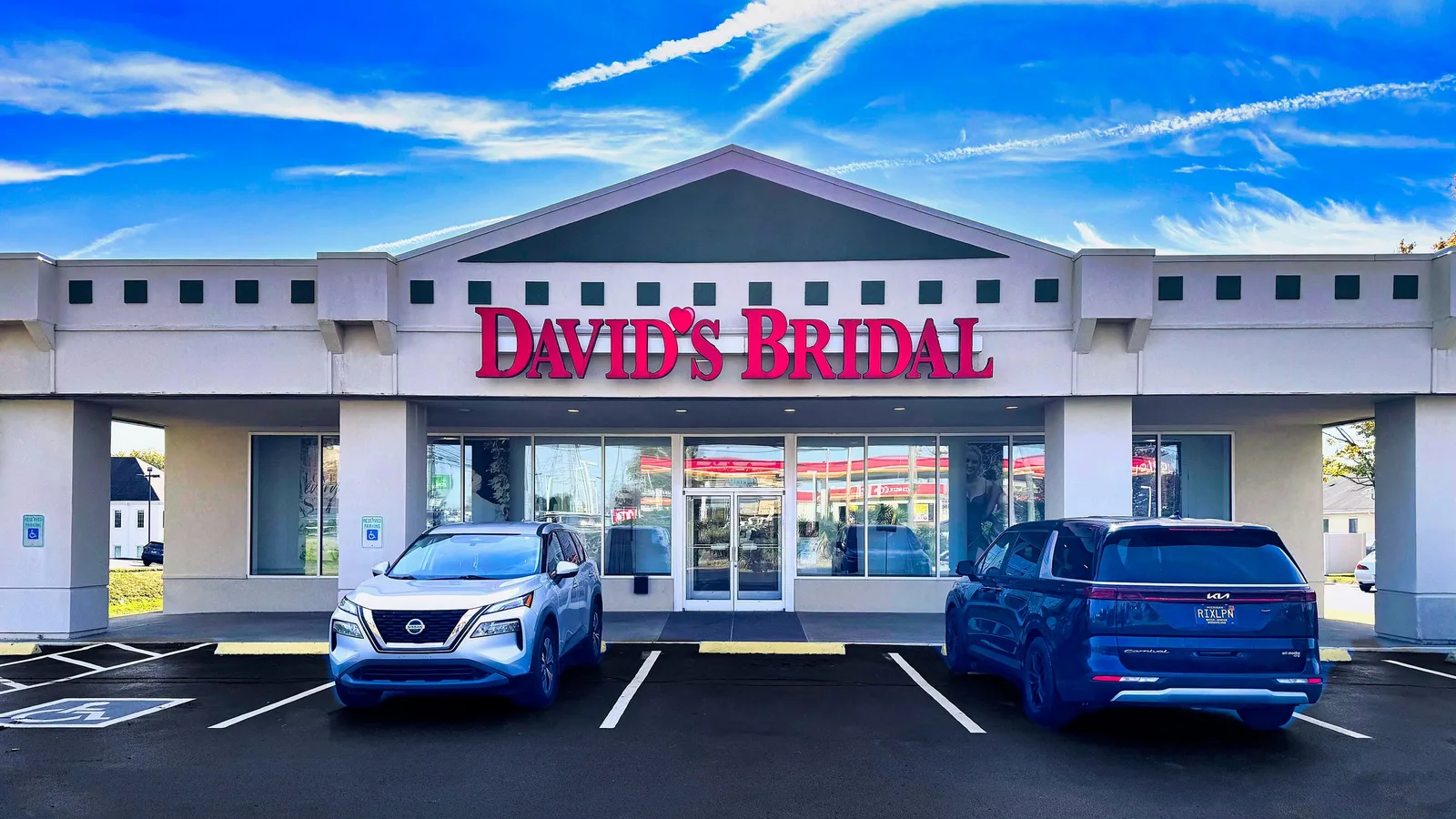
The American retailer best known for its wedding dresses wants investors to value it for something else. On 22 October, David's Bridal said it plans to separate Pearl, its digital wedding-planning, media and commerce business, into an independent company, and to take it public through a merger with K&F Growth Acquisition Corp. II, a Nasdaq-listed special purpose acquisition company. The two sides signed an amended, non-binding letter of intent on 21 October and are aiming to close in the first half of 2027.
Chief executive Kelly Cook, who is set to lead Pearl, framed the deal as offence rather than rescue. "We have a fast-growing, high-margin business generating positive cash flow right now in Pearl, and going public now will help us attract the talent and give us more optionality to fuel the growth that we believe that we have," she told CNBC. In the company's announcement she called it "an exciting milestone in David's Bridal's 75-year history and a defining moment for our future".
What Pearl is
Pearl is the part of David's Bridal that sits around the dress. According to the company, it combines Pearl Planner, an AI-powered tool that personalises budgets, timelines, checklists and vendor recommendations; Pearl Connect, software that gives wedding vendors leads, messaging and appointment scheduling in one place; and a digital content network, including LoveStoriesTV, YouTube channels and blogs, with 8 million social media followers and 30 million monthly viewers. It makes money from advertising and media, vendor listings and subscriptions, commerce, and licensing and brand partnerships. David's Bridal says 90% of US brides engage with its ecosystem, that its e-commerce site draws 60 million visitors a year, and that Pearl draws on more than 200 data attributes about its customers. Those are the company's own figures, not independently audited ones.
The pitch is that the retailer already has the audience that technology start-ups spend heavily to acquire. "Most AI companies have to find a customer," Cook told CNBC. "We already have her." She also insisted the product is "not AI for AI's sake".

The market it is chasing is large. The announcement cites Grand View Research's estimate that US wedding services will be worth close to $100 billion in 2026, and Centers for Disease Control and Prevention data showing 2.1 million American couples married in 2024. For context on what brides are buying this season, see our report from New York Bridal Fashion Week.
The terms
The letter of intent amends an earlier one dated 11 September. It values Pearl at a pro forma enterprise value of about $350 million, or roughly 9.3 times its projected 2027 EBITDA, assuming no K&F shareholders redeem their shares. The deal is to be supported by a $75 million private investment in public equity (PIPE), including a proposed $25 million anchor investment from CION Investment Corporation, the largest shareholder in David's Bridal.
The forecasts, prepared by Pearl's management and unaudited, are ambitious. Pearl expects an EBITDA margin above 30% in 2026, and revenue growth of more than 100% in 2027, to more than $85 million. It also projects positive free cash flow in both years, and says it will be debt-free after closing. K&F's co-chief executive Dan Fetters described a "compelling trifecta of established profitability, highly attractive growth potential and unlevered pristine balance sheet".


K&F itself raised $287.5 million in its initial public offering in February 2025 and is run by co-chief executives Edward King and Dan Fetters. Its filings show it has called an extraordinary general meeting for 3 November 2026, at which shareholders will vote on extending its deadline to complete a deal from 6 November 2026 to 7 February 2028. A letter of intent is not a definitive agreement: the transaction still needs final documents, regulatory filings and shareholder approval.
What David's Bridal keeps
The separation reshapes the parent company. According to a spokesperson quoted by Retail Dive, Pearl will own the David's Bridal brand and intellectual property and license them back to the retailer, which will remain a material shareholder in Pearl. The stores are not affected. Cook will move across to run Pearl, with Elina Vilk, currently president and chief business officer of David's Bridal, as its president. Retail Dive reports that David's Bridal is searching for a new chief executive and expects to have one in place before the split is finalised, and that Cook will stay on its board.
Cook told CNBC the result would be "a leaner David's, a more focused David's", and added: "I think it's a move from strength." Her case for the split was that "Pearl has earned the right to stand on its own because it's created more value than we've expected."

The test ahead
The history matters. CNBC notes that David's Bridal filed for bankruptcy protection in 2018 and again in 2023, after which it sold its business to the asset manager CION. In 2025, Retail Dive reports, the company announced the "biggest shift" in its history, a digital-first plan it called Aisle to Algorithm. The Pearl deal is in effect a bet that public investors will pay more for those services as a standalone platform than as part of a retailer.
That is not guaranteed. CNBC points out that the market for consumer-company listings has been lacklustre, that more companies are postponing their public debuts, and that investors are beginning to lose confidence in the AI boom. SPAC mergers also carry their own risks, from shareholder redemptions to deals that never complete. Pearl's numbers, its growth forecasts and the final valuation will all be tested when the definitive agreement and registration documents are filed.
For the bridal industry, the more interesting question is the one Cook has raised: whether a dress retailer's knowledge of the bride, from engagement to the aisle, is worth more than the dresses themselves. Compare it with the smaller-scale approach of Australian bridal designers, where the business still begins and ends with the gown.
Featured image: Harrison Keely, CC BY 4.0, via Wikimedia Commons. Cropped for this page.
