
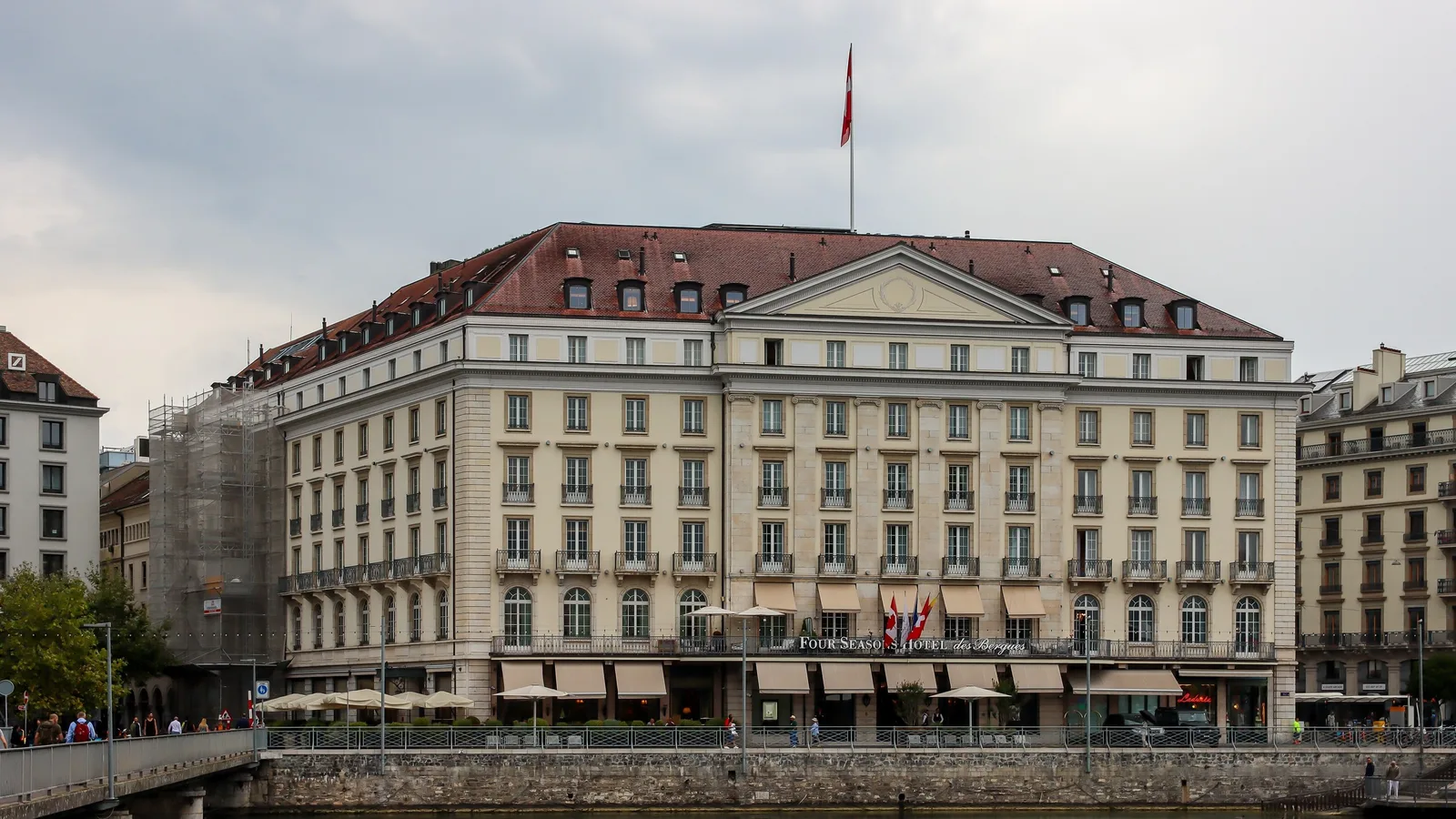
Every November the auction houses take over Geneva's lakeside hotels for a week of watch and jewellery sales. This year, between 7 and 10 November, Phillips and Christie's set records that would have seemed improbable a few years ago, and gave the clearest sign yet of where collector money is going: to rare vintage pieces in perfect condition and, above all, to independent watchmakers.
Phillips: the first $100 million watch auction
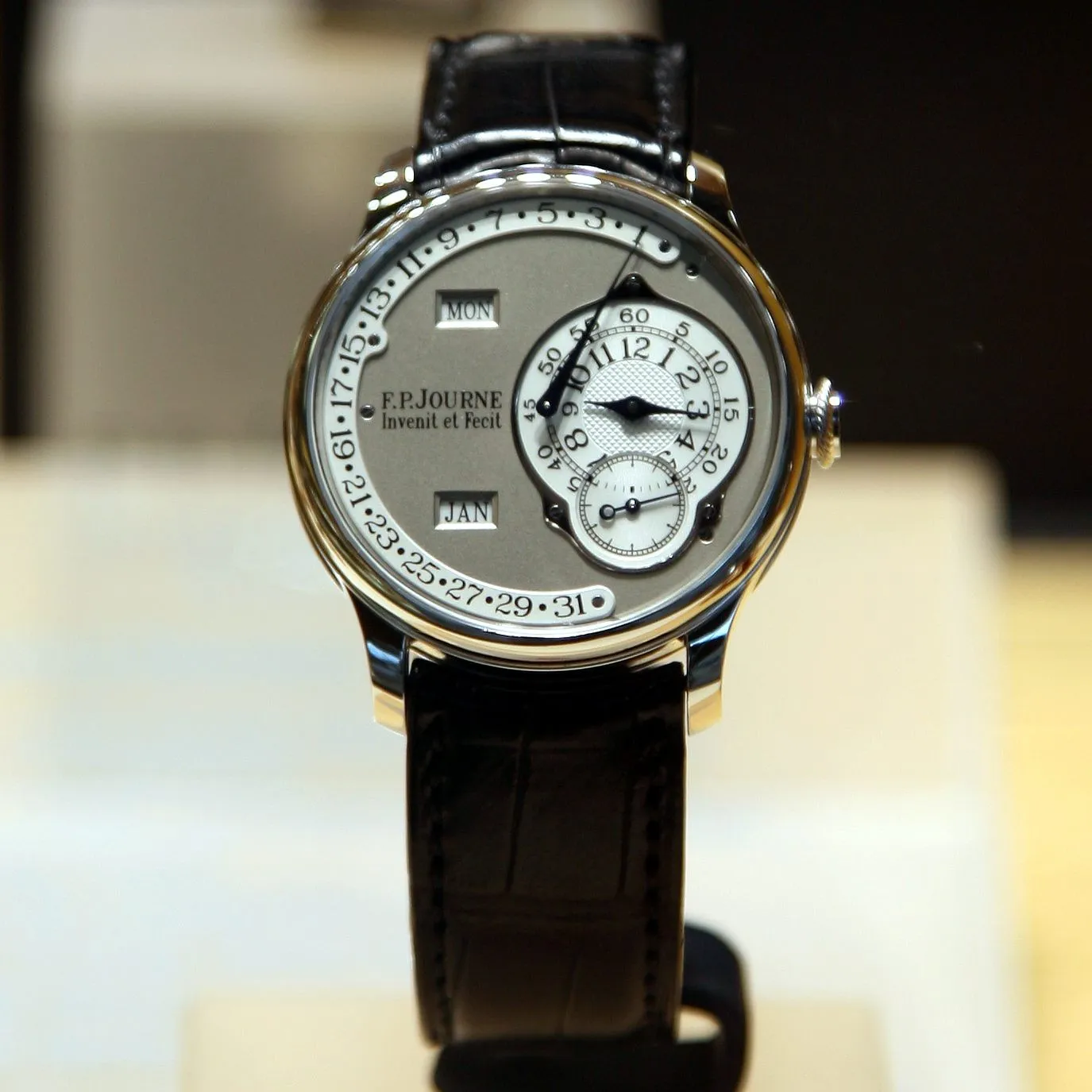
Phillips, in association with Bacs & Russo, opened the week with The Geneva Watch Auction: XXIV at the Hotel President on 7 and 8 November. The two-day sale made CHF 92.0 million, or $112.3 million, according to the auction house. It is the first live watch auction to pass $100 million and beat the record Phillips itself set six months earlier. All 217 lots sold, 24 world auction records were set and 17 watches made more than CHF 1 million. The average lot sold for more than $500,000, and 2,121 registered bidders from 69 countries took part.
F.P. Journe dominated. Thirteen of its watches made CHF 31.8 million between them. The top lot of the sale was a platinum Chronomètre à Résonance "Régence", the only example with a shiny pink-gold hand-engraved dial, which sold for CHF 8,680,500 ($10.6 million). Phillips said it was the fifth consecutive live auction at the house with a watch selling for more than $10 million. A titanium Tokyo Boutique Chronomètre à Résonance made CHF 6,146,000 and a diamond-set Vagabondage III CHF 5,057,000.
Vintage pieces still commanded the biggest premiums for rarity. A stainless-steel Patek Philippe Ref. 1436 split-seconds chronograph, one of only two known examples with its original steel case and dial, made CHF 6,267,000 against an estimate of CHF 2 million to 4 million, a record for any split-seconds chronograph, Phillips said. A steel Ref. 530 Calatrava and a yellow-gold Ref. 1518 perpetual calendar chronograph each made CHF 1,117,600.
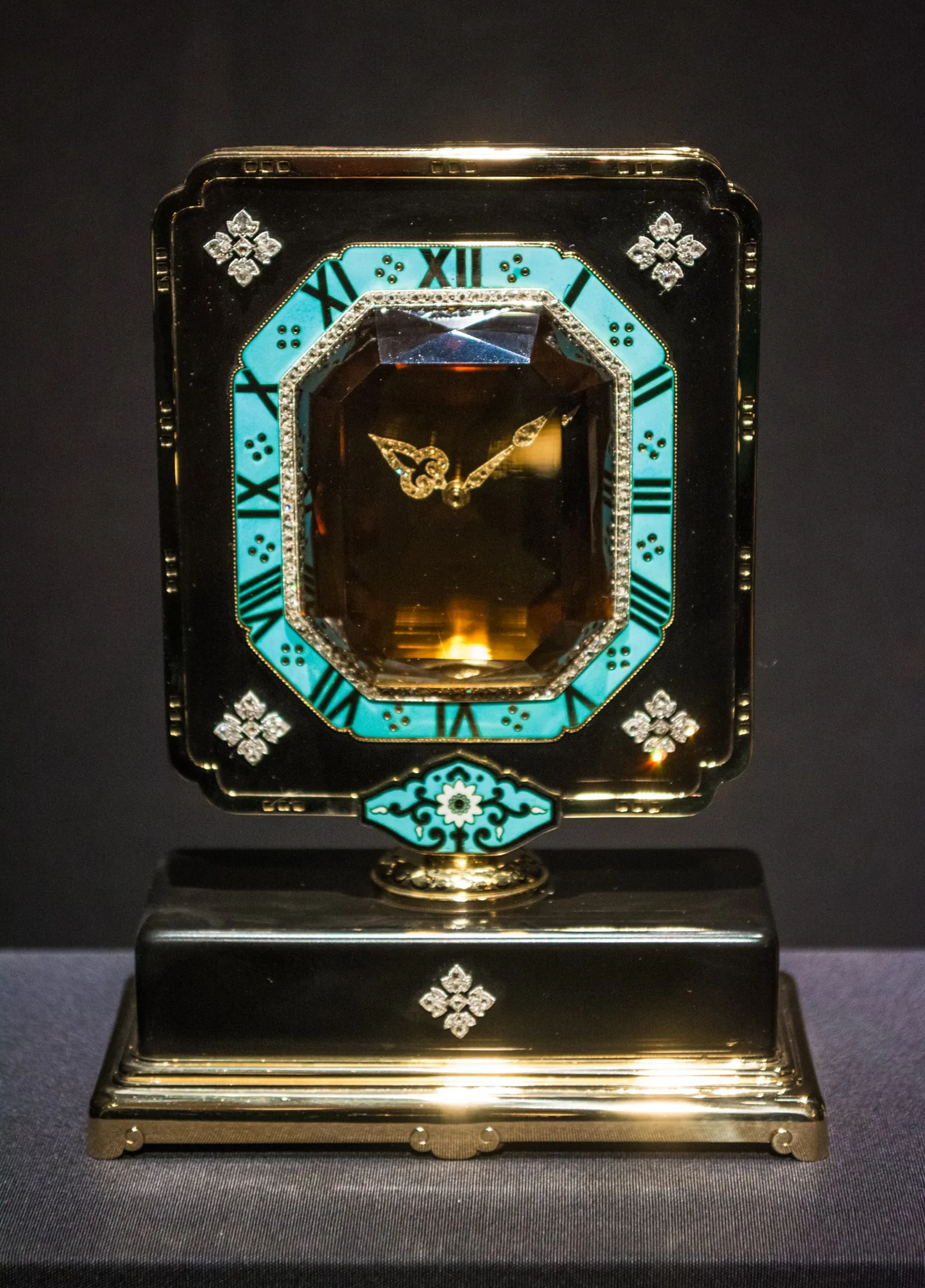
Cartier set a record of its own. The Portico Mystery Clock No. 4, made in 1924 and one of only six Porticos, sold for CHF 4,815,000, the highest price for any Cartier timepiece at auction. It was the only Portico with a hexagonal rock-crystal dial and had not been offered since 1996. Among Rolex lots, a newly discovered Ref. 6062 "Stelline" in yellow gold, bought from its original owner in Japan, made CHF 2,334,500, and a 14k gold Cosmograph Daytona "John Player Special" CHF 1,905,000.
The independents were not only Journe. Philippe Dufour's early platinum Simplicity sold for CHF 1,968,500, Kari Voutilainen's tantalum Vingt-8 Inversé for CHF 1,524,000, and Sylvain Pinaud's Origine No. 2 went to an online bidder for CHF 609,600, more than five times its high estimate.
"As a twelve-year-old boy discovering vintage watches, I never imagined we would go from a few francs to hundreds, to thousands, to hundreds of thousands, and to millions," said Aurel Bacs, senior consultant at Phillips. "I always believed that watches deserved a place on the Mount Olympus of collecting."

Christie's: a house best, and a younger crowd
Christie's Rare Watches sale at the Four Seasons Hotel des Bergues on 9 November made CHF 47,824,592, or $58.7 million, the highest total the house has ever achieved for a watch auction and 221% more than the year before, it said. Every lot sold, and the sale made 250% of its low estimate. Christie's said 19% of bidders were new to the house and 40% of registrants were millennials or members of Gen Z.
Journe featured here too. A complete F.P. Journe Ruthenium Collection of five watches, all numbered 92/99 and formerly owned by Michael Schumacher, was offered to mark 30 years since the driver's association with Ferrari; the Tourbillon Souverain and the Chronomètre à Résonance each made CHF 1,536,000. A matching-numbered set of the Vagabondage I, II and III in pink gold went to one private collector for CHF 6,709,200 in total. A Patek Philippe Ref. 1518, the first serially produced perpetual calendar chronograph wristwatch, made CHF 1,075,200, and a gold Nautilus Ref. 3700/1 made in 1978 for Sultan Qaboos bin Said of Oman, offered at auction for the first time, sold for CHF 1,024,000.
"These exceptional results reflect the breadth and vitality of the rare watch market, with particularly strong demand for independent watchmakers," said Remi Guillemin, Christie's global head of watches.

The Bulgari Pink closes the week
The jewellery sales ended on a single stone. At Christie's Magnificent Jewels sale on 10 November, a 24.00-carat Fancy Intense Pink emerald-cut diamond ring by Bulgari, the final lot, sold for CHF 12,086,000, or $14.8 million, Jewellery Outlook reports. Christie's described the stone as unseen for more than seven decades. It was bought in India by the consignor's great-grandparents in the 1950s and set in Bulgari's workshops in Rome, and it is a Type IIa stone, a category that accounts for fewer than 2% of gem-quality diamonds.
What the numbers say
The auction results sit alongside a broader recovery at the retail end of the market. On 10 November Watches of Switzerland, Britain's biggest Rolex retailer, moved its full-year revenue growth guidance to the upper end of its range, at 7% to 10%, after first-half sales rose 22% at constant currency in the US, Bloomberg reported via The Business of Fashion. Swiss watch exports grew for a fifth straight month in September, led by the US.
At the top of the market, though, the story is concentration. One maker's 13 watches made up more than a third of Phillips' record total, and both houses put independent watchmaking at the centre of their sales. For collectors, Geneva confirmed that scarcity, original condition and a living maker's name now matter as much as the heritage brands that built the market.
Featured image: Mike Peel, CC BY-SA 4.0, via Wikimedia Commons. Cropped for this page; the cropped version is shared under the same CC BY-SA 4.0 licence.
