
For years, the fashion industry's sustainability story was told mostly in pledges: targets, reports and recycled-content percentages. This autumn, in Europe, it is being told in law. Two measures took effect within six weeks of each other. Since 1 September 2026, France has charged a per-item penalty on clothing linked to what it calls mode ultra-express, or ultra-fast fashion. On 10 October 2026, an EU restriction on a family of "forever chemicals" in clothing, footwear and accessories became applicable.
Neither is aimed at luxury. Both, read closely, contain obligations that reach well beyond the bargain end of the market. Here is what has changed, and what comes next.
France: a penalty on speed
France's Law No. 2026-602, "to reduce the environmental impact of the textile industry", was enacted on 8 July 2026 and published in the Journal officiel the following day, according to FashionUnited. It is widely known as the anti-fast-fashion law.
The law defines ultra-fast fashion by two cumulative criteria, as the government's official summary puts it: "the placing on the market of a large number of new product references" and "the low incentive to repair products". The sale of second-hand products is excluded.
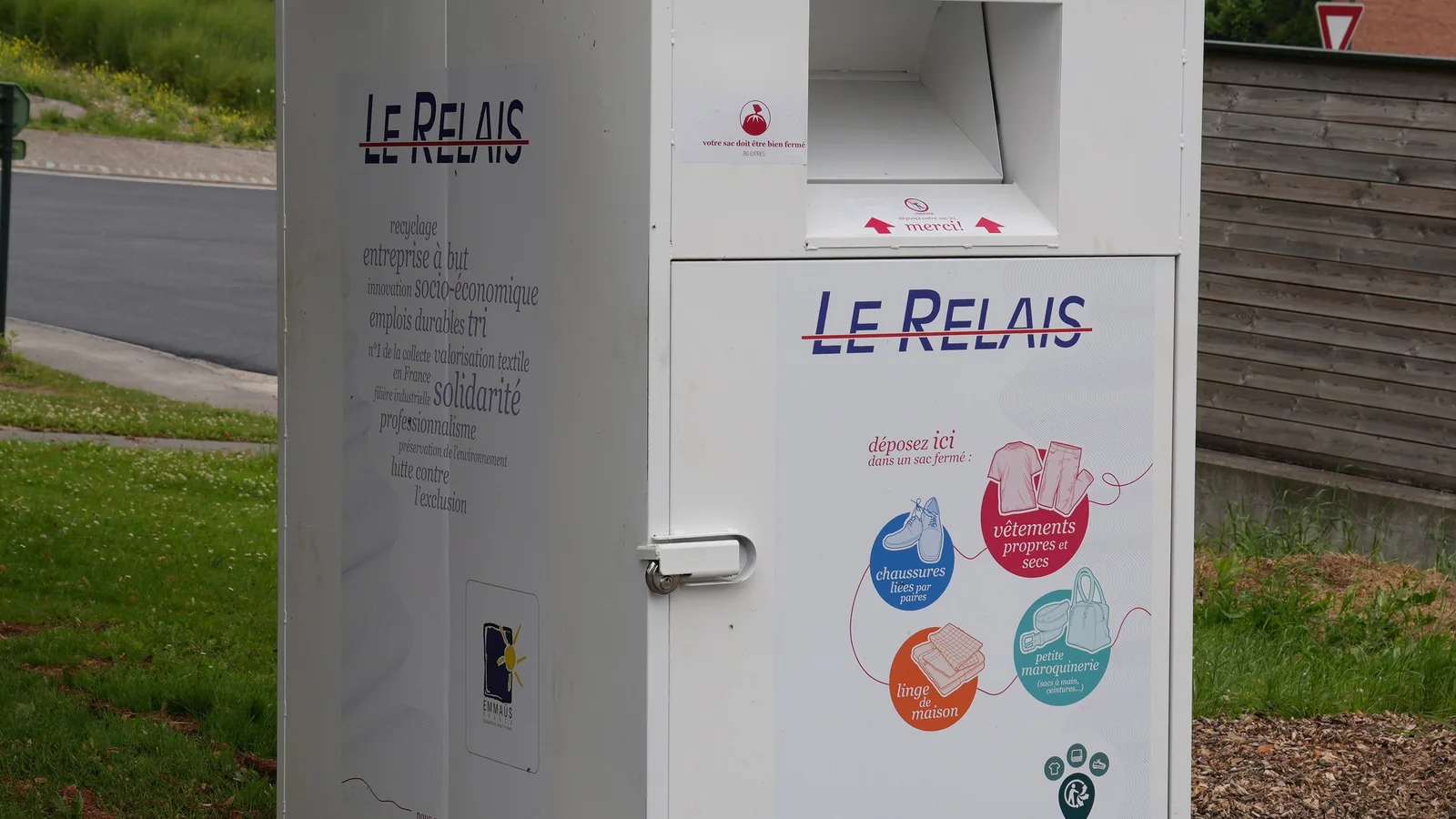
Its first teeth are financial. France has run an extended producer responsibility (EPR) scheme for clothing, household linen and footwear since 2009, under which producers pay an eco-contribution towards collection and recycling. From 1 September, that contribution can carry a penalty for ultra-fast-fashion products.
The penalty is calculated from a durability score. According to ADEME, the French environment agency, the method was set out by the ecology ministry on 28 August and gives equal weight to two factors: the breadth of a producer's range (the maximum number of references offered) and its incentive to repair, measured by the average cost of repair relative to the sale price and whether a repair service is offered. Products with a durability coefficient below 0.8 are penalised.
The amounts rise each year. The government summary describes penalties of between €0.25 and €12 per item in 2026, rising to between €2.20 and €20 in 2030, and caps them at 50% of the pre-tax sale price. ADEME, which notes that household linen and footwear fall outside the penalty, gives €0.50 to €12 per item in 2027, rising to €2 to €19.50 from 2030. The law firm Beveridge & Diamond, writing in Legal 500, gives two examples: €9 for a pair of jeans in 2026 and 2027, rising to €17.25 from 2030, and €12 for a coat or jacket, rising to €19.50.
For scale, ADEME notes that the average eco-contribution in the scheme was 4 cents per item in 2024. The details are still settling: ADEME says Refashion, the scheme's approved eco-organisation, has yet to adjust its scale and set out how affected companies will be identified.
The advertising ban, and the rules for everyone else
The second set of measures is about visibility. From 1 January 2027, according to the government summary, it will be forbidden to advertise ultra-fast-fashion products or to promote them "directly or indirectly", and influencers will no longer be able to promote them, "whether for free or for a fee". Breaches carry an administrative fine of €100,000. The summary's examples of indirect advertising include event sponsorships, product placement in films or series, and positive reviews in the media. A decree in the Council of State is still needed to set out how the ban will work, FashionUnited reports, as are the thresholds that decide who counts as ultra-fast fashion.
Other provisions are already broader. FashionUnited's reading of the final text highlights three that apply well beyond ultra-fast fashion:
- Made-in disclosure online. Article 2 requires the manufacturing locations of new clothing, footwear and household linen sold online to be shown "clearly and legibly", in characters the same size as the price and close to it. This is not limited to ultra-fast fashion.
- A representative in France. Under article 5, a business not established in France that is subject to EPR must appoint a representative in France responsible for its obligations.
- Tougher enforcement. Customs, the consumer-protection authority (DGCCRF) and other agencies can share information more easily, and the eco-organisation may collect publicly available data from sales sites automatically, even where a site's terms of use forbid it.
Donations of ultra-fast-fashion products also lose the corporate tax reduction for charitable giving, FashionUnited reports.
For a luxury house selling into France online, the practical consequence is the disclosure rule: where a product was made must now sit beside its price.
Europe follows France's lead, cautiously
France is the first country to implement such a mechanism, according to Beveridge & Diamond, and it may not be the last. The revised EU Waste Framework Directive requires every member state to set up an EPR scheme for textiles and footwear by 17 April 2028, and expressly allows states to modulate producer fees to address fast- and ultra-fast-fashion practices. In June 2026, Germany, Denmark, France, the Netherlands and Slovenia submitted a joint note to the EU Environment Council calling for a coordinated EU approach, including EU-wide criteria for identifying ultra-fast-fashion business models. Italy, the firm notes, is working on a draft EPR regulation covering clothing, footwear, accessories and leather goods.
The EU's PFHxA limit: chemistry, layer by layer
The second milestone is chemical. Since 10 October 2026, Commission Regulation (EU) 2024/2462 has restricted PFHxA, its salts and related substances (part of the PFAS group of "forever chemicals") in consumer clothing, related accessories and footwear sold in the EU. According to Textile School's summary of the regulation, the limits are 25 parts per billion for PFHxA and its salts combined and 1,000 ppb for PFHxA-related substances.
Two details matter. The limit is measured "in homogeneous material", so a garment is assessed layer by layer and trim by trim, not as a whole. And products already on the EU market before 10 October 2026 are exempt. From 10 October 2027, the same limits extend to other consumer textiles such as carpets, curtains, upholstery and bed linen. Consumer waterproofing sprays are covered from the first date. Ecotextile News notes that the EU measure "sits alongside broader national bans", adding to what it calls a growing patchwork of PFAS rules for companies selling across markets.
The bigger picture: a cluster of deadlines
These are two pieces of a much larger puzzle. Writing in WWD's Sourcing Journal, Jasmin Malik Chua lists the EU measures moving "from policy ambitions to compliance non-negotiables": the Corporate Sustainability Due Diligence Directive, the Forced Labour Regulation, the Ecodesign for Sustainable Products Regulation (which brings Digital Product Passports) and the Packaging and Packaging Waste Regulation.
"What is evident is the cumulative effect for the industry: a system-wide change across every stage of the value chain, with multiple pieces of legislation landing at once," María Luisa Martínez Díez, vice president of public affairs at Global Fashion Agenda, told the publication. Asked whether the industry is ready, Marissa Brock of the supply-chain software company Sourcemap answered: "not at all."
Luxury is not exempt from that challenge. Brock told Sourcing Journal that luxury companies may struggle with Digital Product Passport compliance because few of their supply chains have transparency beyond their direct suppliers. Iris Skrami, chief executive of the sustainability-data company Renoon, sees an upside: luxury brands could use a product's digital record to verify authenticity, support repair and power resale. "The question is, how will luxury brands want to use it?" she said.
Industry steps beyond the law
Not every move this autumn was compelled. In a press release dated 29 September, Adidas, H&M Group, Inditex and Bestseller announced the Apparel Recovery Coalition with The Or Foundation, a Ghana-based non-profit, ESG Dive reports. Over two years, the coalition plans to develop and test a producer-responsibility model for post-consumer textiles in countries that receive large volumes of exported second-hand clothing, starting with a demonstration project in Accra. The Or Foundation estimates that Accra's Kantamanto Market recirculates around 25 million garments every month.
The Casadi view
The direction of travel is clear. Europe is moving from asking fashion to report on its impact to pricing it, labelling it and, in France, restricting how some of it may be advertised. The penalties are aimed at the fastest end of the market, but the obligations around disclosure, chemistry and traceability apply to everyone, including the houses that pride themselves on craft.
For buyers, two changes are already visible. In France, the place of manufacture now has to sit beside the price online. Across the EU, new stock of clothing and shoes must meet the PFHxA limits. For more on how Europe is reshaping fashion's end of life, read our explainer on the EU ban on destroying unsold clothes and our analysis of the resale paradox.
This article summarises published official and press sources and is not legal advice. Several implementing details of the French law are still to be set by decree.
Featured image: IgnaceBoitaclou, CC BY 4.0, via Wikimedia Commons. Cropped for this page.
