

For most of fashion's history, what happened to a garment after it left the shop was someone else's problem. In California, that is changing. The Responsible Textile Recovery Act of 2024, known as SB 707, makes the companies that sell clothing and textiles in the state responsible for making sure their products are collected, repaired, reused and recycled. It is the first extended producer responsibility (EPR) law for textiles in the United States, and in October it moved firmly from statute into the detail of rulemaking.
The scale of the problem is set out by CalRecycle, the state agency running the programme: Californians throw away 1.2 million tons of textiles a year, about 3% of what the state sends to landfill. The agency also notes that one garbage truck's worth of textiles is landfilled or burned every second, and that 8% of global climate pollution is linked to fashion, from sourcing to disposal.
What the law covers
Governor Gavin Newsom signed SB 707 on 28 September 2024. As Resource Recycling reported at the time, covered apparel includes "clothing and accessory items intended for regular wear or formal occasions and outdoor activities", among them undergarments, athletic wear, business suits, formalwear, outerwear, work uniforms, knitted and woven accessories, backpacks and handbags. CalRecycle's list of covered textiles also takes in household items such as bedding, towels, blankets, curtains, tablecloths and pillows.
There are exclusions. The law does not cover personal protective equipment, clothing made for the US military, some reusable products such as cloth nappies, products already covered by California's mattress and carpet schemes, or window coverings. Sellers that handle products only secondhand are not treated as producers, which matters for the resale market. Online marketplaces must tell the state and the programme about third-party sellers making more than $1 million a year in apparel or textile sales in California. For luxury houses, the inclusion of handbags means that leather goods, not just ready-to-wear, sit inside the system.

Who runs it, and what producers owe
Like most EPR schemes, SB 707 works through a producer responsibility organisation (PRO), which must carry out a needs assessment, collect fees from producers and draw up a plan for collecting, sorting, repairing and recycling textiles across the state. The law requires those fees to be eco-modulated, meaning they are meant to reward products that are easier to repair or recycle. CalRecycle selected Landbell USA as the sole PRO earlier this year; Just Style, reporting on a briefing from the industry group American Circular Textiles (AMCIRC), dates the selection to February 2026, while CalRecycle's own timeline lists the approval under March 2026. Landbell USA's board has since been expanded to include national brands, California retailers and other stakeholders.
The statutory deadline for producers to register was 1 July 2026, although registration remains open. The fee is $1,000 for the period from 1 July 2026 to 30 June 2027, and producers that do not register risk fines of up to $10,000 a day. The AMCIRC briefing did not say how many companies have registered.

The timetable, and the court case
The detail of the programme is being worked out in public. CalRecycle has held informal workshops on regulatory concepts on 13 August and 29 September, covering definitions, online marketplaces, collection, reuse, repair and responsible end markets. The next, on 12 November 2026, runs from 10am to 5pm Pacific Time at the Byron Sher Auditorium in Sacramento and online, and will deal with the producer responsibility plan, contingency planning, annual reporting and how a PRO's status can be revoked. "CalRecycle's informal workshops are where the details of SB 707 will take shape," said Rachel Kibbe, AMCIRC's founder and chief executive. "The whole textile value chain needs to be in that room... What happens in California sets the template for everyone else."
After that, the PRO's needs assessment is due by 1 March 2027; as of 12 October, the contractor for it had not been announced. Formal rulemaking is expected to begin in mid-2027, and regulations cannot take effect before 1 July 2028. The PRO must have an approved plan by July 2030 and fully implement it in 2031. From 2035, CalRecycle can approve additional PROs.
Not everyone in the industry is happy with how the programme has been set up. The American Apparel & Footwear Association (AAFA) has challenged CalRecycle's selection of Landbell USA in the Sacramento Superior Court. AAFA argues that the law requires a PRO formed and governed by producers, with a board representing the whole industry, organised as a nonprofit and subject to strong financial controls, and it contends that the current arrangement does not meet those requirements. On 17 September the court denied AAFA's request for a preliminary injunction. According to Just Style and Landbell USA, the court found that AAFA had not shown irreparable harm or a likelihood of success on the merits at that stage. AAFA president and chief executive Steve Lamar said the association was "disappointed by the court's decision" and would continue to pursue its complaint. A full hearing is scheduled for 12 March 2027, and implementation continues in the meantime.
Why it matters beyond California
California is not acting alone. In the European Union, a revised Waste Framework Directive entered into force on 16 October 2025. It gives member states 20 months to write it into national law and 30 months to set up EPR schemes for textiles and footwear, with fees adjusted according to sustainability criteria such as durability and recyclability. The European Commission says the EU generated 12.6 million tonnes of textile waste in 2019, and that only about a fifth of it was collected separately for reuse or recycling.


For a global brand, the result is a set of similar but not identical obligations on two of its largest markets, with fees that will eventually depend on how products are designed. The costs are likely to weigh most on companies that sell in volume, but the rules reach the luxury end too: handbags, outerwear and formalwear are all named in the Californian law. They also sit alongside other measures we have covered, from the EU ban on destroying unsold clothes to France's law on ultra-fast fashion, and the question of whether resale really reduces waste, explored in the resale paradox.
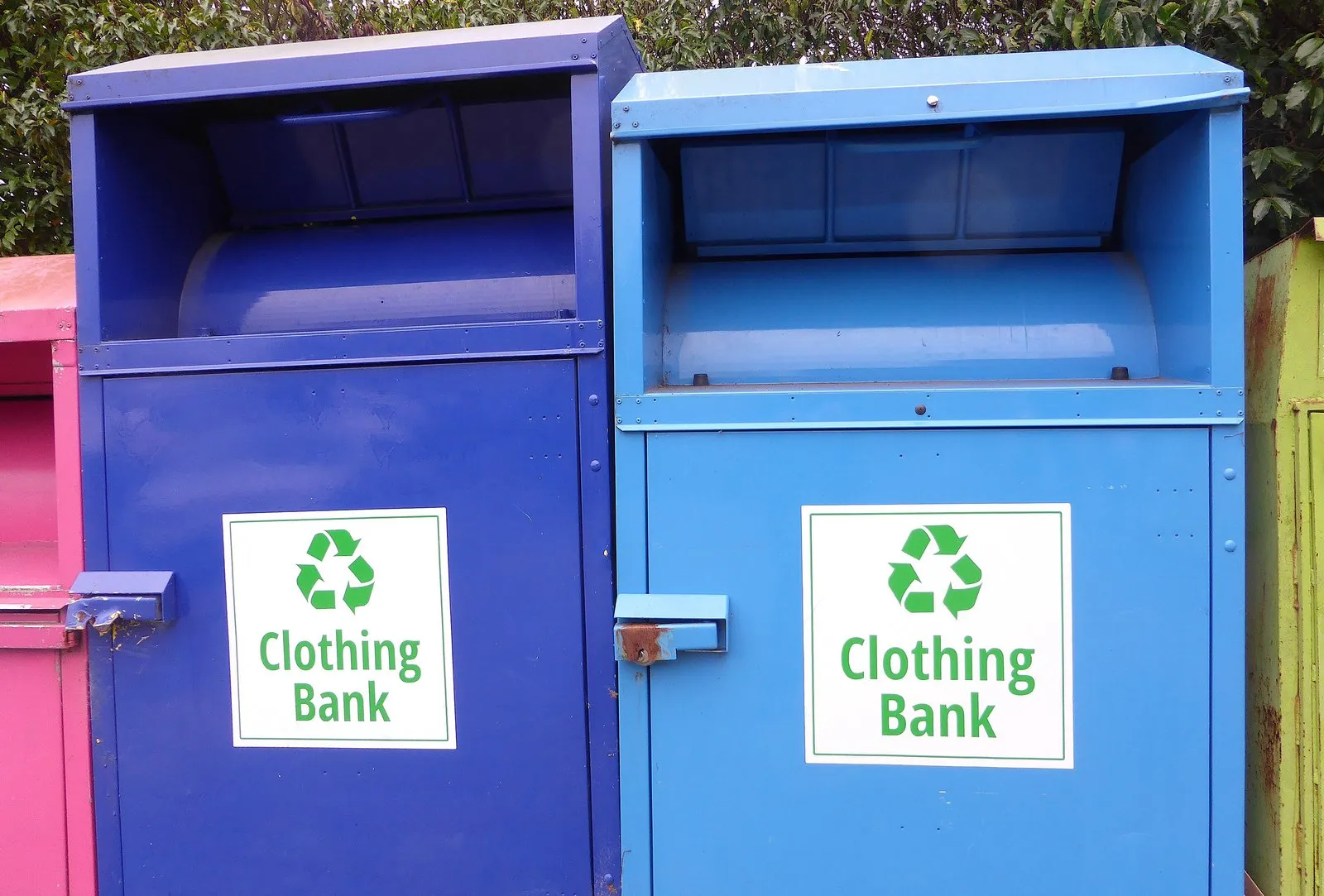
Featured image: Tony Webster.jpg), CC BY-SA 2.0, via Wikimedia Commons. Cropped for this page; the cropped version is shared under the same CC BY-SA 2.0 licence.