
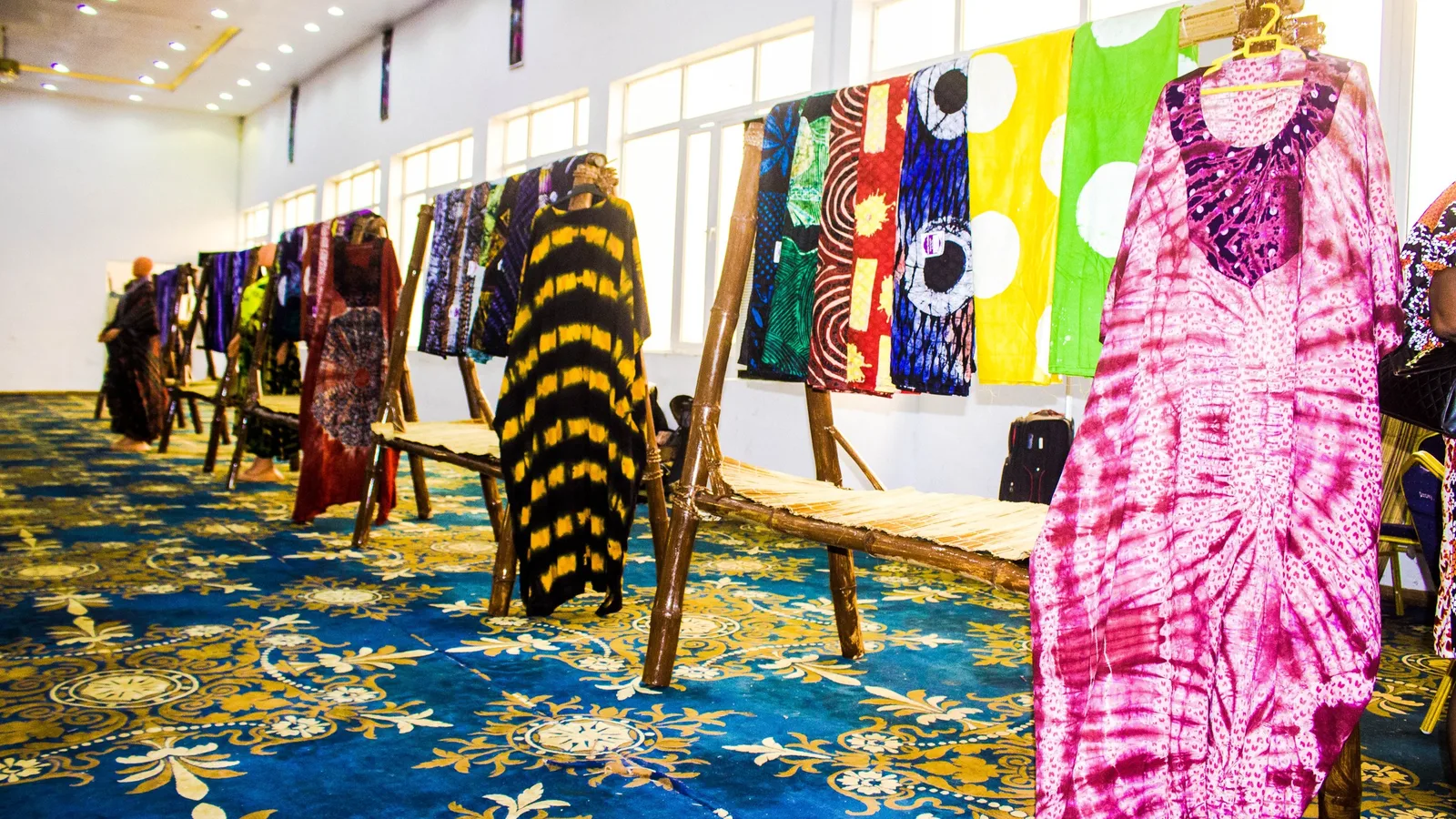
While Paris, Milan and London spent September debating the next generation of creative directors, Lagos Fashion Week spent the last week of October on a more basic question: what does it take to build a fashion industry, rather than just a fashion moment? The 15th edition, which ran from 28 October to 1 November, was staged under the theme "CRAFTED: Heritage. Innovation. Circular Futures." Its organisers placed hand-weaving, natural dyeing and reuse at the centre of the programme, and the strongest collections took them at their word.
A week built on craft
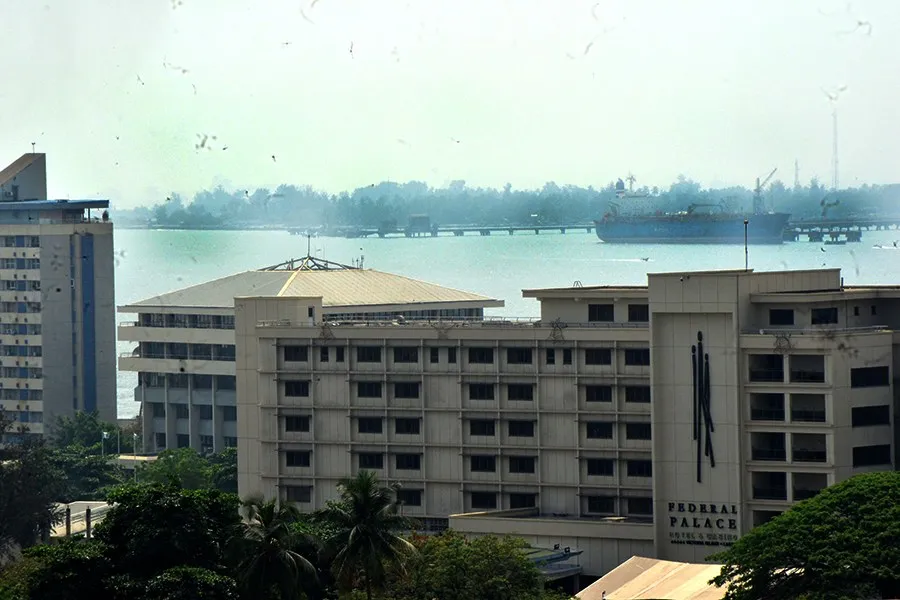
Lagos Fashion Week is organised by Style House Files, the agency founded by Omoyemi Akerele. According to BellaNaija's guide to the week, it opened with a welcome party on 28 October, held its main runway shows from 29 to 31 October in the LagosFW Tents at the Federal Palace Hotel on Victoria Island, and closed on Sunday 1 November with off-site presentations at cultural venues across the city. Alongside the shows ran the Green Access programme, which supports designers working with sustainable methods, and the Fashion Business Series of talks.

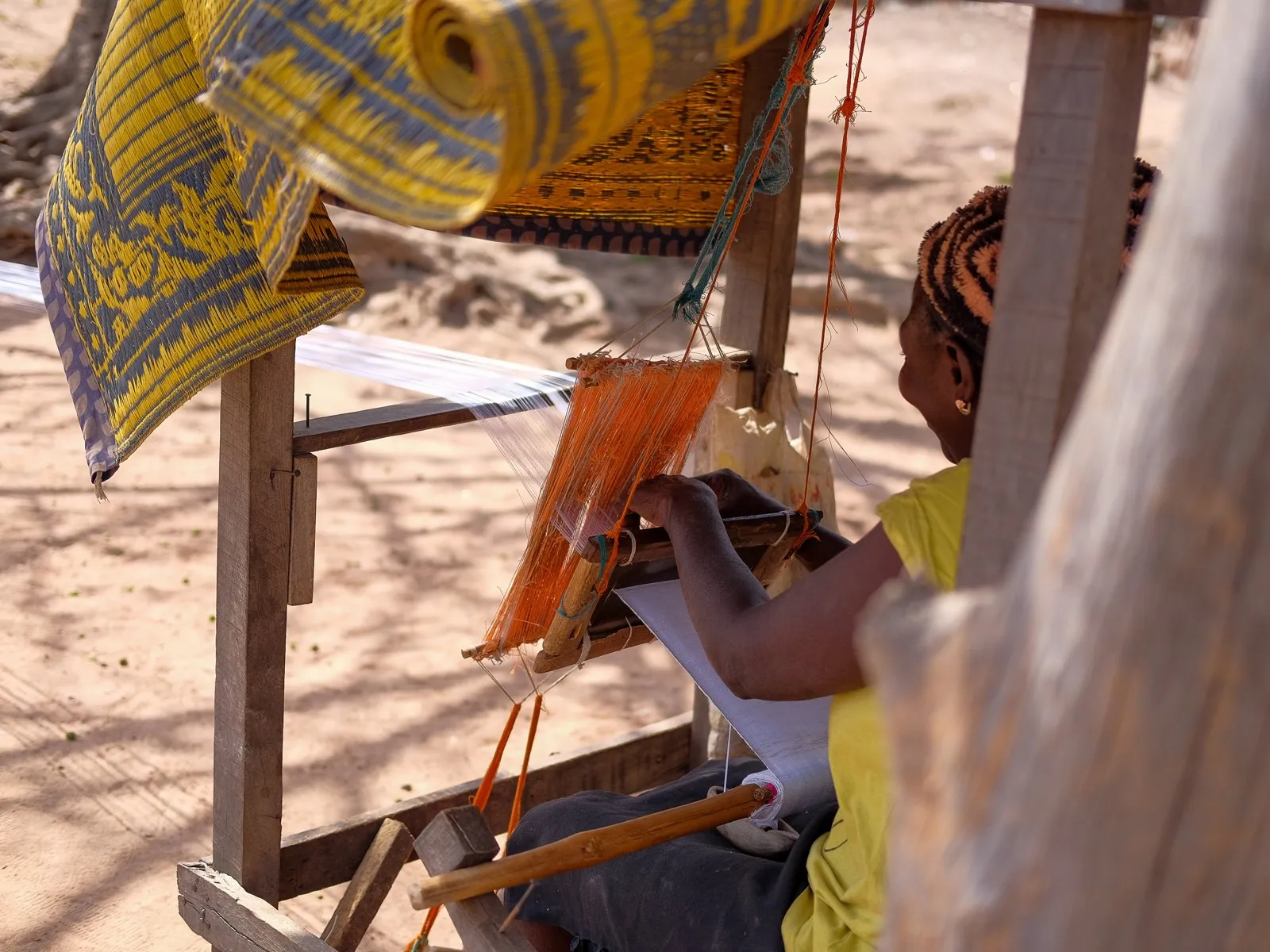
The theme drew directly on West African textile traditions. BellaNaija pointed to aso-oke, the Yoruba hand-woven strip cloth; akwete, the woven cloth of south-eastern Nigeria; and adire, the indigo resist-dyed textile of the south-west, as the kinds of heritage technique the week set out to celebrate. For Semafor, the aim was to turn the global attention now paid to African design into lasting economic opportunity for local manufacturers, artisans and creative businesses.

"An infrastructure problem"
Akerele set out the week's argument plainly. "African fashion doesn't have a creativity problem, it has an infrastructure problem," she told Semafor. "Access to finance, manufacturing capacity, and distribution remain significant barriers."
The talks returned to the point repeatedly. Fashion Police Nigeria reported that the second day opened with a conversation between Akerele and Imran Amed, founder of The Business of Fashion. A panel on overconsumption pushed back against treating it as primarily an African problem, with speakers pointing instead to overproduction and the influx of inexpensive imported clothing as part of a wider, global issue. Another session, on intellectual property and circular fashion, brought in the designers Nkwo Onwuka and Ugo Monye to discuss unreliable power, limited manufacturing capacity, workforce development and the difficulty of protecting African design rights. They are familiar questions for anyone following the debate over fashion's resale and textile-waste paradox, seen from the other end of the supply chain.
The shows to know
Désirée Iyama marked ten years of her label with a Spring/Summer 2027 collection titled "This Is Why". Marie Claire Nigeria described a story of thorns transformed into flowers, told in green, chartreuse, red and white through tulle and organza, with hems finished in rings inspired by the Olympic emblem.
Studio Imo called its collection "Clan" and built it around crochet, presenting it with the line "At the heart of craftsmanship is community". The brand worked with Jay BZ and 21 Wool Street, and the stylist Uche Uba closed the show, according to Marie Claire Nigeria.
Ajanéé, reported Fashion Police Nigeria, showed "Masquerading (Cloth as Spirit)", deconstructing old sports jerseys into dresses: the circular theme made literal. On the same day, Cute-Saint brought adire to the fore with cowrie embellishments, the Benin Republic-based label Bakusoraya put indigenous textiles at the centre of its collection, Cynthia Abila dedicated "The Common Ground" to her father, and Street Souk, presenting work from four designers, reinterpreted the agbada, the flowing robe worn across West Africa, in leather. Christie Brown and Nkwo also showed.
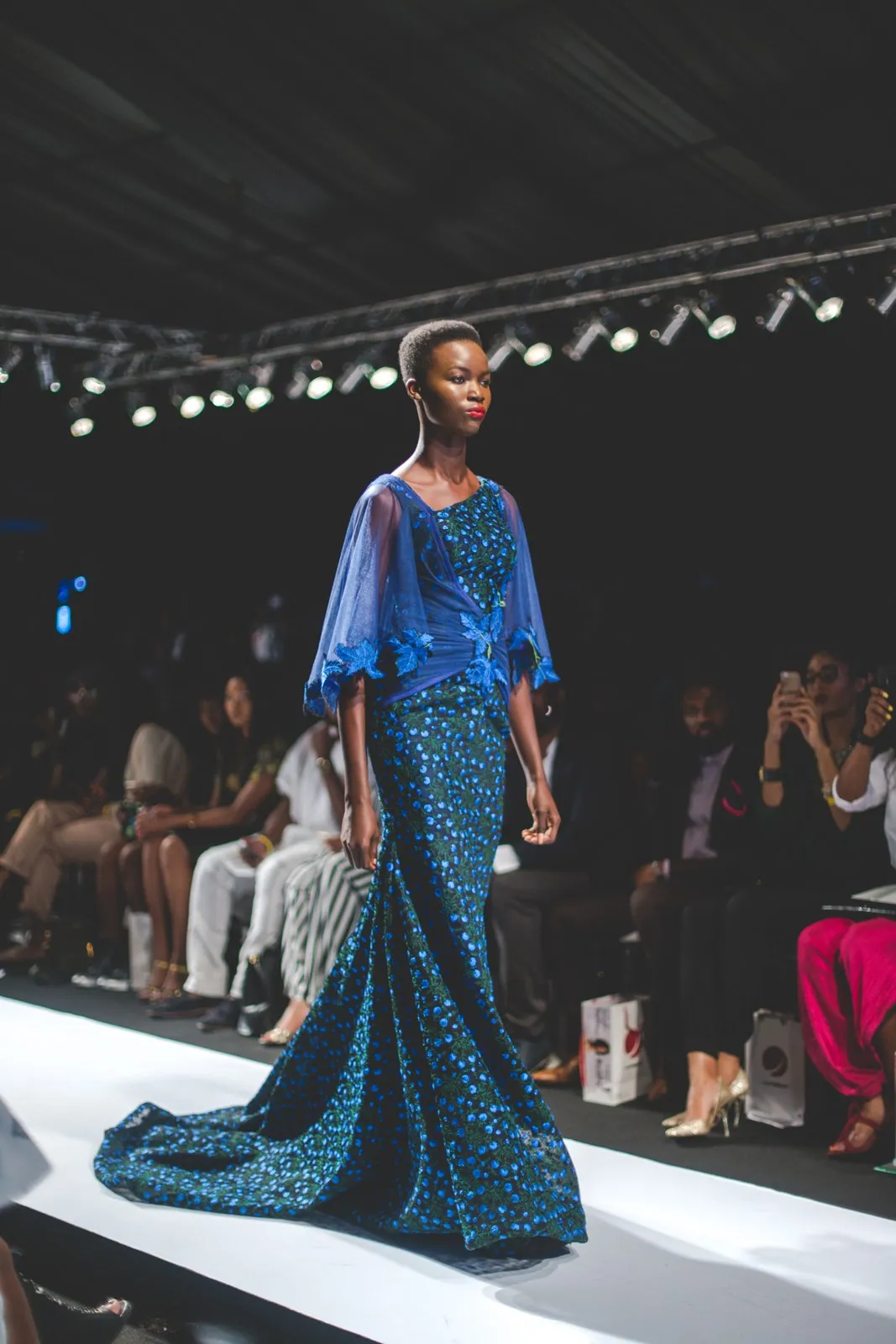

Bloke did not show pieces by its creative director, Faith Oluwajimi, this season. Instead it launched a Designer-in-Residence programme under Oluwajimi's curatorship. Its first resident, Pelumi Oyewo, presented a collection titled "Tzar Bomba", which Marie Claire Nigeria said explored segregation and Black identity through sheer fabrics and metallic finishes. Elsewhere on the third day, Marie Claire Nigeria singled out Abiola Olusola's "Bound for Lagos", Pettre Taylor's "The Middlemen", in knitwear, woven fabrics and oversized denim in grey, brown and white, and Sahrazad, the label of Scheherazade Essrhir, whose "Inner Child" drew on Moroccan weaving.
The final runway day, according to the official schedule, included Ugo Monye, Eki Silk, BoyeDoe and Fruché. The closing Sunday moved off-site, with presentations from Iamisigo, Orire, Gozel Green and an open studio at Andrea Iyamah, before evening shows from Emmy Kasbit and, closing the week, Lisa Folawiyo.
Why it matters
The international calendar has spent the season talking about lightness in Paris and new appointments at the big houses. Lagos offered a different measure of a fashion week's value: whether it builds the workshops, the supply chains and the buyers that let a designer's tenth collection follow their first. Akerele's point is that the talent is already there. Fifteen years in, Lagos Fashion Week is making a strong case that craft and circularity are not a niche for African fashion but its competitive edge, if the infrastructure can catch up.
Featured image: Tunde Akangbe, CC BY-SA 4.0, via Wikimedia Commons. Cropped for this page; the cropped version is shared under the same CC BY-SA 4.0 licence.
